Excerpt from Sylvia Broadbent’s “History of a Horticulturist” Memoirs

Ever since I was big enough to heft a trowel, I have been interested in horticulture. Well, maybe not horticulture, but at least in gardening. I guess it is in the blood or something. My elder brother discarded his pea-shooter for a spade at a very early age. Some people I know say I just copied him, but I always insist that it must be an hereditary predilection, being careful to stress the “an” before an aspirate “h”, or whatever it is—it just sounds learned, anyway.

It all began, I think, when I was about four. I had a playhouse at the end of the garden, in a spot later occupied by the henhouse when we started our wartime menagerie like millions of loyal British suburbanites. Perhaps my playhouse was prophetic. It was always a mess, but it was fun. In front of it was a ten by six foot area of beaten earth, with a few unhappy straggling snapdragons along one edge. This was my garden, the first of many. I don’t remember much about it, except a vague sense of proprietary pride. I think it was intended to promote respect for natural growing things, property rights, and all that sort of thing. I imagine it was an admirable place to dump a four-year-old with reasonable safety. It was a comfortable distance away from the house, and I could break as many things as I like down there without disturbing the peace of the household. Also, the mess did not matter because grown-ups could not get into the playhouse anyway.

That phase, however, was more domestic than horticultural. The second phase started when I was about six. At that time I had mumps or measles or something equally puerile and contagious, and while I was still confined and untouchable, my brother and uncle knocked together a new playhouse for me. This was a much smarter affair than the other, with a neat gabled roof, a little bow window, and a real house door that my brother had somehow body-snatched from some dismantlement or other. It was painted green, the other one had been merely creosoted.* It was a playhouse to delight any six-year-old, especially one recovering from chickenpox or whatever it was.

However, it was not the playhouse itself that interested me. It had in front of it a strip of flowerbed about ten feet long planted with some strange vegetable whose name I have long since forgotten and which I could never pronounce anyway. This became my new garden. However, I still didn’t do much about it. It was dug and planted and even occasionally weeded by my brother, who was then an amateur gardener, and hence interested to a certain degree in the welfare of our own backyard. When he later attained professional status all such interest waned abruptly. However, he still grows a few dahlias—mostly, I fear, so that he could have new plants from the tubers that he could use in the garden he cared for professionally.

The third phase of my horticultural career constituted a real advance. For the first time I started taking care of “my” garden myself. Until then someone else had always dug the thing over and planted a few things left over from other parts of the garden. Now, at the age of about eight, I suddenly became violently interested in the actual working side of gardening. One late winter’s day I struggled down the garden path with my brother’s spade, a hefty, man-sized weapon, and, with sweat and toil and blistered palms, dug over my ten foot flower bed. It was hard work for an eight-year-old. I then planted some marigold seeds I had bought at Woolworth’s. They never grew. I shall always suspect that someone else dug that bed over again later—perhaps even intentionally. I made no accusations, but after that I was wary.

Soon after this phase began, the family hen-house was moved to the site of my second playhouse, which had been torn down and its beloved boards put into that awful structure. There, as least, it was serving the war effort. That was a consolation, more of less—that nice cliché that became the reason for so many privations, great and small.

The new position of the henhouse meant that my garden was no longer accessible, and in any case was in grave danger from the hens, who could stick their heads through the wire netting in that region, and eat everything within about a foot—and the only thing there was my garden. So that garden went. I was given another area to play with; I insisted on that. It was a trapezoid area between the henhouse and the air raid shelter. It was thoroughly shaded by an apple tree and the shelter, but it was fine for me. It was cut off on three sides from the rest of the garden, a secluded little peninsula of grass and good black loam. The side of the air raid shelter facing my garden was covered by a sort of rock garden, since the shelter was an Anderson, a corrugated iron arch covered with earth. They were good protection against blast, but rather fatal in the event of a direct hit. I soon took over the rock garden, and then the entire earth covering of the shelter.

In this area my golden age of horticulture began. I cultivated it with an economy that would have put the Belgians to shame. I grew sage and thyme in patches of clay a foot square. I grew honesty on the top of the air raid shelter, where no one would see it. I found an old washtub and made it into a pond for tadpoles. As a gallant gesture of patriotism, I grew half a dozen Romaine lettuces—my most successful crop. I discovered that parsley and poppies could not be successfully transplanted. I collected seeds from everything in the garden that had them and grew some fine columbines that never bloomed. I think I bought perhaps two packets of seeds for the garden—the rest of the plants I begged, borrowed or stole from other parts of the garden.

My ambition spread. I thought of the other side of the air raid shelter—a still more secluded area, then filled with weeds, apple tree prunings, and cold frame lights, plus a quantity of broken glass. I did not bother to ask anyone’s permission. One day, when no one else was around, I cleared out the rubbish, stacked the cold frame lights and flower pots where my brother was sure to trip over them when he tried to get into the greenhouse, and dug the area over. Here at last was virgin ground. There was no garden already there to be worked on and developed; I had to make it. I found some old bricks and made a sort of a path. I got grass seed and planted a handkerchief-sized lawn, which since it was never rolled, was always too soft to cut successfully with the lawn mower. Being at the romantic or rather sentimental age of ten or eleven—it must have been then I was reading “Ivanhoe” I remember—I converted the dangling trails of our neighbour’s pet rambler rose into my idea of a bower. It was one of the oddest roses I ever saw; the blossoms were a bluish pink at first, and later faded to a pinkish blue. My blue rose bower added exactly the right touch of unreality to my secret and secluded garden. I made a small rockery in one corner, and planted a bed of pansies, with sweet peas behind, intended to cover the side of the air aid shelter, but which somehow never achieved its purpose. I even made a little lath fence and gate to keep the dog out—a rather over optimistic enterprise choice.

In the late summer of that year, this six by ten foot area seemed like heaven to me. I could go there and lie on the grass to read Sir Walter Scott and Robert Louis Stevenson, Lord Peter Wimsey and Father Brown, Arthur Ransome and “Biggles”. I could steal apples without fear of discovery. No grown-up could ever intrude on this ideal haven it seemed. I could go there and satisfy my mother’s vague feeling that I should be out-of-doors, without having to go and play cowboys and Indians with the boy across the street, whom I hated energetically. I always ended up fighting him, using my head as a battering ram, although he was a much better fighter than I. I could read and dream as much as I wanted.

This joy, however, was short-lived. As soon as the war was over, my brother and uncle started making plans for the no longer needed air raid shelter. They planned to dig it up, fit it together with a similar shelter, and set it, on a concrete foundation right on top of my beloved garden, for use as a tool shed. My astonishment, rage, and disappointment at this, to me, unwarrantable betrayal were more than I had ever known in my twelve or thirteen years. This was incredible. That my brother could take away from me this, my most precious possession, was more than I could understand. I had had my garden moved before. But this was different. This was a garden I had made all myself, from nothing. My faith in humanity suffered a very severe blow.

As always in such cases, I, as the youngest, lost out. My garden went. Instead I was given a bed in the front garden, and another in the back garden. I suppose my brother tried to make up for the loss of the garden I had made myself. However, the front garden was open to everyone’s view—there was no hiding there with a book on a sunny afternoon. Also, it was gummy, yellow London clay instead of the rich fine loam of the back garden. It was hard to work, and harder still to get things to grow in. I tried, but my heart was never in it. My backyard patch I converted into a vegetable garden. I grew a few peas and radishes, but for some reason that bed was infested with chickweed, and nothing I could do would get rid of it. I finally gave up the battle. By that time I was becoming more or less responsible for most of the garden. I cut the grass occaisionally, did a bit of weeding now and then, and cut down the perennials at the end of the season, and left it at that, apart from climbing the apple trees as often as possible, ostensibly to pick apples, but mostly just for the fun of climbing.

My interest in gardening became more and more vague after that, but it has never quite waned. Last year I cleared a patch two feet long by the barbecue pit and planted some parsley. The last I saw of it, a rather hungry looking robin was attacking it with might and main. I turned my back and walked away in disgust.

The Do’s and Don’ts of Submitting by Cati Porter

Most of you know me as the face of Inlandia. Recently I had the pleasure of being interviewed for the My Awesome Empire radio broadcast. One of the things they asked was how did I get involved with Inlandia. I have Marion Mitchell-Wilson to thank, who invited me to coffee and the rest is history. Everyone who knows her knows that you can’t say no to Marion.

Marion and I met at an Inlandia event—I can’t even remember which, this was so long ago, but Inlandia was still housed at the Riverside Public Library, and Marion ran the organization from her post as Development Officer at the library, curating their arts and culture calendar. I was just a few years in to my own foray into arts & culture, having founded Poemeleon: A Journal of Poetry, an online literary journal dedicated to poetry. The first Advisory Council meeting that I attended was in 2009, and shortly after that Inlandia broke from the library and formed its own independent nonprofit. I never envisioned then that I would someday be at the helm.

Marion had as one aspect of her vision for Inlandia, the preservation of the voices and stories of those that make this place home. In furthering that mission and vision, coupled with my own interest in writing and publishing, I have been working hard toward expanding Inlandia’s publications program. We have been slowly adding books to our catalog, both through Heyday and independently, and with the launch of the Hillary Gravendyk Prize, we hope to continue to bring books to the public for many years to come. It’s a slow process, though, one that requires patience as we gain speed.

Through Poemeleon first, and now through Inlandia, I’ve learned many things about publishing. It hasn’t been easy, and as a writer myself, it’s been challenging to follow my own advice sometimes, but years ago I found a very helpful list of “50 dos and don’ts”, which I’ve modified for my own use. For those of you looking for a publisher, or looking to submit work to Inlandia, try to keep these things in mind:

– Do read submissions guidelines carefully—it shows you respect the editor’s time, and that you take the submission process seriously.

– Don’t ask for feedback on your work, because, again, it shows you respect the editor’s time; if you want feedback, find a writers workshop to join or form your own.

– Do keep cover letters brief; don’t include anything personal other than your contact info, and don’t try to summarize what you are trying to do with the poems.

– Don’t include a bio that is a mile long—editors don’t need to see everywhere you’ve ever published; only include a handful of recognizable and recent credits, or don’t include any at all.

– Do spell check everything and proofread until you’re certain they are no typos, and don’t freak out if you find out later that there was a typo, because if the work is good, that can be fixed later; editors understand.

– Don’t center your poems or use any other weird formatting or font or use ALL CAPS unless you have a very strategic reason to do so.

– Do your research and submit only to journals that you’ve actually read and think might like your work.

– Don’t put the copyright symbol on your poems—copyright is inherent from the moment of creation. (And if someone is out to steal your work, the copyright symbol isn’t going to stop them.)

– Do submit to more than one press or journal at a time, as that ups the odds of the work getting picked. (Exception: if a press or journal specifically states no simultaneous submissions.)

And lastly:

– Don’t take rejection personally! There are so many reasons why an editor might pass something up. And if you get a personalized rejection, submit again—promptly!

Right now, Inlandia is gearing up to reopen submissions but we are not currently accepting full-length manuscripts. One of our goals is to provide services to authors—whether they are looking for a publisher, or want help publishing it themselves. All writing has an audience somewhere, it just takes patience, strategic submitting, and time.

But while you’re waiting, if you have individual prose or poetry selections, check out Inlandia’s online literary journal, Inlandia: A Literary Journey (www.InlandiaJournal.org). Or try these other So Cal presses and venues:

IE-centric Lit Journals:

PoetrIE/Tin Cannon

Wild Lemon Project

Pacific Review

Ghost Town

Crate

Mosaic

Muse

Shuf Poetry

See the Elephant

Presses:

Metaphysical Circus Press

Blue West Books

Jamii Publishing

Orange Monkey

Moon Tide

Spout Hill

Lucid Moose Lit

Cadence Collective

Sadie Girl Press

Arroyo Seco Press

For the Love of Words

Tebot Back

reVERB

Bank-Heavy Press

Kelsay Books

Aortic Books

Lummox Press

Locked Horn Press

I’m sure there are more presses out there—if you know of any, send me a link! Help me build a list of resources for Inlandia’s writers to include on our website.

Somnambulist & Funambulist’s 4Q’s and a Witch Doctor’s 4A’s… Throw the Bones: From Whence You Learn to Dance, Learn to Vomit, Learn to Heal by Maureen Alsop

A recent encounter/interview with Witch Doctor, Nicky Auren, author of African Spirits Speak and The Spirit Speaks, offered a curious, magical, and miraculous Morongo Valley eventide!

How is the practice of divination used in the healing craft?

In throwing the bones a consistent telepathic message arose, a repeated pattern: a big shell (among smaller shells, dice, & bones) rolled across a reed mat.

You’ve got spirit, you must find a trainer and learn.

I was quiet and then saw chickens…stop, let the brain open, I still saw chickens.

What I learned took a long time…we are a system…when a relative dies one must return to the village and kill a goat or a cow to help the deceased transition to the other world…certain motions appear around the spirit & the old ways must be engaged to appease the conciousness of the spirit clan.

How does the spirit realm heal?

The whole house shook & strange things happen.

They test you through trance and call out spirits to report back to the practitioner on your spirits; you begin to see psychically, you master the practice of discovering hidden things (both literal and mental).

Practice cleansing in a tiny room.

Don a red skirt, white t-shirt, dred locks lathered in car oil and red ochre.

What was your most profound experience as a Witch Doctor?

Piercing, by spear, the back of a cow’s throat to provide a merciful death.

Followed by a thankful feast: raising a plate of cow flesh boiled with eggs & greens.

A rainbow.

Sungoma’s (medicine woman, traditional healer) final initiation.

Who were special practitioners, healers, you admire and learned from?

No god, no devil, only the trickster.

Joyce (whose name means “Lord”).

Self.

Ritual, candle, ancestors, impetigo.

Inland Area Influences Poems of Hard Truths: Yossi, Yasser, & Other Soldiers by Joan Koerper

Award-winning books are often birthed in pieces, over several years in different locations. During the 10 years that poet Jon Sebba lived in Redlands and commuted to work in Riverside and San Bernardino, he confronted his ghosts of war by writing. In 2013, poems he penned in the shadows of the San Gorgonio Mountains helped earn him the title of Poet of the Year by the Utah State Poetry Society for his book, Yossi, Yasser, & Other Soldiers.

Rising from his young soldier’s soul, Sebba’s poems record, reflect, and meditate on the images, sounds, and psychological realities of war. They offer an indelible expression of the invisible scars Sebba has carried with him since he witnessed his friend, Yossi Levi, killed in the 1967 Arab-Israeli Six-Day War: “that a man you knew for weeks who died in a war of only six days / can be mourned for 45 years and counting.” And he gives voice to those caught in battle who can no longer speak for themselves.

His poems are authentic: embodying truths he refuses to couch, hide, or deny. As Dr. Rob Carney writes in the preface: “The power of these poems is that they don’t explain. They present.”

After witnessing a man severely beaten in front of his family, and learning an inquiry into the incident was to occur, Sebba writes: “Too late for that Palestinian farmer / in ripped, blood-splattered pajamas. / Too late for me, still carrying / invisible scars all these years.”

The first 25 poems in the collection focus directly on the 1967 Six-Day War. Twenty-one poems speak to “Others’ Wars”: WWI, WWII, Vietnam, Iraq, and Afghanistan. During a phone interview, Sebba explained, “I included poems about other wars, and other conflicts or situations, that I was driven to write because they were about things that bothered me.”

I met Jon Sebba when we were members of the Redlands Branch of the American Association of University Women (AAUW). He was one of two men who broke the gender barrier, joining the group when males were allowed membership. He quickly started a play reading group for the Branch. For four years, being part of that group was my favorite monthly activity.

I also was a member of a writer’s support group he hosted, one of the multitude of writer’s groups he has either anchored, or participated in, wherever he has lived. When he moved, we lost touch. Recently, I located him in relation to a book I’m writing about a former center of intellectual, literary, and creative activity for women in Redlands where he took part in a community program I organized and produced.

Born and raised in South Africa, Sebba left after high school to live in Israel. He studied geology, among other subjects and held various jobs. When the Six-Day War broke out he was mobilized as a reservist and fought in Jerusalem while his wife and 3-month-old son huddled in a bomb shelter a few miles behind the front lines. Transformed by the experience of random death, he committed to the belief that war should be avoided. “We didn’t know / that every rifle bullet / manufactured for the army / is intended for some mother’s child / But, by God, we do now,” he writes.

Sebba immigrated to the United States in 1968. He studied civil engineering, became a specialist in water-resources engineering, eventually working in six states. He welcomed another son into the family, and later divorced and re-married. For five years he was also an adjunct instructor in the engineering department at Salt Lake Community College, Salt Lake City, Utah until he retired. He and his wife now balance their time between Utah and Arizona.

Writing and being able to share his poems with others has been deeply therapeutic, says Sebba. In turn, his poems are therapeutic to others.

In demand as a speaker, he relates, “I often focus on writing as a way to work through trauma. And I always offer to connect with veterans. I want to help. And because family members are sharing stories with me after [readings and] speaking engagements, I’ve grown more aware of the trauma and stress the family goes through because they’ve been left behind.”

In 2013, The Gallery Theatre in Ogden, Utah produced a play he wrote. From November to June each year he teaches poetry at a low security prison in Tucson, Arizona. He is also organizing a program to work with veterans in Arizona using writing as therapy. And Yossi, Yasser, & Other Soldiers is a text used in a Social Justice class at Salt Lake Community College.

Sebba’s current writing projects tackle another volatile subject: apartheid. He has written a second play, and is working on a novel, both based on people he knew while growing up in South Africa. And, of course, another book of poems about the effects of war is taking shape. “If I can help others through my experience, and writing, it is both satisfying and fulfilling,” he shared.


Yossi, Yasser, & Other Soldiers is available at Amazon.com.

Jon Sebba can be reached at: yossi.yasser.soldiers@gmail.com.

This column was published in the Riverside Press-Enterprise, May 24, 2015; Section: Life; Page Z2 & Z5.

Exemplary Friendship by Judy Kronenfeld

A good friend of my husband’s and mine, Theda Shapiro, who was Associate Professor of French and Comparative Literature in the Department of Comparative Literature and Foreign Languages at UCR, passed away in March, to our shock and dismay, after a somewhat precipitous decline due to cancer. We have been to two memorials for Theda, an informal one at the house of her close friend, Stephanie Hammer, in LA, and, just a week ago, one hosted by Thomas Scanlon, the Chair of her department, at the Alumni House on the UCR campus, and have thought about her a great deal from the onset of her illness; all of this has made me realize just what it is for a person to have a profound effect on other people, to create a lasting legacy of kindness and exemplary friendship.

For Theda, joy was so definitely not a zero-sum game—that is, if you have some good luck or some joy, there’s less to go around for me. Certainly, the extended family of my youth sometimes involved a certain zero-sum competition and even schadenfreude , especially among cousins’ parents. And I’ve had certain friends (should I call them that?) like the one who shot back an email, after I sent her a link to pictures of my kids and grandkids, saying “save these for someone who’s interested”—an expression completely inimical to someone like Theda. In her capacious mind, it was as if she had files and subfiles for all her many friends’ children and extended families. She kept up with those children and their accomplishments; she always asked to be remembered to them. Even after her awful cancer diagnosis, when I talked to her regularly on the phone, she made a point of asking about ours, and—hoping, perhaps, for more time than she had—looked forward to seeing some recent pictures of our grandkids. For Theda, if you had some good luck, or your kids gave you naches, it was her joy, too. She made herself into the best kind of family member for so many people—colleagues, students and younger faculty she mentored and mothered, and all her other friends. She was incredibly smart and knowledgeable, and also unassuming, kind, supportive, loyal, and utterly positive. There’s plenty of schadenfreude in academia; for Theda, with her amazing generosity, it was a place to share the wealth, to be supportive to students and faculty. Their testimonies at her memorials and the way in which her friends stepped up to help during her decline and afterwards made so clear how universal her generosity was, and gave me a heartwarming sense that the kindness she taught by her example is a living tradition, and will be passed on.

Poetry Month Scouts: A Guest Post by Marsha Schuh

Since the Academy of American Poets first established National Poetry Month in 1996, poets and poetry lovers have celebrated the month through readings, workshops, festivals, and “poem-a-day” challenges. Each year, the number of events seems to grow. Each year, I begin a poem-a-day challenge with the intention of writing 30 poems during the month of April, but I’ve never been successful—until 2015.

In March of this year, I stumbled upon a particularly inspiring challenge called PoMoSco, short for Poetry Month Scouts. PoMoSco was sponsored by the Found Poetry Review, and 213 poets from 43 states and 12 countries around the world took part. By its conclusion, they produced more than 6,000 poems, and I was one of them! Each participating poet had the possibility of earning 30 digital merit badges for the month’s creative work. The prompts were divided into five categories named for the method of their generation: remixing, erasure, out and about, conceptual, and chance operation. You can read all about the badges and more at PoMoSco.com. Each category provided six distinct badges that varied in their level of difficulty. Poets chose their own source texts and venues from which to craft their poems.

One of my own favorites was “First in Line” according to which we were to choose a published book of poems and craft our own poem using select first lines, keeping the wording of the original intact, and organizing them in any order, thus creating an original “cento.” I chose Barbara Crooker’s wonderful book, Gold, and after the experience of creating my cento, I was hooked. Two other badges that I especially enjoyed were “Crowd Source” and “Survey Says.” In the first, we were to choose a concrete noun (I chose “doorway”) and ask at least ten people to either define the word or explain what the word made them think about or feel. From the gathered words alone, we had to create a poem that did not mention the original word. The second badge entails making up a questionnaire of eight to ten questions and asking several people to answer them in writing. The words we collected from their answers constituted the word bank for our poem. Not only did this challenge result in a pretty good poem, but it also helped me learn some fascinating things about my friends.

I think this poem-a-day challenge was so much fun and so motivating for me because of the quality and inventiveness of the prompts. Jenni Baker, Editor in Chief of the Found Poetry Journal, and her team of scoutmasters and badgemasters did a great job of creating the challenge, motivating us, and maintaining the very professional website. Poets who took part in PoMoSco were forced to write outside their comfort zones and to experiment with new ways of thinking and writing. We discovered new tools and learned to let go of our own techniques and favorite ways of doing things; this sparked more creativity. We also met and learned from the fellow “scouts,” made new friends, and created a close and supportive community of writers.

PoMoSco is the Found Poetry Review’s fourth National Poetry Project, and this one was, in the words of one of the other participants, “the best poetry month project yet.” She wonders how they will be able to top it next year. Be sure to check next March for the 2016 challenge. If this year’s project is any indication, it should be great fun, highly original, and exceptionally motivational. You may still visit the website—PoMoSco.com until May 31, 2015 to read this year’s great—and sometimes wild—collection of poetry.

A Conversation With Rattle Editor Tim Green by Cati Porter

We’re again in the midst of National Poetry Month, so I thought it might be a good time to catch up with one of our regular columnists, Timothy Green. An avid supporter of the literary community, Tim recently moved from Los Angeles to Wrightwood, a move that has proven fruitful for him and his family. Here is our conversation:

Cati: Inlandia is all about celebrating the region, so tell me: you’ve been living in the Inland Empire for a few years now. What convinced you that moving to Wrightwood was the right move, and how does it compare to where you were living before?

Tim: I grew up in western New York, and my wife in rural Washington, state. We moved to Los Angeles to work at Rattle, but we were never meant for the City of Angels. We managed for a while, avoiding crowds by time shifting our weekends and work hours, but then we had kids and realized we needed a change. We chose Wrightwood for the seasons, the nature, and the easy drive up—coming here felt like coming home. I’d never lived in a small town before, and now that I’ve experienced the friendliness of the line at the post office and how much everyone cares about things like Little League, I’ll never be able to leave.

Cati: Most people who follow this column know that you write for Inlandia Literary Journeys and by virtue of that know that you are the editor of Rattle, a prestigious literary journal based out of Los Angeles. You mentioned once that you read something like 80,000 submissions each year—is that right? How do you get through so many submissions?

Tim: Writers send us 100,000 poems a year now, which is 250 a day, every day—even Easter. When you consider that the average book of poetry is about 50 poems, that’s five books before bed each night. I don’t know how we do it—my wife Megan and I read everything, and we’re always reading. But, then, this is the 21st century; everyone is always reading. We’re just always reading something very specific: boxes of submissions.

Cati: Can you tell us about the literary community in Wrightwood? I understand there are a number of writers who live there? You’re a writer as well as an editor—how has moving to Wrightwood affected your writing?

Tim: Wrightwood is a great place for writers—it’s almost in the name, right? My office overlooks a few dozen Jeffrey pines, all of them full of squirrels and quail and Stellar’s jays. It’s a great space for daydreaming. And there are writers here—I met a few through Inlandia: MJ Koerper and Victoria Barras Tulacro. But there hasn’t really been a literary community; there hasn’t been a nexus to bring us all together.

Cati: Today in my inbox, I received notice that you are planning a Wrightwood Literary Festival? Can you tell me a bit about it—where did the idea come from, and what kinds of activities and special guests do you have planned? I understand you’re also leading a workshop, on polishing your writing for publication. That’s a great opportunity for folks who want an editor’s insider perspective.

Tim: We’re having this festival to bring us all out of the woods, so to speak. The festival was borne mostly of jealousy, to be honest. I love Wrightwood, but I wish there were more of an Idyllwild element to it. Wrightwood is a great gateway to skiing and hiking, or day-tripping the Angeles Crest, but it isn’t known for art—why not? There are artists here, many visual artists, many musicians, many writers. I thought we could show off the beauty of our mountains, while also giving our local artists something to rally around. 

Inlandia Literary Laureate Juan Delgado is giving a keynote presentation on hiking and storytelling, followed by creative workshops with local artists. It’s really a retreat: our goal is to provide a space where participants’ personal stories can come to life. The wildflowers will be blooming, the pine scent on the air will be at its peak—it will be a respite from the daily grind of the Inland Empire, capped off with a lively open mic.

My contribution will be a workshop on how to really move an audience through writing. We all have important stories to share, each one of us, but how do we make a complete stranger want to listen? As an editor, that’s been my job for the last decade, and I’ll share what I’ve learned.

Cati: Do you think the festival will become an annual event? If so, what do you think future years will have in store?

Tim: The festival is definitely going to become an annual event. We wanted to start small and build outward, and in the future we’d like to make it a whole weekend, spread across multiple venues in town, including more visual arts and theater. For now, more information for the May 30 event can be found at www.wrightwoodlitfest.com.

Artists’ Bios

Karen Greenbaum-Maya (“Wigs“), retired clinical psychologist, German Lit major, and Pushcart nominee, no longer lives for Art, but still thinks about it a lot. She has lived in Claremont for 30 years, during which time her camellias’ blooming has moved up six weeks, and squirrels have moved in, reliably eating all the apricots and peaches. Her poem “Real Poem” received Honorable Mention in the 2013 Muriel Craft Bailey Memorial Contest. Kattywompus Press published her chapbooks Burrowing Song and Eggs Satori. Links to on-line poems at www.cloudslikemountains.blogspot.com/ and to on-line photos at www.flickr.com/photos/pieplate/ In addition to the art, she has poetry in this issue.

Jeff Mays (“Apple Orchard, Oak Glen” and “Winter Dust and Windmill, Oak Glen“) is a native Inlander who has lived in the Empire for 47 years now.  In addition to poetry and photography, he is also an avid baseball fan and has recently published a book about the miraculous ’62 Angels called The Spectacular Case of the 1962 Los Angeles Angels. In addition to the art, he has poetry in this issue.

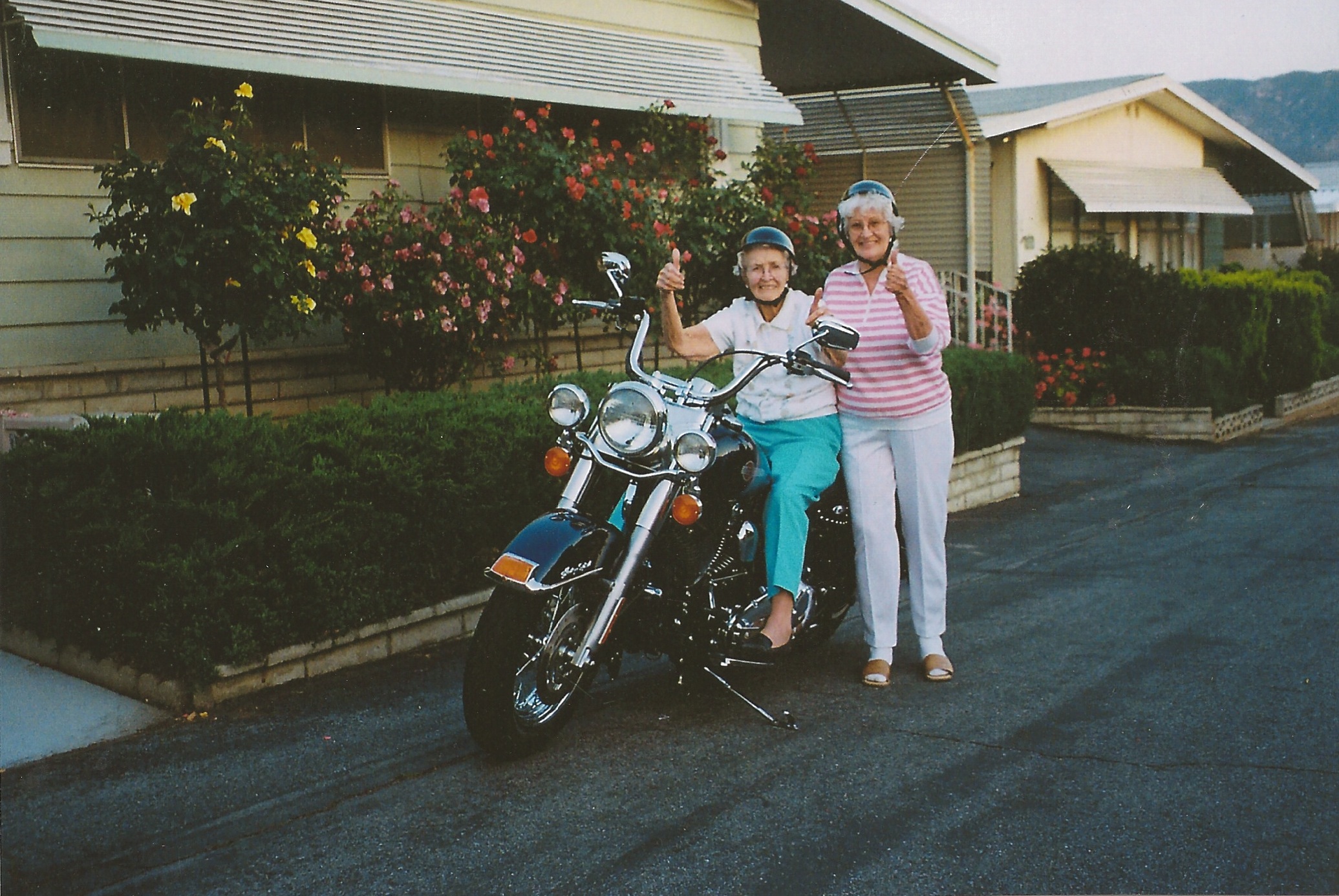
Kristin Lieberman (“Edna Nutt and Evelyn Olson, Banning“) was born and raised in Beaumont, California. She has a BA from Simmons College, Boston, MA, a JD from Albany Law School and an MFA from Antioch University. This image is her favorite photograph of her grandmother Edna Nutt and her mother Evelyn Olson. It was taken in Banning, California where they lived.

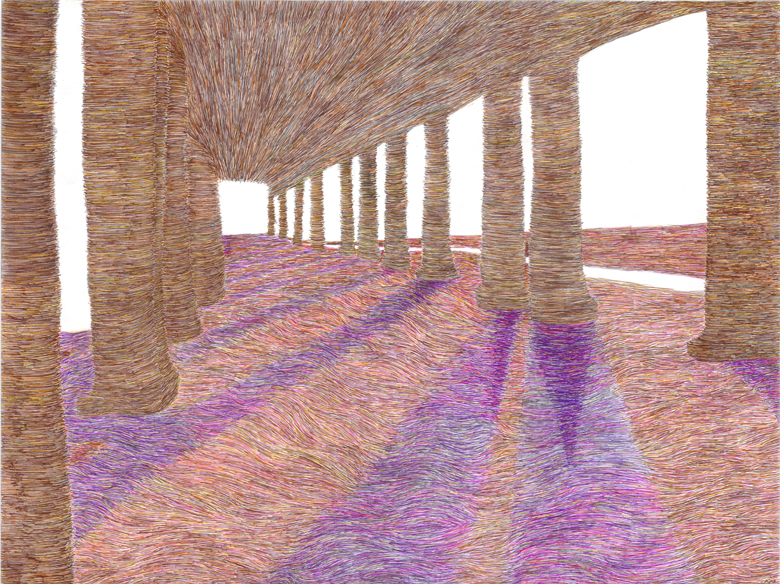
Andrew James Woodyard (“A Street Corner in Redlands” and “3:10 to Nowhere“) is an artist and writer from the mountain community of Running Springs. He is currently attending Cal State Fullerton to complete a bachelor’s degree in illustration. He works mostly with markers and pens to create extremely detail oriented drawings of landscapes, portraits, abstracts and bizarre surrealist images. His artwork, fiction and poetry has also been shown in Phineas Literary Magazine, and Morpheus Tales. The full gallery of his artwork can be found on Deviantart under the screen name Falconire, or through Instagram under Andrewjameswoodyardart. “A Street Corner in Redlands” originally appeared in Phineas Literary Magazine, a journal out of San Bernardino Valley College.

Image Gallery – In Chronological Order

Volume IV – Winter 2014 – Audio