Our Long Brown Land by David Stone

Growing concern over this season’s low-levels of snowpack in the Sierras has brought numerous comparisons to California’s lowest recorded snowpack in 1977. This summer we may be once more “under the sky that deafened from listening for rain” as Gary Soto wrote in his 1977 poem “The Drought.” Californians need to place drought literature at the top of their reading lists because it provides us knowledge of our past and visions for our future.

The Salvadoran poet Roque Dalton wrote, “man uses his old disasters as a mirror.” Natural disasters such as drought allow humans to see more clearly their relationship to Earth and its natural forces.

The classic American novel of drought is John Steinbeck’s “The Grapes of Wrath,” which describes farm families fleeing the Great Plains’ Dustbowl in the 1930s with false hopes of an Eden in California. Steinbeck’s novel helps readers to see the environmental, economic, and human costs of drought and the great migrations that major droughts can cause.

The term “dustbowl” is increasingly being used to refer to California’s Central Valley. Former Inlandia Literary Laureate Gayle Brandeis recommends Alan Heathcock’s “Scenes from the New American Dustbowl” with photographs by Matt Black, published in the online magazine, Matter. Reminiscent of Steinbeck’s travel literature, the fiction writer Heathcock turns to nonfiction to tell the story of farmers along California’s Highway 99.

Drought drives home the value of water. Joan Didion’s essay “Holy Water” from her 1979 collection “The White Album” reminds us to reconsider the complex and distant sources of California’s water. Didion says, “the apparent ease of California life is an illusion, and those who believe the illusion real live here in only the most temporary way.” The megadroughts of prehistorical California, like the 240-year-long one that began in 850, make Didion’s words sound prophetic.

For the definitive history of water resources in the American West, read Marc Reisner’s “Cadillac Desert,” commonly described as an illuminating look into the political economy of limited resources. For a more in-depth look at the history of the Colorado River, which Reisner called the “American Nile,” read “Contested Waters” by water historian April Summitt of La Sierra University.

The Nebula and Hugo award-winning author Paolo Bacigalupi’s “Water Knife,” now available for pre-order, presents a near future dystopia where Nevada, Arizona and California fight over the water of the Colorado River. Early reviews describe it as a science fiction thriller with a realistic portrayal of an all too probable future.

“Water Knife” may also be classified as climate fiction, cli-fi for short. Climate change concern drives this emerging genre’s increasing popularity in literature and film. Often described as a cousin of science fiction, climate fiction typically focuses on the results of climate change in the present and near future. J. G. Ballard began the cli-fi genre with a trilogy of novels in the 1960s , including “The Burning World,” which tells the story of a global drought caused by industrial waste. The novel was later renamed “The Drought.”

Should we as humans see ourselves essentially in conflict with nature? Do Southern Californians misconstrue natural disasters “by a way of thinking that simultaneously imposes false expectations on the environment and then explains the inevitable disappointments as proof [of] a malign and hostile nature,” as Mike Davis argues in “Ecology of Fear: Los Angeles and the Imagination of Disaster?”

The academic field of ecocriticism, which examines how nature is portrayed in culture, prompts careful rethinking about the relationship of humans to the environment. “Readers should ask how could individuals and societies inhabit their world more sustainably. Literature can help us articulate the dangers and imagine the solutions,” says Lora Geriguis, associate professor of English at La Sierra University and host of the Natures conference, which annually draws ecocritical scholars from around the world.

Children can also use literature to cope with drought. Larry Gerber’s “Adapting to Drought” gives readers in grades four to eight a basic understanding of the science behind droughts as well as suggestions of how to take action. They might also enjoy Karen Hesse’s Newberry Award winning free-verse novel “Out of the Dust” that tells the story of Billie-Jo trying to survive during the dustbowl years of the Depression.

Teens looking for something beyond the myriad of dystopian novels should check out “We Are the Weather Makers: The History of Climate Change.”

If drought worries you, crack open Ruth Nolan’s “No Place for a Puritan” to the excerpt from Mary Austin’s “The Land of Little Rain.” “If one is inclined to wonder at first how so many dwellers came to be in the loneliest land that ever came out of God’s hands, what they do there and why stay, one does not wonder so much after having lived there. None other than this long brown land lays such a hold on the affections.”
A Writers Week Reading and the Mystery of Poetry by Judy Kronenfeld

On February 3rd, the second day of Writers Week, I heard the UCR Creative Writing Department’s new poets, Associate Professor Katie Ford and Assistant Professor Allison Benis White read in the campus bookstore lounge. My friend, poet and artist Lavina Blossom, came with me. It was the first poetry reading I had been to since my knee replacement surgery in November, and the several months of intensive therapy and recovery following. And maybe, because of that, I was particularly delighted to be out in the world, and focused on the nuances and music of words. In any case, I think both Lavina and I were heart-struck, mesmerized. We each bought one of the poets’ books (and will be exchanging, soon).

The poets indicated that Tom Lutz (Professor of Nonfiction in the Department) had suggested that they arrange a responsive reading, each poet “responding” to the other with a poem of her own. Because of this, it seemed that each poet saw some aspects of their own and the other’s work which had perhaps not been salient to them before. Each poet’s work is informed by an experience of personal trauma. Many of the poems in Ford’s Blood Lyrics (Graywolf, 2014) concern the very premature birth of her daughter and the uncertainty that she will live and thrive; the poems in White’s Self-Portrait with Crayon (Cleveland State University Poetry Center, 2009) are prose poem meditations on Degas’ art that body forth almost hidden feelings about abandonment by her mother when she was a child. However, it is clear from some comments the poets made during the reading, as well as from their work, that neither poet is remotely “confessional” in the limited sense; artistry utterly transcends the merely private.

I have been reading Ford’s Blood Lyrics and have been struck, as I was during the reading, by the ways her fierce poems keep turning and surprising with their diction and imagery. Here’s the opening of “Of a Child Early Born”:

For the child is born an unbreathing scripture

and her broken authors wait

on one gurney together.

And what is prayer from a gurney

but lantern-glow for God or demon

to fly toward the lonely in this deathly hour;

and since I cannot bear to wish on one

but receive the other,

I lie still, play dead, am delivered decree:

our daughter weighs seven hundred dimes,

paperclips, teaspoons of sugar,

this child of grams…

Ford’s poems confronting the public world are among the best “political” poems that truly are poems I’ve read. Here’s the beginning of “Foreign Song”:

To bomb them,

we musn’t have heard their music

or known their waterless night watch,

we musn’t have seen how already

the desert was under constant death bells

ringing over sleeping cribs and dry wells.

I have not yet obtained a copy of Self-Portrait with Crayon (though it’s on its way from Amazon). But I do want to report on a brief, wonderful conversation I had with Allison Benis White after the reading. I was absolutely struck by what she is doing in this book. I found an interview with her that allows me to share, in her exact words, something close to what she told me as we talked:

When I started writing prose poems that meditated on Degas’ artwork, I didn’t know I was writing a book. In fact, I wrote the first one as a random exercise in response to a postcard of Degas’ “Combing the Hair” I brought home from London—and in responding to that painting, I found, to my surprise, that I could write about my mother’s disappearance in a way I never could before.” So I tried again, with Degas’ “Dancers in Blue,” and it worked again. So I kept going. I had found a way in.

The first thing I said to Allison was something like this: “It’s the difference that matters, isn’t it, when you work from a piece of Degas’ art.” It had struck me forcefully that her use of Degas is one of those extraordinary lucky accidents at the heart of poetry. I asked if Allison had ever studied Degas and learned that she had not; these poems are completely apart from “academic” knowledge. It is just because the Degas works are completely other, though perhaps instinctively attracting, that this poet was able to use them in the most nuanced way to explore her abandonment, and even more. What started out as a “random exercise” completely metaphorizes her experience in the most visual manner. I felt that I was in touch with the mystery at the heart of poetry. And could only wish for the next transformative “accident” for my own work!

Here’s the first paragraph of “Curtainfall” (which I got from Google Books), so you can hopefully see something of how these meditations work:

Back to your own mind and the blank look of the curtain half-

lowered and red velvet. Their heads are already gone. Only

the closest dancer who kneels and looks away. Soon her head

and neck. Soon her shoulders. And when she is gone, only the

backs of their heads who stand and applaud into the absence

of movement. Nothing else will ever happen.

Everyone Has a Story by Cati Porter

Not too long ago, I was going into a CVS with my youngest son, and as we were walking in I noticed a young man near the door. As we approached, he said he was hungry. He didn’t ask for anything in particular. He looked to be a couple years older than my teenage son. He was disheveled but not actively panhandling. I’m generally pretty generous when it comes to strangers who are down on their luck, but I always wonder what their story is. This time, I asked. He told me he’d been living with a family member until recently, but had now taken to sleeping at the high school or in his brother and sister-in-law’s car; they were homeless too. When I came out, I brought him some sandwiches and water, but I always wonder if I shouldn’t have done more.

It’s easy for us in our comfortable lives to walk past people as though they were invisible. We are all isolated, even close as we may be to one another. We might think—can’t stop, or next time, or she doesn’t really look like she needs it. But who are we to make those kinds of judgments? I don’t know. I make them too. I don’t give to every stranger who asks. But here on the heals of the holiday season during the coldest months of the year, it may serve ourselves well to give it some additional thought.

Gertrude Davidson, a student at Cal Baptist University with an interest in writing, sent me this poem a while back. These are issues that deserve our attention, and I’m glad she sent it in.


THE STILL VOICE THAT SCREAMS HELP

by Gertrude Eugenia Davidson

The still voice that screams help on the streets and in the streetcorners.

When I drive I see them. They are everywhere and don’t care where they stop, sit or stand.

When I walk by the park I see them and so does everyone else who walks by. They are accustomed to every weather condition. They do not express their grievance to anyone but to themselves or among themselves.

They make friends in the streets and on the streetcorners. Do they care about what you think? I believe they do since they are human. Do you care about what they think? I believe not since you are human. Why? Because you are not instantly affected by their standing, sitting or stopping.

The still voice that screams help on the streets and in the street corners.

When I go shopping, I see them and I know you see them too. Sometimes, all they get is a bottle of water or just a soda. Do they need or want more? I believe so because they are human. They cannot get what you get and cannot have what you have now by virtue of their situation.

The still voice that screams help on the streets and in the street corners.

They look intently when you approach. Most never utter a word. They just stare. Their eyes do the talking. Their stare or gaze make the loudest noise. It leaves the echoes lingering on after you walk by.

The still voice that screams help on the streets and in the street corners.

The still voice that screams help on the streets and in the street corners will scream the loudest this time of the year. The still voice that screams on the streets and in the street corners will lose its voice this time of the year to the weather and to the festive season.

The still voice that screams help on the streets and in the street corners will be audible.

The still voice will say, HELP ME FOR I AM HOMELESS AND HELPLESS!

KIDLANDIA: Giving Gifts of Meaning by Julianna M. Cruz

I hope that everyone is able to find that perfect gift for their loved ones this holiday season, but as I say that it reminds me that there is really no way to wrap the gifts that are at the top of my list (health, happiness, and love for all my family and friends). I know many children write long lists that include the latest toys and technology, but I hope that somewhere on that list is a special wish for others. Also, I’d like to take this opportunity to plug local, small business. I plan on making as many local purchases as I can—there are just so many talented artists and crafters in our area—we must support them. If you would like to find that unique gift, be sure to stop by the Alternative Gift Fair this Sunday. I will be there selling and signing books at the Inlandia Institute’s table, and there will be many local artists and crafters selling their wares.

I checked the weather report and it looks like it will be a great day to shop outside. Please go to the Facebook link for more details. I hope to see you there!

When: Sunday, December 7, 2014

Where: Methodist Church, 4845 Brockton Ave, Riverside, CA

Time: 11-3pm

Why: To support local authors and artists—and find that unique gift that you cannot find at Walmart. 🙂

Happy Shopping.


Julianna M. Cruz is a teacher, a author, and an Inlandian.


2014 Pushcart Prize Nominees by Cati Porter

For the first time, Inlandia is proud to announce that we have nominated the following works for this year’s Pushcart Prize Anthology, an annual anthology of works culled from little magazines and independent presses. Editors may nominate up to six works, and can be any combination of fiction, nonfiction, poetry, and stand-alone excerpts from longer works published or scheduled to be published during the current calendar year. This year, we have nominated the following:

From Inlandia: A Literary Journey

Kathleen Alcala’s “La Otra”

Elisha Holt’s “Geology”

From Orangelandia: The Literature of Inland Citrus

Juan Delgado’s “Walter’s Orchid”

Casandra Lopez’s “Those Who Speak to Trees Remember”

Chad Sweeney’s “World”

From No Easy Way: Integrating Riverside Schools – A Victory for Community by Arthur L. Littleworth

Congratulations to all of our nominees!

And to all of our contributors, we wish we could nominate all of you!

KIDLANDIA: Give Thanks and Praises by Julianna M. Cruz

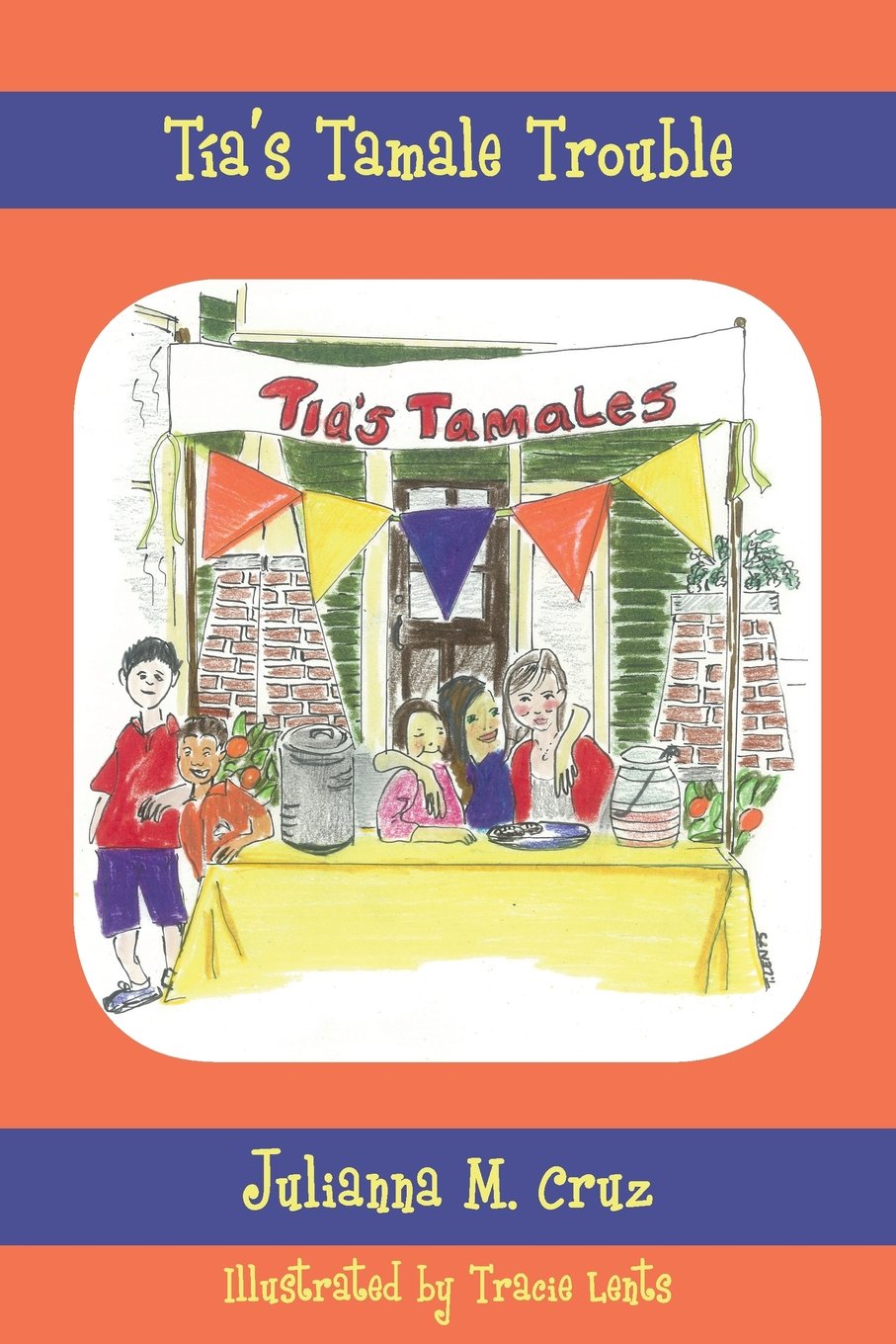
I am truly grateful for the fountain of support that I always receive from family and friends. It was so uplifting to see so many familiar, smiling faces at the launch of my newest book, Tia’s Tamale Trouble. Amazingly, we sold all of the books that we brought to the event. If you didn’t get a chance to get your copy, and you would like one for yourself, or to give as a gift, please leave a comment and send me an email so we can arrange to get you a signed copy. It was so fun to watch my friend, and fellow Bryant teacher, Tracie Lents (the illustrator) tell all the children about the process of illustrating our book. They also were very excited to take part in her turkey coloring contest. Winners will be displayed in the Taylor Gallery at the Riverside Art Museum—and the winner will also receive a signed copy of Tia’s Tamale Trouble. I can’t wait to find out who the winner is!

Thanks and Praises must also be given to everyone at the Inlandia Institute that helped bring my vision to reality—I couldn’t have done it without you! A special thanks to Cati and Larry who carried my baby all the way through to the end. I know and appreciate how hard you worked.

71dcb6c-krl

Thank you! Thank you! Thank you!


Julianna M. Cruz is a teacher, a author, and an Inlandian.

For All Those Who Ask, What *is* Inlandia? by Cati Porter

Once again we are approaching that time of year when we give thanks for friends and family, take stock of what we have accomplished, and express appreciation for all those who have made it possible. So, thank you—we are all Inlandia.

A question I get asked regularly is, what is Inlandia? We have now been writing these columns for well over a year, and I don’t think we have ever addressed that directly here. Sure, you can make out who we are by the patchwork of topics covered here; what you see is what Inlandia is and does: many voices, all hailing from Inland Southern California, celebrating the region. But on the heels of what has been a banner week for Inlandia, I thought I would try to explain it in a little more detail.

The Inlandia Institute was established in 2007 as a partnership between the City of Riverside and Heyday, our co-publisher, after the publication of the anthology Inlandia: A Literary Journey through California’s Inland Empire. The idea was to found a literary and cultural center here in the Inland Empire that focused on the writers and readers of the region. Soon after, Inlandia moved into our own office, incorporating in 2009, and in 2012 Inlandia was granted non-profit status as a 501(c)(3).

Inlandia has five core programs: Children’s Creative Literacy, Adult Literary Professional Development, Publications—both with our co-publisher Heyday as well as a locally-produced independent imprint, Free Public Literary Events, and the Inlandia Literary Laureate. What does this translate to? Just this past year, Inlandia has:

– Served over 2000 children, including at-risk youth through The Women Wonder Writers program of the DA’s office, resulting in a collection of written work and a public reading and discussion; and in programs in Title 1 schools like Fremont Elementary, where we held a book discussion and gave all 200 fifth-graders and sixth-graders a free copy of Gayle Brandeis’ young adult novel, My Life with the Lincolns, thanks to a generous Rotary sponsorship.

– Served over 2400 adults through public outreach events like Celebrate Mount Rubidoux and the Mayor’s Celebration for Arts & Innovation, and by hosting free monthly author events during ArtsWalk at the Riverside Public Library, and writing workshops throughout Riverside and San Bernardino Counties, including a Family Legacy Writing Workshop at the Goeske Senior Center.

– Published: No Easy Way, the story of the integration of Riverside schools, by Arthur L. Littleworth, a chapter integral to Riverside history; Vital Signs by Inlandia Literary Laureate Juan Delgado and Tom McGovern, which went on to win an American Book Award from the Before Columbus Foundation; and the Orangelandia anthology, which contains the fruit of Riverside’s citrus heritage. And launching this week, a new children’s chapter book, Tia’s Tamale Trouble, by Inlandia author and educator Julianna Maya Cruz.

Inlandia also undertakes special projects from time to time, like “Making Waves in Inlandia,” which chronicles the stories of the women’s environmental movement through oral histories and a very cool interactive component on our website, including a map of all the spaces saved by local environmental activists, and video interviews.

We also have two other interactive features on our website—a map that details the location of every Inland Empire site mentioned in our flagship Inlandia anthology (which, regrettably, is currently out of print—but we are working on a second edition! More about that in a future post). And, just this past week, with the publication of No Easy Way, we launched an interactive timeline, “Time Travel through Riverside’s School Integration History.”

Further, after the first of the year, we will be launching a six-part series of monthly public civic discussion forums featuring esteemed panelists and partner organizations, with the kickoff event at UCR’s Culver Center on January 31, 2015, at 1 pm.

One of the sound bites associated with Inlandia is, “celebrating the region in word, image, and sound.”

Planned projects include a new Adopt-a-School program which will bring literary arts education, taught by professionals in the field, to area schools; a Native American Voices conference at the Dorothy Ramon Center in Banning, featuring and celebrating indigenous peoples; a writing workshop at the Ontario Museum of History and Art celebrating black aviators in February, in honor of Black History Month. Not to mention our usual monthly Arts Walk series at the downtown Riverside Public Library and the free writing workshops held in six different cities throughout the region.

We are supported wholly through the generous donations of our members, supporters, and through grant funding from organizations like the City of Riverside, the Riverside Arts Council, the E. Rhodes and Leona B. Carpenter Foundation, and Cal Humanities. But like any arts organization, we are constantly thinking of creative ways we can ensure continued funding while also making it fun for contributors. Last week, we participated in the county-wide Give BIG day of giving, and to all of those who helped us meet our goals, thank you!

We are also currently in the midst of a book fair fundraiser sponsored by Barnes & Noble. If you missed the kickoff event on Saturday November 22, which featured readings by notable locals Larry Eby, Isabel Flores, Stephanie Barbe Hammer, Julianna Cruz, and a flurry of contributors to the Orangelandia anthology, know that you can still participate through the end of the week by shopping online or in store (any Barnes & Noble anywhere, as long as you have Inlandia’s code: 11484482), through Black Friday. So if like most people at this time of year you are beginning to think about holiday gifts, give a gift to Inlandia when you shop at Barnes & Noble this Thanksgiving week.

From all of us at Inlandia, we give thanks for you this week, and every week, throughout the year.

Tomás Rivera and Civic Morality by Carlos Cortes

When Tomás Rivera became chancellor of the University of California, Riverside, in 1979, he accepted both the honor and the burden of being a first: first Chicano chancellor, first minority chancellor, and youngest chancellor in the history of the University of California system.

Tomás earned plaudits nationwide for his accomplishments. Partly because of his firstness, he also became the object of national attention, serving on numerous prestigious boards, committees, and task forces, including the Los Angeles Times Board of Directors. Moreover, beyond his administrative firstness, Tomás also garnered literary acclaim for such works as his novel (. . . and the Earth Did Not Devour Him) and his poetry (“The Searchers”).

But, as inevitable for most firsts, Tomás also bore a heavy burden, the relentless pressure of knowing he was constantly being viewed as a representative, maybe even the embodiment, of his people. He lived continuously with the terrible knowledge that any of his perceived missteps or failings would be interpreted by some as definitive proof of the inadequacy of Mexican Americans. That burden ultimately contributed to his death from a heart attack in 1984.

In the aftermath of his death, Tomás reemerged as a Latino symbol. His name soon adorned schools, centers, prizes, and, of course, UCR’s Tomás Rivera Library. Yet, while Tomás attained enormous symbolic importance, his real life administrative accomplishments received little serious assessment for nearly three decades. Then, in the fall, 2013, Professor Tiffany López, holder of UCR’s Tomás Rivera Endowed Chair, organized a seminar dedicated to analyzing Tomás’ speeches and writings concerning the role of higher education administrators, particularly Latino administrative leaders.

From that careful and astute examination of those documents, the seminar identified one core idea that illuminated the trajectory of Tomás’ administrative life: his commitment to the concept of civic morality. Again and again Tomás proclaimed that college administrators should lead with the goal of spreading and inculcating a sense of civic morality, a basis for fostering a more equitable society.

During the seminar, Tiffany invited me, as Tomás’ friend and a 26-year UCR History professor, to spend a couple of hours with her students, sharing my observations of and experiences with Tomás. Later Tiffany asked me if I would participate in a theatrical piece she was developing based on the seminar. Intrigued by the idea of a seminar on college administration being transformed into a theatrical presentation, I said yes. Yet the cynic in me knew that an administration-oriented seminar could not possibly become effective theatre. How wrong I was!

While the expression “blown away” has become a cliché, that is precisely how I felt when I participated in the first performance of “Civic Morality” on December 3, 2013, before a packed house at UCR’s Culver Center of the Arts. Riversiders will get another opportunity to see how wrong I was when Tiffany’s theatrical presentation, “Civic Morality,” about the life of Tomás Rivera, is presented again at 7 pm on Wednesday, November 12, at the César Chávez Community Center Auditorium in Bobby Bonds Park, 2060 University Avenue.

“Civic Morality” is as difficult to describe as it is impossible to resist. Both Tiffany’s opening narrative, which sketches the contours of Tomás’ administrative career and the evolution of his thinking, and the students’ heartfelt reflections on their engagement with Tomás’ writings provide drama and insight into the life and ideas of this remarkable man. When the students had finished their parts and I made my way to the Culver stage to share my recollections of Tomás, I felt both the joy of personal revelation and the onus of responsibility of helping bring Tomás to life for an audience of many who had never known him.

Tomás Rivera was far more than a first; he was unique. With his sly smile and mischievous sense of humor, he could charm. A man of virtually limitless personal generosity, he gave himself to everyone almost without reservation. He and his wife, Concha, hosted more than 200 events each year in the Chancellor’s residence. No matter how imposing the administrative pressures, Tomás would somehow make time to answer a local teacher’s request to speak to her elementary school class. An academic leader who never forgot his farm laboring family roots, he always remained part of the people.

The life of Tomás Rivera, particularly those last five sometimes joyous, sometimes tumultuous, always challenging UCR years, provide the stuff of tragedy and triumph. “Civic Morality,” which captures both the tragedy of Tomás’ death and the triumphant timelessness of his vision, serves as a moving tribute to a good and, in some respects, great man. I hope that many of you will be able to join us on November 12 for this dramatic exploration of a life worth recalling, cherishing, and emulating.

Other Desert Mothers: Ruth Nolan at Riverside Art Museum by Lisa Henry

Tonight, Friday November 7, Salt+Spice will present author, educator, and environmental activist Ruth Nolan, who will launch her latest collection of poetry, Other Desert Mothers, at the Riverside Art Museum. A wine and cheese reception will begin at 6:30pm with the reading set to begin at 7:00pm.

Ruth Nolan knows more than a few things about the desert, and about motherhood. A native of the Inland Empire and a current resident of Palm Desert, Nolan has spent countless hours hiking, camping, writing, parenting, grandparenting and firefighting in the vast, dry landscapes of California’s deserts. Her new collection of poetry, Other Desert Mothers (Old Woman Mountains Press, 2014), is a meditation on her unique desert journey. The book will be released in November and Nolan will celebrate the publication with a reading and reception at Riverside Art Museum Friday November 7 at 6:30pm.

A long-time desert dweller, Nolan has experienced adolescence, motherhood, and now grandmotherhood in and around the Mojave Desert.

“My parents moved us to a very remote area of the Mojave Desert when I was 13, from Rialto, CA.” It was a difficult transition for Nolan. She readily admits, “I was in shock at the vast contrast between the Inland Empire and desert, but instantly smitten and blown away by the beauty and power of the desert. I’ve been pinned down by the desert, both literally and metaphorically, since then.”

As single mother and a professor of English and Creative Writing at College of the Desert, both Nolan’s personal identity and professional career have been forged in the vast and surreal landscape, which she describes as “my #1 geography.” This place is “a sort of complete dreamscape, an altered state that both inspires, elates, and intimidates me. I have only to step into the desert on a hike or start a road trip across its vast, empty roads, and I feel that sense of unbroken dreamscape again.”

Nolan has fully embraced her hometown as rich and fertile ground where she can write, study and teach. An avid desert advocate and conservationist, she lectures widely on literature of the desert, and has taught desert-based writing workshops for the Desert Institute at Joshua Tree National Park. Among her many notable publications are No Place for a Puritan (Heyday Books/Inlandia, 2009), an impressive anthology highlighting the diverse literature of California’s deserts, Orangelandia: The Literature of Inland Citrus (Inlandia, 2014) and New California Writing, 2011 (Heyday).

“For me, the Mojave hasn’t been a wasteland; nor, even as it’s been discovered by artists more recently as a highly desirable location for a more refined, esoteric aesthetic. The Mojave Desert is a free-flowing experience of consciousness and geography. It’s a place of life, a place of people—however far apart, a place of sustenance and nurturing and enlightenment.”


Lisa Henry teaches at San Bernardino Valley College and is founder of Salt+Spice, a community-based arts organization.