Alexa Mergen

Autobiography


In plexiglass pillboxes I collect samples of wind, align them
on spice shelves above the kitchen sink, a measure of my life.
The story goes I emerged in an Iowa blizzard. Snap
a chip of deep night, label: December 1967. DC in ’73. Into this box
set wet wind—summer thundershower. Augusts in Nevada. Dry
bluster off sand mark ’76 ’77, ’78 through ’84. I’m a teenager at Rehobeth, up
at dawn after bonfires and beer. Into this box a handful of Atlantic salt air
misted by porpoise exhalation. 1985. Berkeley fog bubbles the specimen label.
Wedding day, August 19, 1992. Forest fires scorch Volcano. A sooty sample.
Two years later we sail San Francisco Bay in a gale, scoop an armful of pulsing Pacific wind off the jib for my collection. Let’s include Kay’s final breath in ’97—it fell out as a sputter— and the bilious tempest of my brother who hollers stay away!
Label also whispered breeze of reconciliation.
Add delight’s gusts, desire’s zephyr, siroccos of ceaseless seeking. Doldrums. Then,
tickles of air on undersides of poppy petals. This a log of landscape felt as it touches other things. Everything a breath. All atmosphere cooled and warmed in layers.


The first month Alexa Mergen lived in Yucca Valley she learned how to respect rattlesnakes and scorpions and how to recognize a dust devil. She grew up in Washington, DC, making visits to family in the Great Basin and Mojave. She now lives in Sacramento. In addition to poetry, Alexa writes fiction and essays. Her favorite places are windy ones–mountaintops, deserts, and seashores.

Dana Jacoby

Oasis

          When I heard about the housesitting job in Twentynine Palms I thought it was the perfect opportunity for flight disguised as paying work. The desert was just far enough from L.A. and sufficiently exotic to be the vacation I tried to convince my daughter it would be. Ruby gave me that bottled-under-pressure look of hers when I told her. She said nothing but the holes in the long division worksheet she brought home from school, the spots where she had erased her mistakes clean through the paper, told me enough: she did not want to spend three weeks in a strange house in the Mojave Desert.
         I remained stubbornly sanguine about it all, weaving what I hoped were beguiling tales of a place I’d never been before. I told her we could relax, watch movies, play board games, visit places like Joshua Tree and the Mara Oasis. Those were the results when I googled Twentynine Palms attractions, that and pictures of “spas” that looked more like cement bunkers in the mountains of Afghanistan. The house was palatial by local standards, a Spanish-style ranch at the end of a cul-de-sac with a pool and hot tub and high stucco walls punctuated by intricate wrought iron panels which allowed the occupants a view without compromising privacy. I jumped on the whole idea of it like a bird on a worm.
         I was between semesters of a PhD program in biomedical physics at UCLA. My dissertation lurked like a mugger around the next corner. Truth told I hadn’t been happy in the program for a while. Every hour I spent in the lab, in my office, sitting with my colleagues reviewing undergrad papers or unwinding over a beer, I wore an inscrutable professional mask. I was just pretending to belong there. In company over the past few months I’d become aware of a tic that bore down on me with the exactitude of God’s accusing finger: a pallid cough just before I spoke about something of which I should have confidence but of which I had absolutely none. And I was coughing constantly. These days every cough felt like the tell of a failing con.
         Ruby and I met the homeowners face-to-face for the first time on the day they embarked on their vacation. Trina, my research assistant, had contacted the couple, who were friends of her parents, to vouch for me when I had expressed interest in the job. Up until my knock on their door, communication had been carried out via email with one phone call to deepen the trust factor. Mick and ‘Renda (her real name was Brenda but apparently the effort of pronouncing the blend of b and r had worn her down) were a robust couple devoid of ornamentation. They matched the denuded wisteria vines I had seen above their patio when we approached the house:  gnarled and monochromatic.
         “Come on in!” Mick said immediately upon opening the door.
         He was wearing one of those Mexican wedding shirts with white-on-white embroidery and little peekaboo holes up each side of the buttons to provide decorative ventilation. His skin was tanned and wrinkled and quite slick with moisturizer.  ‘Renda was much smaller though sinewy and firmly planted where she stood. I would not have wanted to arm wrestle her, even though I topped her by a good ten inches. She had very blond hair that hung on both sides of her face in a wispy curtain. The initial effect was the equivalent of Mick’s shirt, brown skin against white, a startling contrast.
         ‘Renda gestured us in. Ruby, who had insisted on wearing her earbuds, even though I had confiscated her music player, preceded me through the door.
         “Wow, is that your dog?” my daughter asked.
         Mick and ‘Renda and I turned in unison, following Ruby’s gaze to a painting on the opposite wall. It was of a brown Chihuahua with huge eyes sitting on a chair, its head in a quizzical tilt. The popped eyes gazed in sweet bafflement at something unseen.  I noticed a tiny dog collar hanging from one corner of the picture frame.
         “That” said ‘Renda, “is Habbi, our baby.”
         “Where is she? Can I see her?”
         “He,” Mick corrected. “He’s gone now. A rattler got him when he was out back of the house just before Christmas. Poor little guy.” Mick looked over at ‘Renda who matched his sad eyes.
         “Mom?” Ruby jerked her head toward me, her anxiety immediately communicated to all of us.
         “Oh, don’t be afraid of the critters here, little one!” Mick boomed. “Habbi was wandering where he shouldn’t have, out beyond the walls. The worst you’ll see on the patio out back are little brown desert lizards.”
         I offered Ruby a reassuring shoulder squeeze though I knew that Mick’s innocent attempt at minimizing the area’s predatory dangers had effectively ensured Ruby would not venture beyond the hacienda’s walls during our stay.
         After Mick and ‘Renda’s taxi fetched them, I went out to grab our suitcases from the car. We weren’t in a neighborhood as much as a settlement on the edge of semi-civilization. There were just four homes around the U of the cul-de-sac with an expanse of scrub and hardpan, the open range as it were, between and beyond them. The architecture had no rhyme or reason in that ad hoc way of places purchased more for the land than for any structure built on it. The landscape was as flat as a cement pad in all directions with the occasional yucca tree and its attendant scrub and sage brush scattered here and there.
         As I hefted the bags out of the trunk I noticed someone leaning against the house next door which was nothing more than a ramshackle double-wide mobile home located a hundred feet away. The guy was smoking in the shade of a window awning. He was tall and skeletal, wearing basketball shorts and a tight sleeveless t-shirt. He watched me, one foot hiked up behind him with the heel wedged in an indent in the aluminum siding.  I gave him a little wave and smile to be neighborly.  He squinted as if the sun had suddenly blinded him. He flicked his cigarette butt into the no-man’s land of scrub and sand between his place and mine. His upraised arm lingered in the air for a moment and he opened his palm in the classic “stop” gesture of a traffic cop. Then he turned and went inside.  Odd. Ruby sticking to the compound might not be such a bad thing after all.

         Ruby walked onto the patio with one of her jumbo PBJs in hand, sat opposite me on the other chaise lounge, and our ritual began. She pillared her feet on the painted cement, knees slightly apart, and held the sandwich in both hands, bending over it solemnly as if it was a communion wafer.
         I observed my eleven-year-old daughter from behind the Ray-Bans I paid too much for, the ones I chose because my eyes were completely obscured.  First, the jam overflow was licked from all four sides. Her tongue ran the trough between the bread slices with the industry and vigor of a backhoe. Next came her scan of every corner of the bread before selecting one to bite down upon—even though she bit down on the same corner. Upper right. Always.
         The swamp cooler, fighting a battle with the morning heat, rumbled on the roof of what I had taken to calling “our hacienda”.  I turned my face away, toward the gentle gurgle of the pool filter, and tried to extricate its sound from the factory churn of the cooler. I looked again at the outdoor thermometer hanging above the potted bougainvillea:  98 degrees Fahrenheit. It was 9:00 am.
         When I was a kid my mother kept a wall calendar. She marked it with specific events. Not birthdays or appointments but little house maintenance concerns like the expiration date of the milk and projected to-do’s such as when the toilet paper roll would need replacing. The calendar was her organizational bible, referred to daily, each task lined out as it was completed. But if an event did not occur or was missed—if the toilet paper roll had to be replaced before that date on the calendar—she would have an anxiety implosion. Sometimes it was dramatic and loud. But mostly she’d be quieter, sometimes just sitting alone at the kitchen table muttering things to herself like, “How am I supposed to function like this?”  Mom had other triggers, the normal whitewater patches in the currents of life. But when she hit them, they usually pulled her under.
         I spent much of my childhood on sentry duty, watching her for signs of an approaching episode. I can’t describe the relief I felt upon realizing I had been spared the mental incarceration my mother suffered all those years. Then I had Ruby. It had not occurred to me that it might simply skip a generation.

         Ruby’s initial anxiety at being in a place with such potentially deadly surroundings lasted just a few days. Or it seemed that way to me. As was our custom she was very good at hiding things and I was very good at collusion. But now she had a purpose and was needed.  She rose to the occasion. There were some chickens to feed, a couple of Persian cats that hung out indoors but still needed frequent grooming and an ancient yellow Pomeranian named Bear that Ruby took to immediately. Ruby was the zookeeper and dedicated companion for this menagerie and spent long hours each day tending them.  The structured days accumulated into a semblance of comfort for her. She would sometimes hum to herself as she went about her work, little tunes I couldn’t quite make out though I tried.
         Meanwhile the initial release of escape burned off me imperceptibly like sunscreen until one day I went to bed feeling parenthetical and disconnected and woke up the next with the same condition. And the days lined up in similar fashion after that. The novel and journal articles I had brought languished on the night table. My laptop sat closed in its case unless I zoned out with some TV show. I had a leaden center in me that kept me glued to the chaise on the patio, occasionally moving into the sun and back to the shade again. I watched the middle and far distance of the scrubby, monochromatic desert beyond our walls. It reposed like some mighty personage, surrounding our little compound with unassailable supremacy. You didn’t question; you didn’t push back. And yet it was always out there. You just narrowed your eyes against what was, kept quiet, and laid low.
         Ruby slowly took on my chores without asking. She did them all: the watering, tidying the house, even the food preparation. Anything she prepared, I ate, including PBJs. We sat in silence, side-by-side on the patio like two cruise line passengers who didn’t know each other.
         I did venture out the front door to grab mail and the paper. Often the next-door neighbor would be outside in front of his sagging double-wide. Sometimes he’d be sitting on a lawn chair smoking, sometimes monitoring a hose that snaked through his front window and ended in the gutter. He watched me but we never exchanged greetings. One morning he had hooked the hose to the outside water spigot and was holding it high over his head, giving himself a driveway shower, fully dressed. I suspected his mobile home was quite possibly a meth lab.
         It was on the day of our Mara Oasis visit that the dog escaped.  I was hoping to go early enough so the heat wouldn’t cook us. I got Ruby up and helped her with the animals so we could leave before 9 am. Ruby insisted on bringing the dog along. I couldn’t say no to my daughter after all the work she had shouldered during our stay.  Ruby leashed him and headed out before I could grab my purse. Maybe the leash clasp was broken but whatever the cause, the dog shot away from Ruby as soon as he was outside and, in a flash, Ruby was standing on the front stoop alone, the unattached leash still in her hand.
         “Mom!” she wailed. “Bear ran away!”
         I ran outside and knelt down to face my sobbing daughter. “Calm down, Ruby. Take a breath. Where did he go?”
         “Out there!” She gestured wildly.  “The snakes’ll get him!”
         We ran together toward the perimeter of the property and around the back. There was no sign of the dog.
         “Bear! Bear!” Ruby called out. Her nose was running like a spigot. She stumbled against me and coughed on her phlegm. I stopped and caught her by her shoulders, endeavoring to make eye contact with her once more.
         “Sweetie, look at me. Please calm down. It will help to find Bear if you can try to be calm.”
         Ruby’s face tightened in a tense pucker as she tried to stop crying.  I had gone into an automatic state of calm, my demeanor modeling what I wanted to draw out of Ruby. After years of mothering my mom and then Ruby, disengaging from the chaos came easily. Yet I thought how useless it would be to conduct a lost dog search in this place of few telephone poles on which to post flyers. Even then, who was crazy enough to walk the streets here with the daytime temps in the triple digits? And then there was Habbi and what had happened to him. But I pushed those thoughts away.
         “I’m going to grab some dog treats from the house and then we’ll hop in the car and look for him, OK?”
         Ruby nodded, her eyes moving back and forth across the landscape. “We’ll find him, honey. You just go to the car and wait for me.”
         But when I came out a minute later with the bag of doggie bon bons Ruby had disappeared as well. Maybe she had seen the dog and gone after him. I ran around the side yard and the back of the house–nothing but the god-damned desert, empty and endless. Ruby’s panic became my panic, too. What was out there, sleeping in the shade or down a burrow, ready to pounce? And knowing my daughter was somewhere she feared, I could feel my calm disintegrating.
         When I came around the front of the house I stopped and viewed the empty street and listened to my panting breath, willing myself to slow my breathing down as I sometimes coached Ruby to do. But there was a dread rising up from my gut, jutting through the adrenalin vibrating through my body.
         “Ruby!” My voice wasn’t mine; yet it sounded familiar. It had a keening desperation to it, a head-in-hand powerlessness.
         I turned to run back in the house, uncertain what I’d do once I got there, when I saw my daughter emerging from behind the neighbor’s house, the dog in her arms, walking toward me. The neighbor was following her, the leash in his hand.
         “Oh my God, Ruby! I was calling you!” I cried as I ran to her.
         “The man found Bear. He caught him. We need a new leash, mom.”
         Up close, the grey stubble on his chin and cheeks and the creases around his mouth made him look much older than he had seemed from across the way.
         “I was telling your little girl I heard the dog snuffling around in the rat food I put out back,” the neighbor said. “I caught him by the collar before he could bolt.”
         Ruby had been out of my sight with the neighbor for just a minute or two but the neighbor went from rescuer to suspect in my mind. I looked for signs of anything out of the ordinary. Ruby seemed fine though her cheeks were flushed and she had a bit of a fevered glint in her eye, the kind she got when she was starting to get overwhelmed. I just wanted to get her out of the heat and settled down.
         “Mom, he has a bunch of rock piles in his yard. They’re really cool!”
         “Oh?” I put my hand protectively on her head and she shook me off. “Mom, can we stay home and swim instead of going out? Bear’s thirsty and it’s hot.”
         “Sure. Can you take the dog inside and give him some water? I’ll be there in a minute.”
         “Thanks for catching him,” I said to the neighbor when Ruby had gone inside. “I don’t know how we could have found him if he’d gotten any farther.”
         “I’m not surprised he made a run for it when he got the first chance. They never take that dog out. And this leash is shot.” He held it up. His arms were bruised and discolored as if he had been in a bar fight—or maybe he was shooting up the stuff he manufactured. But there was something else in him now that I was standing feet from him; he had a shyness that was almost childlike. His head tilted quizzically and his eyes had a guileless, soft earnestness that struck me as more wistful than threatening.
         Despite my protestations he insisted it would just take a couple of minutes to fix the leash.
         “It would be good to take that dog out for a proper walk.”
         I followed him to the toolshed behind his place. His yard was strewn with an array of junk–broken clay and plastic pots, old machinery, a rusting bicycle. Yet here and there amongst the discards were the rock piles that Ruby had mentioned, extraordinary sculpture-like pillars of stone–one precariously balanced upon another–in uncanny and seemingly impossibly haphazard configurations. Some piles were a foot or so high, others taller than Ruby.  Rocks that were no bigger than a marble held ones that were as large as watermelons. The variety of shapes at crazy angles, all reaching up tenuously yet holding fast had the overall effect of a playful and fantastical stone garden. I thought of the illustrations of enchanted woods in a fairy tale book I had pored over for hours on end as a child. Logic said  they should topple rather than stand. Yet there they stood. The overall effect was a place that contained erratic, hopeful magic and rusting detritus.
         “Those rock piles—are they glued together?”
         “No.”
         “But how can you do that? They can’t stay that way for long.”
         “They actually want to balance, stones do. But that don’t mean they can’t fall. They do–all the time. Like this.”
         He pushed the nearest pile over with a flick of his wrist, hitting a smaller stone that had been anchoring a number of larger ones above it. The entire tower crashed to the ground, joining the rest of the clutter strewn around. I couldn’t help gasping at the suddenness of the destruction of something so whimsical, so hopeful somehow. I looked at him to see what was in his face, destroying something like that. He was peering up and squinting into the sun then he turned to me. He was smiling.
         “It’s kinda like karma; you just start all over again.”

         My mother took me to a therapist when I was thirteen. She said she was worried about me, that I seemed depressed and angry. Even at that age I knew there was nothing wrong with me that getting through to the other side of puberty wouldn’t cure. But when mom insisted on the visit to Dr. Trefeldt’s office, I was terrified that I might have contracted what my mother suffered from. Everything my mother did was excruciatingly shameful to me and had been for a while. She was certifiably crazy, as far as I was concerned. The irony that she wanted me to see a shrink was not lost on me.
         Dr. Trefeldt was a middle-aged woman in an oversized sweater and peasant skirt. She invited me to sit in an armchair. As she positioned herself in a loveseat opposite me her skirt billowed like a picture book shepherdess. There were dolls and stuffed animals on a play table and a sand tray with plastic shovels and cups and funnels.  I wondered if she saw grown-ups and if they played with the toys. I spent the session, the only one I ever had with her, pouring sand from one cup to another, answering questions like did I ever want to hurt myself.  My mother told me later that Dr. Trefeldt informed her I was a normal adolescent with, if anything, a heightened sense of anxiety. “There’s no reason for that,” my mother said to me. “You’re a kid. Be a kid.”
         When I got pregnant at eighteen, I succeeded in my plan to escape my mother and what I believed by then was the toxic pull of her. Ruby’s father and I were married and moved into our own place. But my rage didn’t end until Ruby was born and I saw in her the child that I had been. I vowed to be someone my daughter wouldn’t be repelled by. But then the marriage went sour. I felt, after my divorce, that my life had come full circle: I was a single mom barely getting by, in a low-grade state of fear over whether we would be OK.
         I brought Ruby occasionally to visit her grandmother but I wouldn’t let the two of them be alone together for any length of time. I was sentry still, protecting my daughter from the unpredictable behavior I had experienced in my mother. One evening while we were visiting her sad apartment, I walked into the kitchen and there was mom, sitting on the kitchen chair, slumping forward with her chin in her hand. Ruby, six years old, was standing behind her on tiptoe crooning a nonsense song while she braided my mother’s hair. I could never recall being that loving with my mother when I was a girl and I watched with some envy as my little daughter cosseted my mother.  They looked so serene, like nothing bad had ever happened or ever would. Maybe there had been times like that between my mother and me but I just didn’t have a memory of it. The memories, bad and good, had been blown away in the backdraft of my flight from home, all of it caught up and dispersed like the smoke of a snuffed candle. A year later my mother was dead of a stroke and I was able to fund a house for us and my education with her life insurance. My sense of new possibilities burgeoned into an industriousness and productivity, a careening energy that swept Ruby and me into our new life. Yet not long after that Ruby began insisting that the doors be left open at a certain tilt and that the chair in her room face a particular direction or she couldn’t sleep.  Sometimes I wondered if her grandmother’s very embrace had had contagion in it.

         The last full day at our hacienda dawned like all the ones before it, hot and dry and dull. But there was something else, a faint scorched scent to the still air. A plume of mud-colored smoke lifted from the horizon. There was a fire somewhere. In spite of the blasted environment of the Mojave there apparently was still just enough vegetation to combust. Ruby had fed the animals, brushed both cats and played a game of catch with Bear but she was anxious, I could tell. I watched from my place on the chaise while she watered the container plants. Ruby went to the gate and stretched up on her toes, looking at the smoke as if its origin could be seen as easily as an errant cup might be fetched from the back of a cupboard.
         “How far away do you think that fire is from us, mom?”
         “Don’t know. Check the TV.” Ruby’s question resonated with one that bubbled up from the mush of my thoughts. I had a sudden need to know, too, where before I hadn’t cared.
         “Would you do that, sweetie? Check the TV and find out?”
         While Ruby was inside the house I got up and walked to the gate where my daughter had stood to scan the horizon. God, the desert was ugly. I took off my sunglasses and squinted out at the unobstructed view, the open expanse of sand and tumbleweed and the occasional lonely fence. With all that space and nothing in it, why a fence? To keep in, to keep out, what? It seemed so pointless.
I looked at the smoke column. I could not see it move at all if I looked very, very hard at it. But if I turned away from it and looked back, there it was, changed. The smoke on the horizon was flattening and broadening into a mushroom top and the cloudy folds of it were smudging to a brown fog.
         When I retreated inside the house I saw Ruby sitting on the floor before the TV. Bear lounged on her lap, panting as he got his ears scratched. On the screen a reporter in a windbreaker finished his news report from the field, projecting an expression of concerned professional detachment. The camera cut to a couple of firefighters in yellow suits and helmets, spraying an outbuilding. The news anchor appeared on the screen and announced a quick break in the report but assured that they were keeping an eye on the developing situation. He advised to stay tuned. Ruby turned and looked up at me. The dog’s little rib cage heaved rhythmically, a contented bellows under her caresses.
         “Mom? We’re going to be OK, aren’t we . . .”
         I heard something in Ruby’s voice for the first time. It was not fear. And it hit me that she wasn’t asking me a question. She was speaking something that didn’t as much need to be reaffirmed as declared. It was like her quiet, self-contained songs, the ones she sang to herself when I wondered where she was in her head, songs that I tried so hard to identify. What I heard from Ruby sitting in this house of strangers surrounded by so much that was unknown, was certainty—a limitless faith—in all the good that was bound to come.

Dana Jacoby grew up in Orange County. Her father was a steel salesman whose territory included the Inland Empire. She will always associate Twenty-Nine Palms with the garnet jars of prickly pear jelly he brought home from his sales trips. A life and executive coach and organization development consultant, she has an MA in Psychology from Sonoma State University. Sonoma County Wine Country has been home since 1975. Her work has appeared in ByLine.

Elisha Holt

The Clear Light

The vibration of molecules
in the empty space
of a bucket
in a cupboard below the kitchen sink.
Air spills over the brim
as drops of water leak from a loose pipe.
Each drop of water, a red thought,
a needle in the arm
of a man dying in a white room.
In between each drop, the air is unstirred.
In between each thought, the man rests in stillness.

Geology

For Virginia Holt Martin and Walt Pratt

In ’97
a flash flood
washed out a section of the highway
in Red Rock Canyon,
collapsed the pavement
into a flow of grey slush.

I thought of this
as I waited in the doctor’s office.
Stared at the vermillion carpet
as she told me the cancer
had spread to my bones.

I thought of how the wind
scoured a hole straight through
the red center of a boulder.
The photo I took of my son
smiling back at me through that rock window
the time we went hiking
along those oxidized sandstone cliffs.

I thought of my wife,
the slight dimple in her left cheek,
her hair that shined like obsidian
and flowed down the full length of her back.

I couldn’t bring myself to tell them,
said I feel like going to the beach.
I stood knee deep in the water with my boy,
let a handful of sand slip through my fingers
to be pulled into the receding tide.
I told him, flesh is like this.

Waking

You wake in the night remembering
that your father is dead,
as if the news was only just told
to you. And in the absence of light you vision
a flat land, Joshua trees
like contorted shadows,
tumbleweed giving texture to the dark.
You remember the time when you met in the hall
and his surprise when he stood
within a foot of you. You knew then
that he could no longer see.
And now you
are going blind,
each year growing dimmer, the past
growing brighter in your mind
until waking in the night to visions
of what’s passed
is all that sight has left to you.

Elisha Holt is a poet of the desert’s edge. He was born in San Bernardino and raised in the rural Palo Verde Valley, on the Colorado River, in the shadow of the Big Maria Mountains. He currently resides in the cresting winds of Hesperia, California. His work is forthcoming in Badlands and The Pacific Review.

Kathleen Alcala

La Otra

                    She had never thought of herself as “la otra,” the Other Woman. All she knew was that she had loved him better, and it was only natural that he should leave his fiance and marry her.
                    “But that was a long time ago,” she would laugh when telling this story to Sirena, who seemed fascinated by her abuela’s past. “Back when the animals could talk.”
                    Anita had not been looking for a husband in those days. She already had too many men in her life – five brothers and a widowed father. She cooked and washed from dawn to night, then got up and did it all over again. When the house burned down along with half of the town, it was a relief – there was nothing to wash and nothing to cook. They had no choice but to join up with all the other refugees and walk north.
                    Some of the men stayed to fight. Her oldest brother, Manuel, stayed with his sweetheart’s family to defend what was left of the town. But the soldiers did not want the town. They wanted more soldiers. Both sides. Men and boys were compelled, forced, conscripted and dragooned, so that brother ended up fighting brother, father fighting son, uncles fighting nephews. It was all mixed up. The crops were deliberately destroyed three years in a row, and finally they had eaten all the seed corn. Better to walk north, where the Americanos were paying good wages.
                    “Bring extra money, and bring extra shoes,” was the advise Celso, who led the travellers out of town, gave to them. People brought a lot more than that, but most of it was lost along the way.
                    The first place of any size the family came to was Guanajuato. Los Guanejuatensos were not known for their friendliness to outsiders. In fact, the last time people had come to try to make themselves at home, they were herded into the granary and set on fire. This was in colonial times, when the Spanish rule had become unbearable. But the worker who had carried a stone on his back to deflect the bullets so he could set fire to the door of the granary was still a hero, El Pípila. No one remembered his name, just his pock-marked face.
                    Introspective people, used to the darkness of the mines and the insulated feel of their valley, they did not speak unless spoken to, offer information or help unless asked directly. It was here that the bedraggled Don Barcielego dragged his exhausted sons and daughter. By then one of Anita’s brothers had developed an infection. He had cut his foot on the walk, and the laceration refused to close and had begun to smell. The other members of the group said to leave him, that he would die of gangrene. Out of desperation, as she saw her brother get sicker and sicker, and her father begin to despair, Anita inquired if there was a curandera who could help him. A gnarled old woman, for Anita was at the age when she assumed gnarled people were old, came and cleaned the wound and wrapped it in a poultice made of local herbs. Then she suggested that the family pray to el Señor de Villa Seca for intervention on behalf of the ailing brother. No one in the family had heard of this Señor, but they prayed, nevertheless.
                    Whether it was the prayers or the poultice, the brother got well. Her father would not allow Anita to go to the church of Villa Seca to give thanks, but when he understood that it was in the mountains going north, he agreed that they could all stop on their way to El Paso del Norte. The brother who had been cured, who had a gift, painted a retablo of thanks on a broken piece of wood and left it there.
                    Sirena’s abuela claimed not to remember much more of the trip. She said she remembered going into towns and begging people for water. She remembered falling asleep while walking, she was so tired. She remembered hiding for hours in the ruins of a building, all of them trying not to make a sound, while armed men – soldiers or policemen, were around. She remembered a town up north that seemed almost deserted, until they found an old woman who showed them a fountain with water. How good it felt to wash her hands and face, her hair, let the water run down the front of her dress. Thirty-eight people started the trek, and thirty-two finished it. Anita remembered that one person died in his sleep, and they found him cold the next morning. Another began to panic during a time of needed silence, and was held down until he no longer moved. She does not remember what happened to the others. Maybe they stayed in some of the towns along the way, or died, or were carried away by a flock of birds.
                    Sirena watched her grandmother intently when she told these stories, trying to glean from her grandmother’s face and hands what she did not understand in words. When Anita got to the part where she described the missing as possibly being carried away to heaven by a flock of birds, the little girl’s mouth would go slack with amazement. When she got older, that expression was replaced by a sorrowful smile, the trademark expression of the Diamantes.
                    By the time they crossed the border, they were all as thin as could be – puro hueso – all bone, Anita would say, holding her fingers a quarter inch apart to show how thin they were. Not like I am now, she would add, patting her comfortable belly fat.
                    Sirena would just laugh at her tiny grandmother. Next to her, Sirena felt large and awkward. It was hard to imagine her abuela surviving the long walk, the hunger and thirst, the uncertainty of death waiting for them at every crossroads. But Anita Diamante greeted every dawn with the cautious optimism of a survivor, throwing water on her front steps and sweeping her walkway down to the sidewalk. Let the day bring what it will, she seemed to say – God willing, it will find me here.
                    As hard as it was to get her grandmother to tell the story of their migration to the United States, it was even harder to get her to tell about how she met her husband, and took him away from his intended. She did not tell this story to Sirena until she was older – old enough to know better, old enough to have gained the sorrowful smile.

                    After all their travails, and several false starts, Anita’s family went to work picking oranges in Southern California. They settled with other refugees on ground too high and rocky to cultivate, but close enough to meet the foreman at dawn in the orange groves. Anita’s father and brothers built a one room stone house with a cooking shed on the back. Anita asked for one window on the wall facing the street that was a little larger than the small, high windows on the other walls. This had a piece of tin that fitted inside of it to close, fastened by a piece of wire. In summer, Anita took down this shutter and sold aguas frescas to people walking by. Later, she began to sell a few canned goods, and after a year she had a small store where the orange pickers and farmworkers could obtain a few goods near their homes from someone who spoke Spanish. By extending a little credit until payday, “Anita’s Tiendita” became popular in the neighborhood.
                    At first, her father was nervous about Anita being home alone all day with cash in the house, but she assured him that she knew how to handle things. He got her a dog they named Flojo, after the mayor of their town in Mexico. When her father saw how much she was able to make, enough to save, he allowed her to handle all of the finances for the family. Anita was the only one who could make change and count to ten in English. On Fridays, she was accompanied to the bank by her four brothers, where the American clerk nervously counted the small bills and wrote out a receipt under their watchful eyes.
                    With all of this brotherly love and attention, Anita despaired that she would ever marry and start a household of her own.
                    Whenever her grandmother got to this part, Sirena grew pensive, staring deep into the pattern on the carpet to hide the feelings she knew would show in her eyes.
                    “Pero ya, mira,” her abuela would say, drawing Sirena’s attention back to the story. “One day a car drove up and parked across the road. A Model A. A man was driving, and he got out to help a girl from the other side. She was well-dressed, but she acted completely helpless in climbing out of the car.”
                    Here her grandmother would flop her arms, like a rag doll. “But once she got on her feet, she grabbed the man’s arm like he was the big prize. I could tell that he was embarrassed by her, and I knew then that I would make a better life mate than she!”
                    Abuela would cackle in remembrance at this point, and Sirena would smile in anticipation of the rest of the story.
                    “It turns out that they had come to our place in the woods to tell us about hygiene. Hygiene! As though, just because we were poor, we didn’t know how to take baths. She talked to the women, and he talked to the men. But she was so embarrassed, and used such funny language, that no one knew what she was talking about!”
                    “You went to the talk?”
                    “Seguro que si! Of course! I had to find out what was going on.”
                    Sirena squirmed in delight. Anita was fully animated now.
                    “Afterwards, I went up to that man – and I could see that he was handsome, too – and I told him that I could do a better job than that girl.
                    “He gave me this look – the way you look at something to see if it has more value than it appears to have.
                    “You think so? He said. All right then. Here is the address of the next talk. It is right next door here, in Corona. And here are some of the brochures that we give people. Take them home and read them, and if you still think you can do a better job, come to the next talk.
                    “And so I started going around with him, giving the talks. I was from the people, so I knew how to talk to them in their own language. And then we got married.”
                    Sirena knew there had to be more to the story than that. Like how her father let her go. And what happened to the store, and all her brothers. But she also knew that was all she was going to get out of her grandmother today.
                    “Bueno,” said her grandmother. “Let’s go to Pancha’s for lunch.” Pancha’s Comida Mexicana was about two blocks away, on a busy commercial street, but they could walk. And her grandmother could order anything she wanted, on the menu or not, and get it. Sirena never turned down a chance to go to Pancha’s with her grandmother. Pancha’s offered tamales and hope.
                    The scuffed linoleum floor, a fake brick design, held six small tables and a counter. Sirena’s grandmother favored a table by the window, not too far from the kitchen. Settled with sugary hot teas, Sirena ventured another question.
                    “What was he like?”
                    “Your abuelo?”
                    “Yes.”
                    Anita looked outside to the parking lot, as though she could see the Model A on the hot pavement. “Like I said, he was very handsome. You have seen his pictures. He was handsome enough that people admired him when we passed.”
                    “They weren’t admiring you, too?” Sirena teased.
                    “No, of course not. You see how I am. Maybe they admired me for having him.” Anita held up her hand as though she had something important to say.
                    “But he was also kind. He was very good to me, not like some other men were to their wives.” She stirred her tea for a minute. “In those days, no one said anything if a man hit his wife. It was his right.”
                    “Some people still think so,” said Sirena.
                    “I know. But it is not right. At least now, women can ask for help, can get protection if they need to. Then, if a woman had children to protect, her parents might take her back, at least for awhile.”
                    “Otherwise?”
                    Anita looked at her sharply. “Otherwise, she put up with it, or had to survive on her own.”
                    Panchita came out from behind the counter to greet her grandmother. “Como estas, Anita?”
                    “Bien, bien gracias. Recuerdas mi nieta, Sirena?”
                    Sirena nodded and smiled. “Hola,” she said.
                    The older ladies had a ritual they had to go through each time, no matter how many times Sirena had been introduced. They would continue to discuss her as though she was not present.
                    “Ay si, La Sirena! Que guapa esta! Como movie star!”
                    “Si como no. Y su hermano tambien.”
                    “De veras que si? Y donde viva?”
                    “En otro estado, muy lejos. Ya tiene esposa.”
                    “Y Sirena? ya tiene novio?”
                    “No, todavia no,” said Sirena, jumping into the conversation before her grandmother could say anything.
                    “Bueno,” said Panchita. “No se importa. No te preocupas.”
                    After taking their order, Panchita left the table, and Anita could see that Sirena was, nevertheless, distressed.
                    “Take your time,” she said, patting her hand. “You will know when the right one comes along.”
                    “I hope so,” said Sirena.
                    “In the meantime, enjoy being young. Don’t let viejas tell you what to do.”
                    Sirena smiled, her first genuine smile all day. “I won’t,” she said, “except for you.”
                    “Andale,” said her grandmother, laughing, as their steaming bowls of menudo arrived. Both stopped talking to eat.
                    When she had her fill, Sirena’s grandmother sat back in her chair, patting her mouth with her paper napkin. “She tried to have me killed, you know.”
                    “Who?”
                    “La muchacha. La otra.”
                    “The fiancee? The one you took him away from?”
                    “Yes. But that is another story.”

Kathleen Alcala was born in Compton and grew up in San Bernardino, California. She is the author of five books of fiction and nonfiction, and teaches Creative Writing at the Northwest Institute of Literary Arts. “La Otra” is part of a collection of stories about Sirena Diamond. More at http://www.kathleenalcala.com

Michael Tesauro

Where I Want to Be

         In regards to the old house, this is the outcome: a trial. And the fighting is really just over the skeleton of what we lost in the Old Waterman Canyon Fire. In regards to Danielle, my wife, well she passed not long before our house was taken up. She’s passed and I’ve accepted it. I’ve accepted that she will not be here with me, nor with the children. This is one of things you hear about when it happens to other people. When you hear about those people, they seem to recover okay. That’s the place I want to be in.
         Even so, I need to say that I’ve been without her some seven months and two weeks. Three days too. At first, it was like she was still in the house, in the pictures, in the closet, everywhere. When the flames took the house, it was like the smoke pillars that hung around the neighborhood were even more of a reminder. But unlike the smoke, Danielle has a mother and a father. Well maybe God or whoever is the parent of the fire, but that’s something existential. I don’t know. Her parents, the Walnuts, like the nut they’re involved in my business.
         See, the property was in Danielle’s name. We put it in her name because I had some bad credit.
         The land is almost an acre, it seems bigger now though. The remains of the house were torn down by way of city ordinance. Now it just looks like a simple plot of earth and it’s spotted with glass and bricks. To me though, Danielle lives there. It’s like she’s alive in the place that was her garden, or where my stoop was. I know she isn’t, but I remember all of it when I see the bare land.
         When I tried to tell the kids how I felt, they thought it was weird. They need their distance, their own mourning time.
         The Walnut’s never did enjoy the thought of me being the sole link to their grandchildren after Danielle passed. My hands are rough and thick and the thought them being laid on her in an intimate way drove them into some dark place. I heard it once she, Mrs. Walnut or Bette as she liked to be called, was on the phone with some other blue hair and she described the level of sickness she felt knowing I was connected to her name. For Christ’s sake, me and her girl were married. We had kids and I put a ring on my wife’s finger and provided for her. I’ve always been faithful to Danielle, even now. She’s the best thing that ever happened to me.
         The Walnuts started sniffing around my affairs right after Danielle died. They knew the property was in her name. They knew we didn’t believe in wills. She didn’t. I don’t really care about these formal things one way or another. But they knew it wasn’t willed and they came after the property. Even the fire was an afterthought.
         So one day I wake up to this knocking at the front door. I had been at my new place for a time.
         But not long enough for someone to know where I am, minus the kids of course. They’re doing their own versions of family life in other cities and other states. I get out of bed, pop my knees, slap my belly and the like. These morning rituals make life feel worth it. After that I dress and go to the door. I see this kid on the other side. He’s just this weasel of a kid, maybe 20 and something years old. He’s fiddling around on the stoop. I can feel my chest.
         I open the door up.
         “Yeah?” I say.
         “Mr. Harkin?” says the kid. “David Harkin?”
         “Yeah,” I say. “What is it?”
         He hands me a thick envelope. The manila folder feels like a sack of stones in my arms. It’s easier heavy, or I’m just that old.
         “What is this,” I say.
         The kid looks at me strange. His mouth is open like he’s going to say something important. He doesn’t. He steps away from me then turns and walks. He’s gone.
         I push the door close and shut away the world. I open this envelope. It’s the papers, a lawsuit for the property. I don’t know what good they’re taking the land would do, but they’re making their bed with the decision.
         There are a few lawyers I know from around. Calling them seems like the course my life is going down. I met one when Danielle died. She was a friend of hers from college. Maybe I’ll call her Jan, Joan, something like that. I have her number written down somewhere. I’m going to try and fight this.
         That much is obvious to me. If I win, seeing that look on the Walnuts’ faces would be worth it enough.
         If they are going to wage some war against me, I’m going to at least fight back. Even if I spend the insurance money on a lawyer, that’s enough. Danielle would like knowing I fought back. Maybe I’ll go look at the property later. I hope I find her there in the emptiness. I always do.
         When I toss the folder on the wood table, it doesn’t make a sound. There is a heavy stillness to the room. With Danielle gone, the open space around me always seems bigger. She would deal with one of these types of crisis with a small smile, a quiet wave of her hand. Do I start to think about this as a crisis? There aren’t really big or wild things at stake like most crises. The kids are safe, which would make this an uncrisis to Danielle. She cared about them more than almost anything.
         I shuffle around for my phone. The damn thing is stuck in my pocket like it always is. I need to sit. The cool of the wood chair feels real in my hand. The cool of the flat wood table feels smooth against my forearms. Hell, if this is what my life has come to I’m going to sit with my head in my hands until some sort of sunshine comes around.
         Danielle used to come and find me like this after a sour day. She would come on the palms of her feet, not making a noise as she floated across the kitchen floor. Her hands would reach deep past the skin of my neck like she was plucking some chord inside my chest. Her touch was something mystic to me. The kids never got it when I tried to talk about it after she passed. They didn’t get the dimness of her touch. She had soft hands, Ted would say. But that’s all he could really articulate on the matter.
         I sit at the table for a time, until something settles inside of me. I’m going to call my buddy Frank. He had a pretty sharp lawyer after he was served. I don’t think calling any of these women lawyers Danielle knew would do a thing for me one way or another. I don’t want to sit through those interactions with them as they let whatever knowledge of me by way of Danielle run through their heads.
          She talked to this Jan woman when her and I lived apart for a few months. How would I go about that situation? A phone call? Email? Christ, I don’t even know how to use the computer my kids bought me. A handwritten letter maybe. I’m at something of a loss on this.

         I wake up sometime past midnight. Or at least I think it’s around midnight. That’s a good, solid time to base my days around. Midnights and afternoons. These time markers have a definite passing to them. When I’m awake, the space between midnight and afternoon grows like a stretch of desert. I’m up hours and hours before noon. At times, the sun hasn’t woken up either. I fall asleep hours and hours after midnight.
         I see Danielle in my dream. Usually, I throw myself up in a fit of nerves because I think she will be next to me. She never is. This time though, I see her in our old house. The place burns around her and the walls slip away. She wears the silk of her blouse she had on the first time we made love.
          Something peels off her She calls out to me with her eyes. Maybe this was why I woke up. I know this image will never be.
         My knees do this noise when I slip on my robe. It’s like I’m on autopilot, already walking out to the kitchen. I’m at the table. The manila folder is slight to the touch. There is conclusiveness in its smooth coating, like I’ve already lost the case.
          The papers have my name in bold. Their name in bold.
          Danielle’s name in bold isn’t the part that gets to me. It’s the fact they call her my exwife.
          Like hell we weren’t married when she died. We weren’t even separate or fighting. Those last years together were like the first years of dating. Maybe she knew she was going to go?
         They say cancer consumes the body’s right to live. Like a fire, it eats at the cells. Attacks the cells, like the doctor said. Danielle’s was of the pancreas. I didn’t even know what it was before hers was attacked by the cancer. Consumed. She went fast, like our house did. Three months. The doctors called that a fast one. A fast one, like it’s some kind of object that can be measured by speed.
         Sometimes I want to go that fast—
          But the house went in three or so hours. That’s what the neighbor told me. He watched from his own house, which was relieved of it’s own significant portions. Somehow, I see the neighbors lasting garage and my lone chimney as a testament to our collective failures as men. We were all unprepared.
          I sign the papers, which say I will be in court on a certain day at a certain time. I’ll give those old bastards hell. If they think I’ll lay down and eat from their palms they’ve got another thing coming.
          My heart stretches inside my chest. I should get some air.
         I call Frank. We agree to meet at the cantina. He’s got his own legal things going on. Maybe he can give me insight.
          In my room, I throw on some fresh jeans, a sweater. My boots are dirty, but they were a gift from Danielle. I pull them on too. Danielle looks at me from the full size mirror. There she is, pinned up in the right corner by a strip of tape. She is in her best dress, the floral one with a green hue. I called it her Macy’s dress. She bought it after seeing it on display. I took this picture on a Wednesday. I took this picture outside the Asian fish market on Tippecanoe. This is my favorite picture of her.
          She looks at me, like she does when I see her in my dreams. Or if she comes to me when I’m driving. She can tell me I’m getting fat from her spot in the right corner of the mirror. She doesn’t have to lie. If I can see what I’m becoming, she can see it too.
          The kids say I should take the picture down. Maybe put it in a frame or some place nice.
          Never.
          I’m out the door and heading to see Frank. I feel like he’s going to be depressed like he always is. I drive to see him anyway. The last conversation I had was with the kid who served me papers. It’s good to talk to people, Danielle would tell me, be social. I can’t be your everything, she would say, one day I’ll be gone.
          How did she know?
          I used to take this drive often. Before Danielle, when Frank and I drove this way every Friday night. We would park on top of Little Mountain Drive and look at the stars, chuck beer off the cliff, and yell into the emptiness. Now I just see smog and the lingering smoke that covers up everything beautiful.
          The sky looks like a empty movie screen tonight, like a bright and interesting picture will pop up soon. I imagine I’m going to see giant faces with huge white mouths as I get further away from the smog.
          I’ve been in the house too long.
          My engine is on its last feet. This parking lot is on its last feet. A drink will put this business with the Walnuts to sleep for now. Everything feels like it’s on it’s last feet.
          Inside the bar is the usual old business. Beer, sweat smell, bar hags, and Frank Allen sitting in his stool at the far right corner. He has Bob Seger going on the radio.
          “Old man,” Frank says. “You’re looking terrible.”
          “Hey asshole,” I say.
          He gives me a beer. He places his hand on my shoulder. His grip has gotten weak. I can feel each dance and calloused mark like the roadmap of his decline. But still, it’s something familiar. These hands held my drunken body above porcelain toilets. This man held up my wife’s casket at the funeral.
          “Good to see you,” he says.
          “Likewise.”
          “The kids?” he says.
          “Ted lives with his girlfriend,” I say. “Shawna’s at college.”
          The kids are 19 and 21 respectively. Frank knows the boy better than he does Shawna. But then again, most of us know him better than we know Shawna.
          Shawna, my eldest, moved out when she was 17. She had the notion that she was something of a woman already. Danielle left Shawna with too many of her likenesses. I hadn’t heard from her in over a year before Danielle’s passing. I know they talked everyday, but that talk was secret a part of the female mystery.
          “Ever getting things straight with Shawna?’ Frank asks.
          “Not really,” I say. When my wife passed away, Shawna’s mother passed away, and the only thing that kept us in relations is gone.
          “Shame,” he says. “She was a dear.”
          “She’s somewhere else in life.”
Danielle was the reason Shawna and I forced ourselves to make conversation. She is my child, my first born, and I love her but it’s always been hard. Danielle knew how she worked. She did her best to get us to talk before Shawna moved out. Mostly it was Shawns and I throwing dumb words at a wall, hoping they would stick like some game show segment.           Mostly though, our conversations fell flat.
          Game over.
          I try not to indulge Frank in my issues with Shawna’s lifestyle and ‘roommate’. He pushes the subject once or twice more before letting it slip away. This is the bar life. This is what a widower is expected to do when the other things he is expected to do falls apart.
          Frank and I are at the cantina late. We’re at the end of a growing day, a day without end or finality. We drink to problems neither of us knows how to face like men. We drink to bad backs and slipped disks. A few more beers and we go outside for a piss. We move through the wooden door like it’s the last threshold to the real world. My beer runs through me. In the open, under the smoke bombed sky, San Bernardino slips from me.

         If the sun were anyone, it would be a dictator on a morning like this. Frank and I wake up in the back of his truck, laying on top of a spread out sleeping bag. Last night went to shit if my headache is correct. But hell, I can do this as a retired widower. Bette Walnut said retiring at 55 is unsavory. I’d like to see her live a little. Danielle’s life insurance plan takes care of the kids just fine. I’m sitting on a nice pot of retirement pension, savings and some money I have in the stocks. But the land will be the last I hear from Bette. Whatever the outcome, win or lose, that woman and her husband can go be of the dirt for all I care.
          “Get up,” Frank says. “We’ve got goat’s stomach to eat.”
          “Have your menudo,” I say. “I need coffee.”
          Frank pulls himself up to the side panel of the truck bed. He perches over a toolbox and lights his cigarette.
          “Honestly Dave,” Frank says. “How are you doing this?”
          “Doing what?” I say. My stomach does aerobics.
          “Dealing.”
          “I just am.”
          “You haven’t cried,” Frank says. “You haven’t cracked. What’s going on?”
          “I’m dealing as it goes.”
          “She’s gone Dave,” he says. “You have to accept it.”
          “I do,” I say. ‘I accept it more than you know.”
          “You don’t say her name out loud?” he says, his voice touching around me. His face is bright.
          His mouth is open for the words to speed out.
          Frank doesn’t talk at breakfast. He laps up his tripa and hominy like it’s the food of the gods.
          These Aztec painting on the wall look real and terrifying. Him and I and our girls would come to this Mexican joint after drinking and dancing when we were young. We would meet up in the morning for breakfast the next day. I guess Frank can settle his two cents as much the kids can about Danielle’s passing. Him and his Lynn knew Danielle just as long as me.
          Frank looks at me and says, “Don’t shine me off Dave.”
          “Okay.”
          “You don’t talk,” he says.
          “What the hell am I doing now?”
          “Since it happened,” he says. “You talk less and less. Let it out man. Lynn worries about you. Your kids worry about you. Hell, I worry.”
          “I’m fine.”
          He stirs his soup around, the red flakes of chili powder float to the top. He is quiet and I am quiet. We finish our meal in silence. I decide to call this lawyer woman that Danielle knew and get legal advice. Winning the land won’t bring my losses back from the dead. It won’t be the Lazarus act, but it’s something. I could use a little something these days. That’s where I want to be.

Michael Tesauro is Masters of Fine Arts Candidate living in Redlands, CA. He calls the Inland Empire his home. This, and the heat, are his inspiration. Other works can be found in the Wilderness House Review, the Sand Canyon Review, Carnival Literary Magazine, and quarterafter journal.

Michael Singh

A Sun Setting as it Rises

I was cradled by earthquakes.

Nursed by the arms
of California,
she put me to rest
on terrain
shaking with
life:

each bloody pulse
fueled a heart
birthing from
poppies in
an unabashed
full bloom,
blush fading
with the rise
of the moon.

Her soil shifts
beneath us
constantly,
tiny shivers
pulsate a
lone heartbeat
wailing its
pale affections
throughout every
pore contained
in the decaying
cracks of concrete
(here we dance
on the edge
of our collapse
knowing the ground
bellows a
warning song
as it vibrates
beneath us).

Our toes are worn
from the steps
as we try to
remember
our moves
try to forget
we were cradled
by earthquakes,
four walls
oscillating
within each box
protecting uneasy
feet gliding
us towards
the horizon;

A sun setting as it rises.

Michael V. Singh is a recent graduate in Theatre from the University of California, Riverside. During his undergraduate studies Michael was involved in numerous productions, the most recent being poet Juan Felipe Herrera’s play  Stars of Juarez where he served as both a stage manager and (later) as an actor. He has previously been published in Literary Laundry.

Yelizaveta Renfro

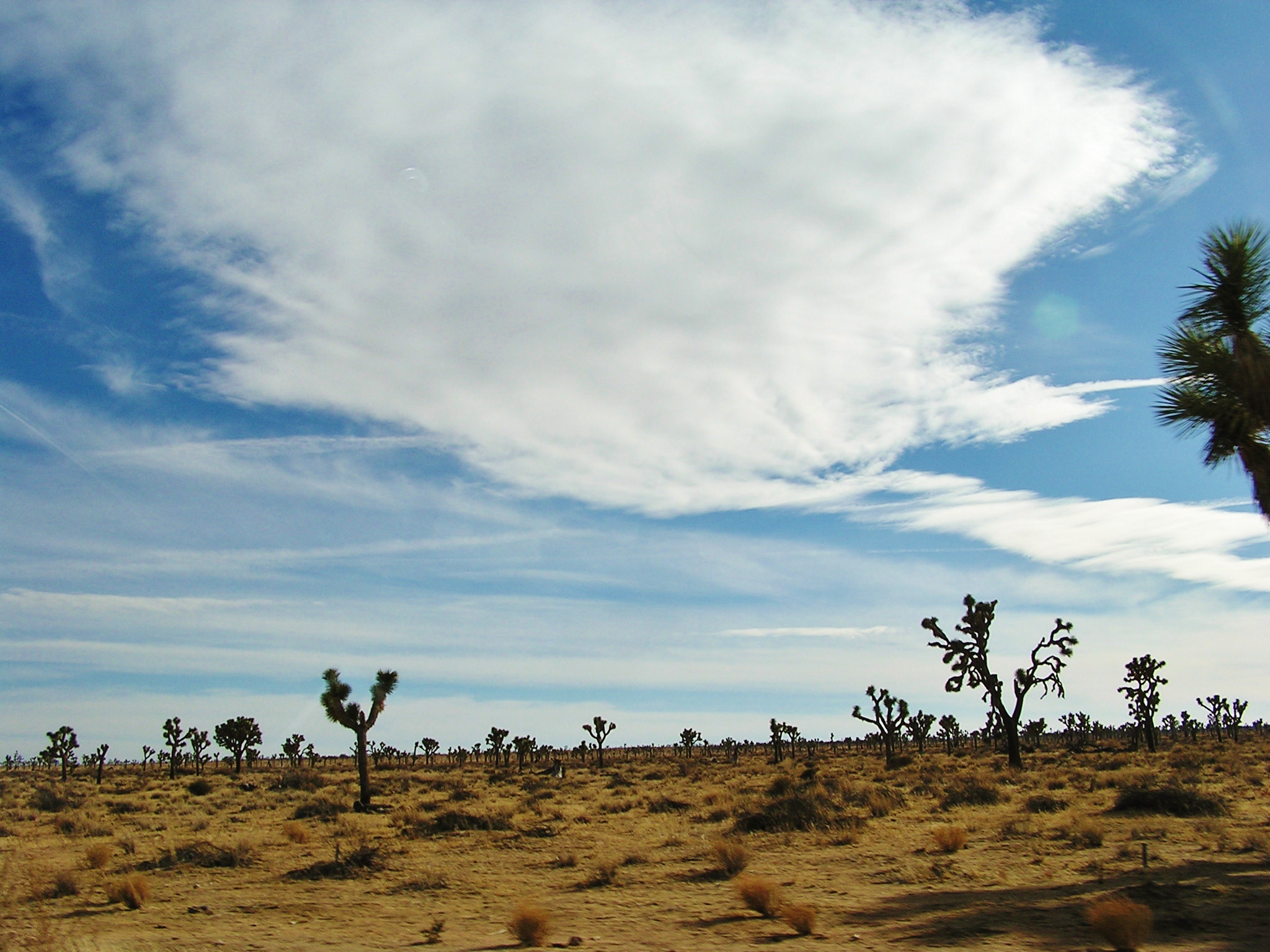
Joshua Tree in Winter by Yelizaveta Renfro

A writer and photographer, Yelizaveta P. Renfro’s work has appeared in Glimmer Train Stories, North American Review, Colorado Review, Alaska Quarterly Review, South Dakota Review, Witness, Reader’s Digest, Blue Mesa Review, and in newspapers. Her short story collection, A Catalogue of Everything in the World, is available from Black Lawrence Press. She lived in Riverside for more than twenty years and has since lived in Virginia, Nebraska, and Connecticut. View more of her work here & here.

William Cass

           It was his wife’s turn to get up with their disabled infant son, so Nick got to sleep in.  By the time he crawled out of bed that Saturday, it was almost 8:00.  His wife had fed the baby, given him the new med the neurologist was having them try, and made scones.  Nick had time to shower, dress, eat, and read the sports page before he walked over to Tom’s condo to help him move.
          Tom was just lowering the ramp on the rental truck when Nick walked up.  He’d brought a couple scones wrapped in a napkin and he handed them to Tom.
          “Molly made those,” Nick said.
           His big friend smiled.  “Great.  I haven’t had a chance to eat.  And I don’t think I have a thing in the place to offer you.  Maybe some cheese or an old carton of milk.”
          Nick shook his head.  “I ate.”  He looked inside the empty truck.  “Do we start with the beds?”
          “I guess.”  Tom had his mouth full, chewing.  “These are delicious.  I really appreciate you guys.”
          Behind Tom, the morning haze was beginning to burn off.  Nick could see the San Bernadino Mountains peeking through it.  He said, “Let’s get started, boss.”

          By the time Tom’s mother came by later, they’d moved out most of the big things and had filled half the truck.  They were both wet with sweat.
          “Don’t hug me, either of you,” she said.
          She was carrying a six-pack of bottled iced tea and some empty cardboard boxes stacked inside of one another.  Nick marveled, as he always did, at how full of life Tom’s mom seemed at sixty years old.
          She put the boxes on the kitchen floor and the iced tea in the refrigerator.  “Get one of those when you want.  So, do you care how I pack this kitchen, or will you leave me to my own devices?”  She climbed onto a stepstool and opened a small, high cupboard.  Tom kissed her elbow.  She asked, “Where’s Kelley?”
          “At the house,” Tom said.  “Setting up for the yard sale that supposed to start at noon.  To sell most of this stuff.  We’ll never make it.”
          “If you get busy you might,” she said, dropping a plastic colander into one of the boxes.

          They took out another two loads out to the truck before Tom’s dad showed up.  He was rearranging things in the back of the truck when they came outside.
          He glanced at them and said, “Don’t you want to set something on this couch?  Didn’t anyone ever show you how to maximize a load?”
          “Hello, Tom Sawyer,” Tom said.
          “Help me move this bureau onto the couch.”
          “I don’t think we have enough stuff for it to matter,” Tom told him.
          His dad was already struggling with the bureau.  “Are you going to help me here, or not?”
          Tom hopped up onto the truck, took an end of the bureau, and they put it on the couch.
          “There,” his dad said, slapping his palms together.  He stepped to the back of the truck and shook Nick’s hand.  “Hello, Nick.  At least Tom had sense enough to hire good help.”
          Tom rolled his eyes at Nick.  He said, “Mom’s packing the kitchen.”
          “Oh, is your mother here?  That’s good.  I need to mention something to her.  Tell her I’ll commandeer things here in the back of the truck for a while, then come in and talk to her.”
          On the way back inside, Tom shook his head and mumbled to himself.
          “Is it kind of weird for you to be together with them?” Nick asked.
          “Nah.  We’re with both of them sometimes for family birthdays and stuff like that.  Get-togethers when friends overlap.  Redlands isn’t such a big town.  Hell, they’ve been divorced almost twenty years.”
          Tom’s mother had finished in the kitchen and moved into his bedroom closet.  She’d turned classical music on his nightstand clock radio.
          “Dad’s here,” Tom told her.
          “Yippee.  That and Christmas to look forward to in the same year.  Speak of the devil.”  She took a framed black and white photograph out of box on the closet floor and blew dust off of it.  The picture was an old one of Tom’s mother and father, she in a long dress, he in his naval uniform, arm in arm on a dock.  “Your dad’s about to go off to sea here,” she said.  “You weren’t even born.”
          “I used to hang that in my room as a kid,” Tom said.
          “I remember.”
          Nick looked away from them and out the window at Tom’s old widow neighbor who was standing on her balcony studying the moving truck with disdain.  She wore a flowered housedress and was scratching the Chihuahua she held behind the ears.
          “There are two separate collages of pictures from different old girlfriends in that box, too,” Nick heard Tom’s mother say.  “Do you want them?”
          “Throw a towel or something over them, and I’ll stick them away somewhere where Kelley won’t find them.”
          “Want these old letters?”
          “Cover them, too,” Tom said.  “Come on, Nick.  Let’s try to take apart that entertainment center.”
          It took a while to disassemble, to label all the nuts and bolts and masking tape them together in groups.  Tom’s dad held the front door for them as they were carrying the boards to the truck.
          He asked, “Anything to drink in there?”
          “Mom brought some iced tea.  It’s in the fridge.”
          “No beer or anything?”
          “Sorry.”
          They started down the walk and Nick heard Tom mutter, “Help yourself, jackass.”
          His dad was leaning against the bedroom windowsill talking to Tom’s mother when they came back inside.  Tom and Nick worked on filling boxes in the guest room.
          “So,” Tom’s dad said, “I think this would be a prudent time to sell.  Mortgage rates are just starting to rise, and the building has appreciated back as much as it’s going to in this market.”  He thought, “Or as close as it’s going to get.  Anyway, I want to get my money out of it.”
          “All right,” Tom’s mother said.  “I’ll talk it over with Mike.”
          “Talk it over with him promptly.  If necessary, I can meet with you both to hammer out the details.”
          The phone rang and Tom’s mother answered it.  “It’s Kelley, Tom.”
          “Hell,” Tom said, looking at his watch.  It was 12:30.  “Tell her we’re on our way.  This is the last load.  We can run the nickel and dime stuff up later in the back of the car.  I have to return the rental truck by two, anyway.”
          “Let me make sure you arrange that stuff correctly,” his dad said.
          He followed them out.  They finished packing the back of the truck, lowered the grate, and pulled in the ramp.
          “I’ve got a television on the passenger seat of the cab,” Tom told his dad.  “Can Nick ride over with you?”
          “Fine.  I’ve got to make a quick stop on the way.  We’ll see you there.”
          “All right.  I’ll go say good-bye to Mom.”
          His dad opened the doors on his white BMW.  He yelled after Tom, “Tell her to call me.”
          They got inside.  Nick looked over at Tom’s dad: an older version of Tom.  The same large limbs, the same thick bulk, the same clear blue-gray eyes, the same firm jaw, the same troubled mouth.  The interior of the car was immaculate and the exterior looked as if it had been recently detailed.  Tom’s dad started the engine and air conditioner, and they drove off.
          They drove the few streets to the 10, but after they got on the 210 going north, Tom’s dad turned off suddenly into a Mexican neighborhood just to the east.  The buildings were mostly stucco apartments and old bungalows with iron fencing over the windows.
          “I just have to run in quick and collect some rent,” Tom’s dad told him.  “It was supposed to have come this week, but it never came.”
          They stopped at a traffic light.  Across the street, a Catholic church was holding a rummage sale in the parking lot.  Even with the windows closed, Nick could smell carne asada on the barbeques under the eucalyptus trees.
          “Mexicans are generally good tenants,” Tom’s dad said.  “Generally they pay their rent regularly and keep their places clean.  But from time to time, I’ve got to come by and make a call.”
          “How often?”
          Tom’s dad shrugged.  “Maybe once a week.  Tom’s step-mom and I own five buildings over here, so that’s not bad.”
          “Have you ever had to evict someone?”
          “Only once.  And that was a white girl.  Strung out on crystal meth.  Had a little kid, maybe two.”  Tom’s dad shook his head.  “Awful.”
          They stopped near the crest of a sloping street and parked diagonally in front of a schoolyard.
          Tom’s dad said, “This will only take a minute.”
          Nick got out of the car with him, but stayed leaning against his door.  He watched Tom’s dad as he strode off across the street and into the courtyard of a green two-storied apartment complex that looked as it might have eight units in its L-shape.  A security system sign sat askew in the crushed rock between the building and the sidewalk.  Aluminum foil covered the inside of the windows on the apartment that fronted the street.
          Nick watched Tom’s dad disappear up some stairs, heard a doorbell ring, then Tom’s dad’s loud voice:  “Is your husband here?  Your esposo?”
          A woman’s voice spoke rapidly in Spanish.  A baby cried.
          Tom’s dad said, “Did he give you some money for me?  Dinero?  Rent?  From last two weeks?”
          The woman began speaking quickly again.  A man working on his car in the driveway of the bungalow next door looked up from under the hood towards the voices.  A Spanish radio station played scratchily on the boom box that sat on a trashcan lid.  He pushed a straw hat back on his head.
          Nick walked off up the street where he couldn’t hear them.  He stood and watched two tall Black teenaged boys on the playground shooting baskets at a rim without a net.  They had their T-shirts tucked into the backs of their baggy shorts, no socks, high tops, and moved unhurriedly with a combination of grace and disinterest. Watching them, Nick found himself thinking of the fifteen years that had passed since he’d graduated from college and began teaching in the migrant farmworking school in the Salinas Valley.  He thought of the time he’d spent in the Native fishing village in Alaska and at the rural project in Guatemala.  He thought about the summer he spent caretakinging the retirement home of a family friend in the town where he now lived, and how he’d met his wife that summer, and of how they’d both found jobs there teaching children of the nearly rich, and of how far his life had strayed from where he’d expected it to lead.  And then their son was born with his problems.  He guessed now he was trying to believe in new expectations.
          Then he considered the night before when Tom and he had stopped for a couple of beers after their run and Tom had confessed that he wasn’t sure about Kelley, but that he was more sure than he’d been about the others.  It was a variation on the same monologue, generally offered six or eight months into one of Tom’s relationships, when he was ready to move on.  Only this one was different.  Tom had been with Kelley for almost two years and they’d just bought a house together.  The wriggle room wasn’t the same.
          Nick pulled at his shirt in the heat and thought that life could have a fair amount to do with variations of truth that you either had to face or mitigate or manage in some manner to avoid.  A shiver passed over him and he saw that the two basketball players had stopped and were staring at him.  One held the ball against his hip; the other had his arms folded across his chest.  Nick nodded to them and walked back down the hill to the car.
          Tom’s father was just trotting across the street.  “Let’s get the hell out of here,” he told Nick.
          They backed out.  The man working on his car and the basketball players watched them as they passed.
          “Tonight, tomorrow, who the hell knows,” Tom’s dad said.  “Miercoles.”
          “That’s Wednesday,” Nick said.
          “I know what the hell it means.  It means another visit next week and the damn husband will be at his brother’s again in Tijuana and we’ll start all over again.  I’m sick of it.”
          They drove the rest of the way to Tom’s new place in silence.

          The truck was already backed into the driveway.  Tom and Kelley had begun to unload it.  They’d put some things along one side of the garage and others out on the front lawn.  Nick looked up at the house.  Tom and Kelley had spent two weeks painting it taupe with white trim, another two weeks putting in a rose trellis and scattering potted plants everywhere, and it still looked like the one-story, 60’s, suburban track home it was.  The items on the lawn were spread on sheets: two twin beds and mattresses, some boxes of plates and dishes, a few small knick-knacks of onyx and terracota.
          Kelley walked up to him as he got out of the car with her arms outstretched.  She was from Boston where her parents owned an Italian restaurant and had somehow found her way west.  She and Tom taught in the same elementary school near the community hospital.  Nick hugged her and said, “The place looks great.”
          “Thanks for helping,” she said.  She patted him on the shoulder.  Her eyes looked as if she might have been crying.  “I bought some hamburgers and fries.  They’re in the microwave.  There’s beer and pop, too.”
          “Okay,” Nick told her.
          He hopped up into the back of the truck and helped Tom with the dining room table, which was low, black, and designed along Oriental lines.
          “We better put this in the garage for now,” he said.  “My dad gave it to me.  He and my mom used to have it.  After he leaves, we’ll move it outside and sell it.”
          “Whatever you say,” Nick told him.
          Tom’s dad came into the garage from the house carrying a can of beer.  “Careful with that,” he said.  “I got that in Guam.”
           They finished unloading in less than an hour.  They moved most of the things from Tom’s old bedroom into a small room Kelley had painted light brown and decorated as his “den”.  A few things were already in there: his chair, a small TV, and mounted photographs of Tom accepting his water polo All-American plaque, Kelley smiling from a lounge chair at the beach, Tom and Kelley at his father’s retirement dinner as a pilot.  She’d covered his duck-taped green recliner with a Mexican throw.
          Nick brought the last box into that room as Kelley was plugging in a floor lamp.  “Close as I come to this is my workbench stool in our garage,” he told her smiling.
          “I love him,” Kelley said.
          “I know you do.”  Nick thought of the party they’d been at a week earlier when Kelley and he had been doing the dishes together.  She’d been near tears as told him that her mother had been calling her daily, saying Tom had the best of all worlds: a partner, a house, and no commitment.
          When he got back outside, Tom’s dad had already started his car.  “I’ve got a deal at the country club this afternoon,” he said out his window.  “An installation deal I can’t miss.”
          Tom gave Nick one of his big hugs.  Kelley waved from the front lawn where an overweight couple was looking over two black statues of leopards’ heads.
          They drove down the hill towards the freeway.  After he’d merged onto it, Tom’s dad said, “When do you think they’ll get engaged?”
          “I don’t know,” Nick said.  He looked out his window.
          “I predict July 4th,” Tom’s dad said.  “I think he doesn’t want to deflect attention from his sister having the baby this spring.  A couple of months from now, it’ll be his turn.  It better be.  He owes her that.  Hell, he owes me that, what I loaned them to get into this place.”
          They drove for a while through the white light towards the 10.  Nick looked over the wide, flat neighborhoods towards the mountains.
          Tom’s dad said, “He better do her right.  Do you think he will?”
          “Sure,” Nick said.  He was drumming his fingertips on his knees.
          Tom’s dad began to talk about Tom’s sisters.  One of them had married, divorced, and remarried a marine who was stationed on the East coast.  They had one daughter and were expecting another.  Another sister had overcome a long illness and was back home after breaking up with the boyfriend she’d moved with to San Francisco.  The youngest sister was living with a reservist and his daughter over whom he had sole custody down near March Air Base; they’d met at an A.A. meeting.
          “My view about him and Kelley,” Tom’s dad said, “is that he’s a grown man.  He borrowed from me to buy that condo, now he’s borrowed from me again.  That’s all right.  But, he’s thirty-three years old.  Christ sake, he can make a decision.”
          Nick said, “I think he will.”
           They were crossing back onto the 10.  Cars weaved in all directions.
          “Truth is, I’m tired of hearing from my supposedly grown-up children,” Tom’s dad said suddenly.  “Truth is, I’m done raising them, and I’d like to hear from them occasionally, but not every goddamn week like they talk with their mother.  They’re adults, goddamn it!  How long do I have to hear them whine?”
          They left the freeway and drove through the quiet streets towards Tom’s condo.  When they pulled up in front of it, Nick thought his dad must have assumed he’d driven over, but didn’t say anything to correct him.  He just wanted to get out of the car.  Tom’s dad shifted the car still.
          “Truth is, I’m tired of hearing from them,” he continued.  He was looking through the windshield, gesturing with his hands.  “Is that crass?  Then call me crass.  I’d like to hear from them for baptisms or barbeques, maybe one of them rents a houseboat on a river and wants my wife and me to visit for a day.  Not goddamn problem after problem.  Not, ‘Damn, Dad, can you bail me out?’  How long does that last?  I know their mother disagrees with me, but when do you cut them loose?  Let’s let them grow up.  So, don’t call me, all right?  I’ve had enough of your calls!”
          Nick was nodding because he didn’t know what else to do.  He looked over at Tom’s dad and nodded some more.  He thought, “My little boy will never leave home.  If we’re lucky enough to still have him around at that age.”
          Then he opened the door and stepped out into the close heat of the afternoon.
          “Thanks,” he said.  “Thanks for the ride.”
          Tom’s dad lowered his head so Nick could see him.  “I’m sorry I got carried away.”
          “No worries.”  Nick waved and started down the sidewalk.
          Tom’s dad throttled the engine, swung around, and drove off in the other direction.  He felt an exhilaration that he had not experienced for a long time, and he knew it had to do with what he’d told Nick.  It had been the truth.  He flipped off the air conditioner and rolled down his window.  The small breeze refreshed him further.  He thought, “Now if I can keep the lid on the cocktails, it will have been a good day.”
          Nick turned right at the corner.  The sound of the BMW died away as he walked past the tennis courts, past the football field, past the elementary school towards home.  The late afternoon light had begun to fall, and he could see the brown haze that always hung above the tree line to the west.
          He stopped behind the hedges that hid the watering system controls at the elementary school and looked across the street at his wife and son.  They were sitting on the glider under the big melaleuca tree swinging back and forth.  His son’s head was on his wife’s lap and Nick could hear her singing to him as they moved in and out of the tree’s shadow.
          Nick thought of walking across the street, sitting on the glider, and embracing them both.  He thought about putting his son in the wheelchair and pushing him up to town with his wife for dinner and ice cream; they could walk back along the beach.  When they got home, he’d do his son’s physical therapy before placing him gently in between the bed supports.  Afterwards, he’d water the flowerpots on the back porch, lock up, then kiss his son goodnight and tuck him in.  He might wait a bit and watch his son sleep.
          Eventually, he’d come into their bedroom and his wife would be lying in bed reading a magazine.  He and his wife would read for a while next to one another.  Perhaps a siren would wind off across town, or if it was still enough, they’d hear the faint clack of a train to the north.  At any rate, at some point one of them would turn the light off and they’d lightly embrace in the darkness.   He’d put his arms around her; they’d both face the closet door.  They wouldn’t need to speak.  Maybe, they’d make love, although it didn’t really matter.  They were together, touching.  What more could they want?

William Cass has had forty-nine short stories accepted for publication in mostly smaller literary magazines and anthologies. Although he now lives and works as an educator in San Diego, he spent a significant portion of his younger years in the greater Los Angeles area.