Poe and Poetic Discovery by Timothy Green

If you spend enough time around poets, you’re bound to hear grandiose claims about self-discovery and poetic epiphany. And it’s true, our favorite poems tend to be surprising, even to ourselves. There are prosaic explanations for this: the best poems give voice to the unvoiced; they provide words for thoughts and feelings that we hadn’t before been able to describe. Saul Bellow famously said, when asked how it felt winning the Nobel Prize, “I don’t know. I haven’t written about it yet.” There is certainly a way in which words build a framework for understanding.

The movie What the Bleep Do We Know? relates an anecdote that, when Columbus first came to America, the natives literally couldn’t see his ships, because they had no mental concept of a ship that large. As sure as I am that the story is apocryphal, the poet in me wants to believe it—I’ve felt it myself: every poem I’ve written that feels successful has taught me something about the world that I didn’t quite grasp when I started writing it. What if there were some truth to this notion of poetic epiphany?

Everyone is familiar with Edgar Allan Poe. But what you might not know is Poe’s last work—which he considered to be his greatest—Eureka: A Prose Poem, not only presaged the Big Bang Theory by 80 years, but also provided the first recorded solution to Olbers’ Paradox.

Also called the Dark Sky Night Paradox, Heinrich Olbers described the problem of the relatively low brightness of the night sky in 1823. If the universe were infinite and eternal, as was commonly held at the time, then any line of sight would eventually hit the surface of a star—in other words, there would be so many stars in the sky that every point in the sky would be bright. In Eureka (1849), Poe explains it like this:

Were the succession of stars endless, then the background of the sky would present us a uniform luminosity, like that displayed by the galaxy—since there could be absolutely no point, in all that background, at which would not exist a star. The only mode, therefore, in which, under such a state of affairs, we could comprehend the voids which our telescopes find in innumerable directions, would be by supposing the distance of the invisible background so immense that no ray from it has yet been able to reach us at all.

Poe is describing the concept of a bounded observable universe—light has a finite speed, and perhaps the universe just isn’t old enough for all of it to have reached us yet. He goes on to explain how the universe sprung from a “primordial particle”:

… one particle—a particle of one kind—of one character—of one nature—of one size—of one form—a particle, therefore, “without form and void”—a particle positively a particle at all points—a particle absolutely unique, individual, undivided …

The particle then expands outward by “divine volition,” a repulsive force that’s opposed to gravity. Once matter is expelled outward it begins to clump together due to gravity, forming the stars and galaxies we see today. Eventually, gravity draws all matter together to once again reform the primordial particle, resulting in an infinite series of big bangs, and a continuously expanding and collapsing universe. He even acknowledges our impossibly small place within it: “Our Galaxy is but one, and perhaps one of the most inconsiderable, of the clusters which go to the constitution of this ultimate …”

Keep in mind that Poe died 60 years before Edwin Hubble discovered that there were other galaxies beyond the Milky Way. Poe didn’t know about Einstein’s cosmological constant, or dark energy, or cosmic microwave background radiation; there was no WMAP of galactic clusters. But he was able to intuit one of the most fascinating theories of the century to follow him, using only a term he himself coined: “ratiocination.”

For Poe, ratiocination—an idea introduced in his detective stories—was a kind of imaginative reasoning, the ability of intuition to make sweeping connections between seemingly small and disparate details, a leap from all the might-have-beens to what probably is. It’s a counterfactual logic that’s able to reveal deeper truth.

For those bounded by logic, ratiocination is only accessible in dreams: the sewing machine, the structure of Benzene, DNA’s double helix were all discoveries said to have first appeared in sleep. But poets practice ratiocination every time we sit down in front of a blank page, often with only the faintest glimmerings of what we actually want to write about. Imaginative intuition is a daily practice.

So next time a poet tells you about some grand epiphany, consider (maybe) listening.

On Waiting for an Acceptance by Cati Porter

This week I opened my email to find an acceptance for my poetry collection, “My Skies of Small Horses.” This is the moment that so many people wait for—sometimes briefly, sometimes forever. The acceptance is from a press—WordTech Editions—that I have long admired from a distance as I’ve watched other friends like Judy Kronenfeld publish with them. But the road to book publication is often a winding one, and mine is no exception.

This particular book began as my thesis for my MFA in Poetry from Antioch University Los Angeles. I had high hopes when I began submitting my manuscript soon after graduation. After all, I had found a publisher for my first poetry collection, “Seven Floors Up” (Mayapple Press, 2008) before I even entered the program. Now, with credentials, shouldn’t it be easier? But only after five years of trying am I finally going to see it in print.

Over those five years, I submitted my book over forty different times—sometimes to the same contest year after year, other times to presses whose aesthetics I thought matched my own, changing it slightly each time, adding and subtracting poems based on editorial comments, feedback from other writers, or just a gut sense of what works best. I tried on different titles for the book, different section titles, reordering the poems, trying to find the book’s most perfect form.

What I discovered? It’s easy to second guess your first impulse, and it’s equally easy to overlook flaws that other readers might see because you’re too close to the work. It’s taken countless critiques and rejections to get my manuscript to where it is now. And there is always the issue that good poetry is almost entirely subjective. Was it fine the first time out? Could it still be improved? Maybe, and probably!

As those five years dragged on, I kept coming back to the question, how was waiting for a publisher better than publishing it on my own? There is no one right answer. Seeing my work rejected was often painful, but publishing it too soon would have been equally so.

Waiting for a publisher, for me, meant that I spent a lot more time with the poems and made changes to the overall manuscript, that I otherwise may not have if I had gone straight to self-publishing. I could have saved time and money and had a book in print five years ago, but what I have to show for those five years, having waited, is an honorable mention, four semi-finalist nods, and one finalist—so, a little closer every time, and more time to submit work to journals, which is like vetting the poems—knowing that someone else finds value in and appreciates the work validates all the hours spent.

Self-publishing can be a viable option for those who can’t or don’t want to wait, or who, like me, have waited to no avail and have grown tired of waiting. The most important thing to consider is whether or not you have examined all of the options and revised the book to some form of finished that you feel good about.

Before the acceptance last week, I had in fact given some thought to self-publishing. There is something appealing about being able to control the overall aesthetic experience of the book, and most publishers are not willing to allow you to micromanage the process. But for me, waiting has meant that I now will have the support of an independent press whose experience outweighs my own.

As an editor and publisher as well as a writer, I’ve seen the system work from both sides, and am hopefully the wiser for it. Which is why it gives me a great deal of satisfaction to create new publishing opportunities, in order to bring more writing into the world.

In my time with Inlandia, we have expanded our imprint from books published solely through our publishing partner Heyday to adding independently published Inlandia Imprint books. I am grateful to have a great Publications Committee and volunteers who help select and prepare works for publication, and who have helped to shape the vision for publishing with Inlandia.

With the success of our first book of poetry—Vital Signs by Juan Delgado and Tom McGovern, and because of this expansion, coupled with my own love for poetry, I am beyond thrilled to announce that we are launching a poetry book competition.

The Hillary Gravendyk Prize is a poetry book competition with two winners—one drawn from a national pool and one from a regional (i.e. based in Inland Southern California). Each will have it’s own $1000 prize and book contract. Chad Sweeney, poet and faculty member at Cal State San Bernardino, will judge the inaugural contest.

The submissions window opens February 1 and will close April 30, at the end of National Poetry Month. For guidelines, please visit: http://inlandiajournal.org.

Everyone Has a Story by Cati Porter

Not too long ago, I was going into a CVS with my youngest son, and as we were walking in I noticed a young man near the door. As we approached, he said he was hungry. He didn’t ask for anything in particular. He looked to be a couple years older than my teenage son. He was disheveled but not actively panhandling. I’m generally pretty generous when it comes to strangers who are down on their luck, but I always wonder what their story is. This time, I asked. He told me he’d been living with a family member until recently, but had now taken to sleeping at the high school or in his brother and sister-in-law’s car; they were homeless too. When I came out, I brought him some sandwiches and water, but I always wonder if I shouldn’t have done more.

It’s easy for us in our comfortable lives to walk past people as though they were invisible. We are all isolated, even close as we may be to one another. We might think—can’t stop, or next time, or she doesn’t really look like she needs it. But who are we to make those kinds of judgments? I don’t know. I make them too. I don’t give to every stranger who asks. But here on the heals of the holiday season during the coldest months of the year, it may serve ourselves well to give it some additional thought.

Gertrude Davidson, a student at Cal Baptist University with an interest in writing, sent me this poem a while back. These are issues that deserve our attention, and I’m glad she sent it in.


THE STILL VOICE THAT SCREAMS HELP

by Gertrude Eugenia Davidson

The still voice that screams help on the streets and in the streetcorners.

When I drive I see them. They are everywhere and don’t care where they stop, sit or stand.

When I walk by the park I see them and so does everyone else who walks by. They are accustomed to every weather condition. They do not express their grievance to anyone but to themselves or among themselves.

They make friends in the streets and on the streetcorners. Do they care about what you think? I believe they do since they are human. Do you care about what they think? I believe not since you are human. Why? Because you are not instantly affected by their standing, sitting or stopping.

The still voice that screams help on the streets and in the street corners.

When I go shopping, I see them and I know you see them too. Sometimes, all they get is a bottle of water or just a soda. Do they need or want more? I believe so because they are human. They cannot get what you get and cannot have what you have now by virtue of their situation.

The still voice that screams help on the streets and in the street corners.

They look intently when you approach. Most never utter a word. They just stare. Their eyes do the talking. Their stare or gaze make the loudest noise. It leaves the echoes lingering on after you walk by.

The still voice that screams help on the streets and in the street corners.

The still voice that screams help on the streets and in the street corners will scream the loudest this time of the year. The still voice that screams on the streets and in the street corners will lose its voice this time of the year to the weather and to the festive season.

The still voice that screams help on the streets and in the street corners will be audible.

The still voice will say, HELP ME FOR I AM HOMELESS AND HELPLESS!

Haiku / Poetry Writing Workshop in Joshua Tree, March 7, 2015 by Ruth Nolan

Desert Institute at Joshua Tree National Park Presents: Desert Haiku Writing in Joshua Tree National Park, March 7, 2015 at the Black Rock Visitor Center, Joshua Tree National Park. Led by Ruth Nolan and Deborah P. Kolodji.

Joshua Tree, CA—Spring is coming soon, and March is an ideal month to visit the Mojave Desert as wildflowers begin to bloom! Be inspired by the power and beauty of the desert setting to learn how to write haiku—one of the most basic types of poetry—as well as other nature-based forms of poetry in this writing-intensive field seminar. Participants will take brief walks and be introduced to the ecologic and cultural/historical richness of the desert at Joshua Tree studded Black Rock Campground. In addition to writing haiku that stems from the direct experience of this natural desert wonderland, participants will also be led in writing other short forms of poetry and some short prose stemming from creative writing prompts. This workshop is open to writers of all levels, from beginning to advanced, and is suitable for ages 14+. The workshop is led by desert poet/writer Ruth Nolan, MFA, Professor of English and Creative Writing at College of the Desert, and poet Deborah P. Kolodji, former chair of the Southern California Haiku Study Group.

TO REGISTER OR RECEIVE MORE INFORMATION: contact Kevin Wong, program director via email at desertinstitute@joshuatree.org or by phone (760) 367-5583.

You can also register online on the Desert Institute website.

Thinking about France in Her Moment of Terror by Judy Kronenfeld

Like so many others, my mind has been on France these last days. And like many others, I feel a visceral connection to this often visited country where my husband and I first traveled on a sort of second honeymoon in the late 60s, filling our picnic basket with the delights of the charcuterie and the boulangerie, where we traveled with friends and our combined kids during a spacious summer in the 80s, where we spent a long sabbatical in the 90s, where my daughter and son each studied, researched, or worked in their twenties, and to which we have all returned quite a few times. Horrified by the brutal and shocking murders of the journalists at Charlie Hebdo and the shoppers at the kosher supermarket, I felt the vulnerability and fear of the French, of all of us in this new (renewed?) world of terror in which the murder of innocent people can be cold-bloodedly planned and executed in the name of religious belief, and we can be helpless to stop it. I was stirred to see the million people, led by heads of state linking arms, marching in the capital of liberté, egalité, fraternité—Enlightenment ideals so contributive to our own—to demonstrate those ideals, to resist fear and intimidation.

I thought back to those visits, extended or brief, which, for all the complexities of being a non-native speaker in a foreign land, for all the occasional tawdry or shabby or even disturbing underside of French glamour, fulfilled the romance I began with France at the time I first pasted a picture of La Tour Eiffel on my fourth grade book report cover. I thought of how aestheticized and ceremonious life seemed in France, and how it felt to me as if, in speaking the language (which passed before my mind’s eye as I spoke it, because I was just not that proficient!), I became part of this ceremony. As I wrote in an essay called “Speaking French”:

The words passing before my mind’s eye—even the simplest of them, like thé for tea—with their rakish accents, their smart little hats, had a cachet that went with the pastel curls of ribbon in the white boxes from la pâtisserie, the white frills on the rack of lamb in the butcher shop, …the ceremony that accompanied the daily events of life, particularly the taking of meals.

Observing the few cultured West Africans walking down the streets of Paris in the early 90s, it seemed to me that they (if not the poor black maids who worked in hotels) were fully part of that aestheticized and stylish Frenchness—walking French, talking French, dressing French—if a bit exotically so. It seemed to me they wanted to be French and felt at home, and were welcomed into France’s proudly republican, secular (and anti-clerical) culture, a culture that thinks of itself as a fraternité with egalité, as long as one accepts its values, aesthetics, ideals, in short, assimilates. No one ever breathed a word against such people in our long sabbatical year in the 90s.

But the same was not true in the case of Arab, Muslim immigrants, of which France now has, of course, the largest population in Europe, most often living in the enormous apartment blocks surrounding Paris and other French cities, which remind me of the often squalid “projects” of my native New York City. It didn’t take much for heated words about them to spill out on several occasions.

In accordance with republican and secular values, and historically centralizing tendencies, even in accordance with an idea of egalité, the French, famously, have attempted to legislate a certain unmarked sameness of appearance in the public schools, prohibiting the wearing of “ostentatious” religious symbols, including the Islamic hijab or head scarf for women, the Jewish kippa, and large Christian crosses. (See Wikipedia, “Islamic Scarf Controversy in France,” for an interesting summary.) Our college student daughter, who lived for some months in Marseille (soon after our extended stay in France ended in 1994) researching French attitudes towards Muslim immigrants there gave us our first insights into some of the complexities involved. Among other things, she discovered that young women newly arrived in France and enrolled in the public schools felt comforted and protected by the traditional head gear. French culture is certainly overtly eroticized (it was hard not to notice building high car ads sporting naked women) and, as my daughter pointed out, there’s a certain feeling that a woman should show off her allure, including her hair, rather than modestly protecting it and herself from sexual scrutiny.

Some feminist French Muslims as well as other French people think of the head scarf, as many Westerners do, as a symbol of female oppression and subservience to men, and therefore agree with the law banning it in schools. Others, both Muslim and not, feel that freedom of individual choice is violated by that ban. Some Muslims and others see the veil as a sign of belonging to a Muslim community; it may be a way of suggesting the unavailability of young women for marriage outside that community. The head scarf remains multivalent, polysemous, as Wikipedia’s article on the controversy makes intriguingly clear. One can see, in any case, how the ban would be disturbing or alienating to many, if not all Muslims. Yet, as the article indicates, even if a significant majority of French Muslims in a 2004 survey (50-60%) preferred that their wives or daughters had the choice to wear the hijab, a much greater majority (90%) claimed to “subscribe to culturally French principles such as the importance of the Republic and equal rights among men and women.”

As the novelist Tahar Ben Jelloun, winner of the Prix Goncourt, says in today’s New York Times (“For French Muslims, a Moment of Truth”): “Most Muslims in France feel completely French, and want the majority of French society to accept them as such.” But alienation, poverty, the increasing stridency and power of France’s right wing and racist National Front, and, as Ben Jelloun says, the efforts of “Islamists … hard at work in prisons, industrial suburbs and neighborhood mosques, peddling a strong religious identity and hope for the future to disaffected youth” make a few of them vulnerable to extremism.

Nothing excuses the murder of innocents.

But, just maybe, mockery is not always the best choice in our interconnected world. Maybe, as Rabbi Michael Lerner suggests in a blog, “Mourning the Parisian ‘Humorists’ Yet Challenging the Hypocrisy of Western Media,” it is time for the media to consider “what it would mean to a French Muslim, living among Muslims who are economically marginalized and portrayed as nothing but terrorists, their religious garb banned in public, their religion demeaned, to encounter a humor magazine that ridiculed the one thing that gives them some sense of community and higher purpose, namely Mohammed and the religion he founded.”

Maybe, as my friend Robert Moore suggests in his blog, “Je Suis Charlie (99.9%),” “avoiding intentional insults to religious beliefs is similar to avoiding ethnic or racial slurs,” that is, “more a matter of common decency” than of “overly timid political correctness.” Maybe avoiding such does not so much impair one’s free speech, as make one feel “respectful.”

And maybe, as Tahar Ben Jalloun suggests, there is much work to be done in France’s schools, “where textbooks should be revised to reflect the diversity of French tradition and new courses offered on racism and on the history of religions.” Maybe it is time for proudly secular and centralized France to more explicitly acknowledge the multiplicity of the cultural and religious traditions of its citizens.

I offer the thought with deference because I much admire the French: their charm, their enjoyment of beauty—even their treatment of the animals they eat!—as well as their social system that confers education and health benefits on each citizen as his or her right. We lack much that they have, even if we are perhaps closer to an ideal of multiculturalism just because we have been and are a nation of immigrants. We must remember that we ourselves have defamed or maltreated many of those in the successive waves landing on our shores.

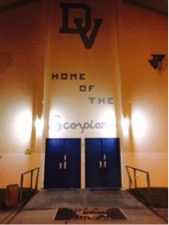
Home of the Scorpions – Notes from the Gateway to Death Valley by Ruth Nolan

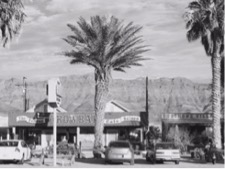
The first thing I notice when I arrive at the two-room Mojave Cabin on a cold, sunny early January afternoon in tiny, remote Shoshone—a Mojave Desert town 3 hours north of the Inland Empire—is the huge scorpion mounted on the wall next to the front door…..

1-12-15.jpg

It’s a wire scorpion, crafted simply, and in a flash quick as a scorpion’s sting, I know I’m where I need to be. I’m now officially the Writer in Residence for the month of January, 2015 this one café, one gas station town which proudly calls itself the Gateway to Death Valley. And, of course, the mascot of the small, K-12 Death Valley Public School, is the scorpion!

And why does this all matter? It matters greatly to me, because I’m about to write, and hopefully finish, the first draft of a book which takes place largely in the Mojave Desert. I’m here to dig in and find the quiet, space, and scenic inspiration to make major headway writing my memoir about my years fighting wildland fires for the Bureau of Land Management’s California Desert District during the late 1980’s, when I was an undergraduate at California State University, San Bernardino.

2-12-15.jpg

I’ve left the comforts of life in urbanized Palm Desert far behind; land of a new Whole Foods gourmet grocery store and a huge Apple store where I can go for all of my iPhone and MacBook Air needs.

After I quickly settled in, I stepped outside to inhale the crisp air and austere sunset. The scorpion seemed to humor me, as I’ve quickly discovered that there’s neither cell phone nor internet service here. There’s no landline phone in my room, either.

3-12-15.jpg

I’m on my own, with a palette of January days stretching ahead of me, waiting for a flash flood of words to spill onto the page, and hopefully while I’m here, page after page will capture the magic and hardships and transformational journeys I took across the storied Mojave landscape in my younger years, working on fire after fire in some of the remotest geographies in the world, which happen to be in the backyard of the sedate Inland Empire and Coachella Valley.

In the year 2015, it’s easy to be seduced by the easy and ubiquitous conveniences and reliance on internet technology, and it seems a little harder each year for me to climb my way back out into the remote Mojave Desert wildlands I grew up in, lived in for most of my adult life, and know so well, like the inside of my soul.

4-12-15.jpg

In fact, I’d argue that the Mojave Desert is part of my soul, a part that never lets me rest, and compels me to a place like this, to slip like a Mojave Green rattlesnake out of the creatively restrictive skin that living in urban environments encases me in, so that I can write the way I really need to write. Here, I can’t spend hours watching Netflix, or checking Facebook, or scrolling through my twitter feed for the latest, repetitive headlines, or playing around on my new iPhone 6. Nope. Here, the rattlesnakes and scorpions and raw cut desert views of mountain and alluvial fan will dominate my view, and demand the attention they deserve.

In fact, I’m writing this in the old west Crowbar Café, the only place open tonight, and I’ve just helped a young, frightened tourist from Brazil, who drove from Las Vegas and got lost in Death Valley after dark on a night where temperatures are forecast to dip far below freezing, and somehow found his way here, guided by the Crowbar’s lights.

5-12-15

He said he lost his way because there was no cell phone service out here, and therefore didn’t have his map app to use. But I think there’s more to it than that. I think the Mojave Desert took over his journey, and forced him to stop, and wander, and, in the end, to really learn to see, before he finds I-15 and returns to the world of built-in answers and predictabilities. He was overjoyed when I told him that as he heads to LA tonight, following the directions I drew on a napkin while sipping turkey soup, that he’ll be able to use his mobile device sometime after he passes through Baker.

As for me, I’ll  head back into the dark desert night soon, and try to find my way back to Mojave Cabin, where I’ll sit with no phone or internet, and undoubtedly stumble and struggle to evoke, with mere words, a world I once traversed so easily, the world of the burning Mojave, where I never relied on an app to save my life, and never thought I’d be mocked by a wire scorpion daring me to write about it all.

In the dark Mojave Desert night, pen and paper in hand, and I’ll wait for the magic and mystery to settle in. I’ll wait for the smoky memories to clear, and I’ll look up to the stars, and I’ll try to find my way to write.

6-12-15.jpg


Story and photos by Ruth Nolan. Copyright (c) 2015 by Ruth Nolan.

Sonambulant Funambulist: Interview with Julie Brooks Barbour by Maureen Alsop

Julie Brooks Barbour is an associate poetry editor at the journal Connotation Press: An Online Artifact and a professor at Lake Superior State University. I’m delighted here to offer an interview with Julie along with a selection from one of her published poems which underscores the distinction of her poetry and lyrical interest.

Maureen: Where do you see the current scope/trends in poetry at this point in time and where do you see your poetry in that evolution?

Julie: I notice that contemporary poets are writing about pop culture, history, fairy tales, race and gender, but, of course, this list doesn’t begin to cover the subjects or issues poets are taking on. The scope is large and broad, and, I think, can’t be pinpointed to any certain trend, but if there is one, I’d have to say it’s that poets at this point in time aren’t afraid to take on difficult subject matter. Where do I see myself in this evolution? I write about gender issues, specifically those of women. I’m interested in the ways women are portrayed in our culture, whether through body image, fairy tale characters, ideas of motherhood, or domestic work.


Brooks Barbour’s poem “Stone” published at Rose Red Review highlights the sensuality, directness and underscores these poetic themes as demonstrated in the following excerpt:

“You are ageless, a perpetual girl. If a ship navigates

your waters, it will not be rocked. You will not be

the legend that folds its sails, that causes the wreck

on the shoreline. You are the easy route, devoid of rocks.

You are the way written about in logs and travel journals:

the sunshine, the stillness, the atmosphere of peace.”


Maureen: How do you balance your priorities when managing the multitude of roles you carry as a woman, mother, wife, educator and writer?

Julie: Each part of my life needs its own time and one thing cannot take priority over everything else. I work at switching gears between work and home, writing and teaching, editing and writing. Setting up boundaries between work and home keeps me balance, though I won’t say that my life is completely calm or that I stay that way. It’s important that I don’t think about how much I have to do, but what I’m doing at the present moment. I also have to remember to take time for myself, whether I’m reading a novel, watching a favorite television show, or watching the snow fall (which I do a lot where I live). Time to rest and refuel is important to me. During this time I might suddenly reflect on my work, whether that be teaching or writing or editing. Times of repose really energize me creatively.

Maureen: How does your teaching influence your writing?

Julie: Teaching influences my writing in different ways. Many times I’m inspired by the literature I teach, whether it be classic essays in my composition classes, poetry and fiction in creative writing workshops, or drama in an introductory literature course. Each semester I try to teach at least one text or a few pieces that are new to me so I can discover something about writing with my students. I’m also inspired by my students and their willingness to take risks with their writing, whether through form, subject matter, or genre. I may be a teacher but I’m also a student, constantly learning from other writers, and my students remind me just as I remind them that I shouldn’t steer clear of risks. (They also remind me to take my own writing advice, not literally, but when I hear myself give them advice and know it’s something I need to do, that in itself is a reminder.)


Julie Brooks Barbour is an associate poetry editor at the journal Connotations Press: An Online Artifact. Read the full poem at Rose Red Review.

Resolutions for Writers by Cati Porter

Here we are at the end of December and once again we are about to turn the corner into a new year. Many of us see this as a fresh start and set goals for ourselves for the following year. For writers, often this means setting out to finally write that memoir or that novel. To accomplish this, I recommend setting small daily goals. By breaking it up into bite size pieces, the project will be much easier to digest.

To forge a writing practice for ourselves, it is best for writers to carve out a few minutes from every day. If you’re a poet, this might mean writing a few lines of verse or even the first draft of a whole poem. If you write fiction, opt to write a paragraph or two. If your aim is to write the Great American Novel, this allows you to chip away at it slowly but steadily. Incremental goals are much easier to keep. And if on any given day you happen to have more time once the ball gets rolling, you can stay with it, but if not, you’ve at least met your goal for the day. Setting a timer helps.

For my part, early mornings—prime time for writing, where I wake long before my kids—are usually spent frittered away with a cup of coffee or three and surfing the net. What else could I be using that time for? So here is my resolution: I will write just fifteen minutes a day. It doesn’t sound like much, but if I keep it up then I will have written for 5,460 minutes by the end of the year. This morning, those fifteen minutes have netted me about three hundred words. If I were to do this every day, by the time the next new year comes around, I will have written over 100,000 words. And, voila! The Great American Novel—Round One. Sure, there will be false starts. Sure, there will be days when I flake out. But should I fall off the wagon, I’ll just hop back on and start again the next day. Or the next.

Like any goal, it is more easily met with the support of a routine, good friends, and maybe some prompting. To begin:

First, decide on a routine that suits you—writing in the morning, on the lunch hour, at night. You may need to try different times to figure out what works best.

Second, decide how you’d like to write. If you prefer to write longhand, you could treat yourself to a nice writing journal, but a yellow legal pad works just fine too, or you could be like Emily Dickinson and write on scraps of old envelopes or whatever is handy. You can even write using your phone. I have written using the notepad app on my iPhone, or sometimes directly into emails to myself.

Third, If you miss writing one morning, don’t fall into the trap of feeling like you’ve blown it for the day—even if you write at a different time, or for fewer minutes than you planned, at least you wrote! Allow yourself some latitude.

And if you’re looking for inspiration, here are a few places to start. Two of the leading magazines for writers, Poets & Writers Magazine and Writer’s Digest, both have pages with free writing prompts on the web:

– Poets & Writers Magazine “The Time Is Now”: http://www.pw.org/writing-prompts-exercises.

– Writer’s Digest Creative Writing Prompts page has new suggestions about once per week from the silly to serious: http://www.writersdigest.com/prompts.

Poets & Writers also has a page listing the Best Books for Writers: http://www.pw.org/best-books-for-writers with everything from poetry craft books to writing nonfiction to how to publish your memoir to Virginia Woolf’s writer’s diary to issues of copyright and other practical things. Some books that I have personally found useful: Ann Lamott’s Bird by Bird, Natalie Goldberg’s Writing Down the Bones, John Drury’s Creating Poetry, and Finding What You Didn’t Lose by John Fox.

And it helps to have the support of like-minded writers. Being a part of a writing group is a great first step. Finding one can be a challenge, but there are many ways to go about this. First, look to your friends. You’d be surprised at how many people write. Also, you can look to the web—just type in “how to find a writing group” in the search bar. Or you could join one of Inlandia’s free writing workshops, which is a slightly more structured form of writers group, offering critique and craft tips in addition to the support of other writers, plus opportunities for publication and publicly sharing your work. With workshops in six different locations throughout the Inland Empire, there’s bound to be one near you.

Whatever you decide, if you begin the new year with some reasonable yet flexible goals in mind, by this time next year, you’ll have a brand new body of work to be proud of. I’m with you. Let’s go.


For more information about Inlandia’s writing workshops, please visit www.inlandiajournal.org/workshop.

The Lost Art of Letter Writing by David Stone

While the crowds are searching online and in the big box stores for the thinnest, fastest electronic devices with the most power and memory, I will be leisurely selecting traditional stationery and pens for novel gifts. I believe letter writing helps family and friends to slow down and reconnect.

My mother stopped writing me this past summer after thirty-one years of faithful correspondence. We have communicated through letters since I went away to a boarding high school when I was fourteen. Weekly she had sent me at least two news filled sheets with a healthy portion of motherly advice, always closed with “Love, Mom.” Through high school and college and again when I was in graduate school, her letters almost always included a check—money I knew she had literally earned on her hands and knees, scrubbing someone else’s floor as a housekeeper. Her letters were truly gifts of love.

Headlines from Beijing to Boston have heralded letter writing as a lost art. Not including greeting cards or invitations, the US Postal Service reported in 2011 that a typical home received a personal letter every seven weeks, more than three times less frequently than in 1987 when it was once every two weeks. According to the numbers of the 2014 Postal Facts report, first-class single piece mail volume declined an additional 3.2 billion pieces or 12% in the past two years, down more than fifty percent in the last decade.

In 1922 Emily Post wrote, “the art of general letter writing in the present day is shrinking until the letter threatens to become a telegram, a telephone message, a postcard.” What would she say about digital communication? Texts, tweets, and Instagrams have virtually replaced that art; indeed, we live in an era of digital fragments. That’s why traditional letter writing gifts stand out.

Compared to the 140 characters of a tweet, receiving a letter is like getting a full-sized car rather than a matchbox; compared to an email, a handwritten letter is like a hand-sewn patchwork quilt rather than a Walmart blanket. The quality comes from the unique combination of stationary, writing instrument, and manuscript form or font.

In other words, letter writing is an art form, a product of a complex craft. Letters are creations, appreciated for their beauty and emotional power. You might find buried in your desk, closet or attic, a letter or two that deserves to be framed and fittingly displayed in your home along side family photos.

Most importantly, letters connect us in a way other communications do not. A friend of mine recently discovered a letter by her grandfather who died when she was only three months old. The letter was written to her grandmother on the day after she and her grandfather got engaged. “My darling little Lily,” he began. His letter connects her to the grandfather she never met.

Letters are relational from the salutation to the closing—two elements absent in tweets, texts, and even in many emails that read more like memos. The slow process of writing the body of a letter therapeutically brings us deeper insight to our lives as we organize our personal experiences and construct the self we choose to share through our words.

A number of recently published books would make excellent gifts for those wishing to hone their letter writing skills or learn more about letter writing. Nina Sankovitch’s new book “Signed, Sealed, Delivered” begins with her discovery of letters in an old steamer trunk written by a college student over a hundred years earlier. Sankovitch shares the insights she learns as she attempts to pass on her love for letter writing to her own son who is headed to Harvard.

Simon Garfield’s “To the Letter: A Celebration of the Lost Art of Letter Writing” just came out in paperback. In over 400 pages, this best-selling writer retells the history of letters and provides practical how-to instruction with numerous examples.

To see a colorful and creative collection of letters, read Ivan Cash’s “Snail My E-mail: Handwritten Letters in a Digital World.” Cash shares some of the most creative letters of the more than 10,000 he and other volunteers created when they set out to handwrite and mail letters for others for free.

For a practical guide to personal letter writing that focuses on its social qualities, consider Margaret Shepherd’s “The Art of the Personal Letter: A Guide to Connecting through the Written Word.”

After three months of disappointingly walking to the mailbox, I found a fat envelope late this September addressed to me in my mother’s cursive that I had worked so hard to imitate as a child, preparing for a forgery I don’t remember ever actually committing. Stuffed in the envelope were six sheets. Multiple unfinished pages and a full letter beginning, “Maybe (someday) you will get an email from me. I now have a book titled ‘Computers for Dummies.’”

I’m sending her some stationary. I’m praying she misplaces her book.


David Stone is a poet who teaches English at Loma Linda Academy.

Great Poems Work Onstage, On a Page by John Bender

Onstage or on the page: Where do your poems fit best? And which do you think is more important, more valid?

After a recent reading by a popular Los Angeles poet, I couldn’t wait to buy his book. His reading was fun, lively and creative, and his performance wowed those of us in the audience.

This guy is a fantastic poet, I thought.

At home the next morning, I started reading his book. The poems were flat, using common verbs, common language. Not quite cliché, but pretty close to it. The quirky wit he exhibited onstage was not reflected on the page.

“How could his poems be so much fun to hear and so dull to read?” I asked myself.

At another recent reading, a well-known young poet, who has won national awards, read from his printed work. The poems were all about the same length, in the same form and he delivered them hurriedly—without any emotion.

His performance was so dreadful that I felt sorry for any audience members who might have been attending their first reading.

“I sure hope they don’t think all poetry readings are this boring,” I said to myself.

I own one of his books, so I know he’s a talented poet, skilled with imagery and fresh phrasing, but the audience never connected with his work, and I could tell he was disappointed afterward.

And I remain disappointed with both poets. Maybe even angry.

We live in a time when most people have no time or respect for poetry. They don’t read or buy poetry books. They don’t subscribe to poetry magazines. They don’t attend poetry readings.

They think poetry is made from predictable rhymes focused on lofty celestial topics devoid of any links to human reality. They think it’s as dry as their fifth-grade textbooks.

They are wrong, and we need to show them.

Real poetry is alive. It makes us want to cry, laugh, gasp. It fills us with dread and joy. It’s about what is happening in the car at the stoplight next to us. It’s about the neighbor’s dog howling through the night. It’s about that weird waiter who followed Uncle Frank to his car.

Real poetry is not safe, not sterile, and it’s not just for the stage and not just for the page. It’s not just for the slams and not just for the journals. It’s for both.

We have to start behaving like ambassadors of poetry. For many people, we’re the best poets—sometimes the only poets—they will ever meet.

So if you’re strong on the page, practice your readings for the stage. And if you’re fantastic onstage, spend some time improving the basics of your craft, so your poems also wow on the page.

This isn’t just some conceit of mine. It’s something the best poets from the past have focused on, something the best poets of the future will do well. Something we have to do to make poetry vital to people’s lives.

If you are in doubt, go to your nearest bookstore or library and find a copy of “Poetry Speaks Expanded,” which includes CDs with recordings of famous poets reading their works. Or if you are a stranger to slam poetry, find a copy of “The Spoken Word Revolution Redux.”

If not those books, just start looking. There are plenty of excellent writing guides and recordings of poets reading their works. Just get to it!

Let’s make a pact to have our work connect both on the stage and on the page. We owe it to poetry, to our readers, and to ourselves. Let there be commerce between us!


John Bender is a journalist and poet from Moreno Valley. He is one of the founders of Poets in Distress, a Southern California poetry performance troupe.