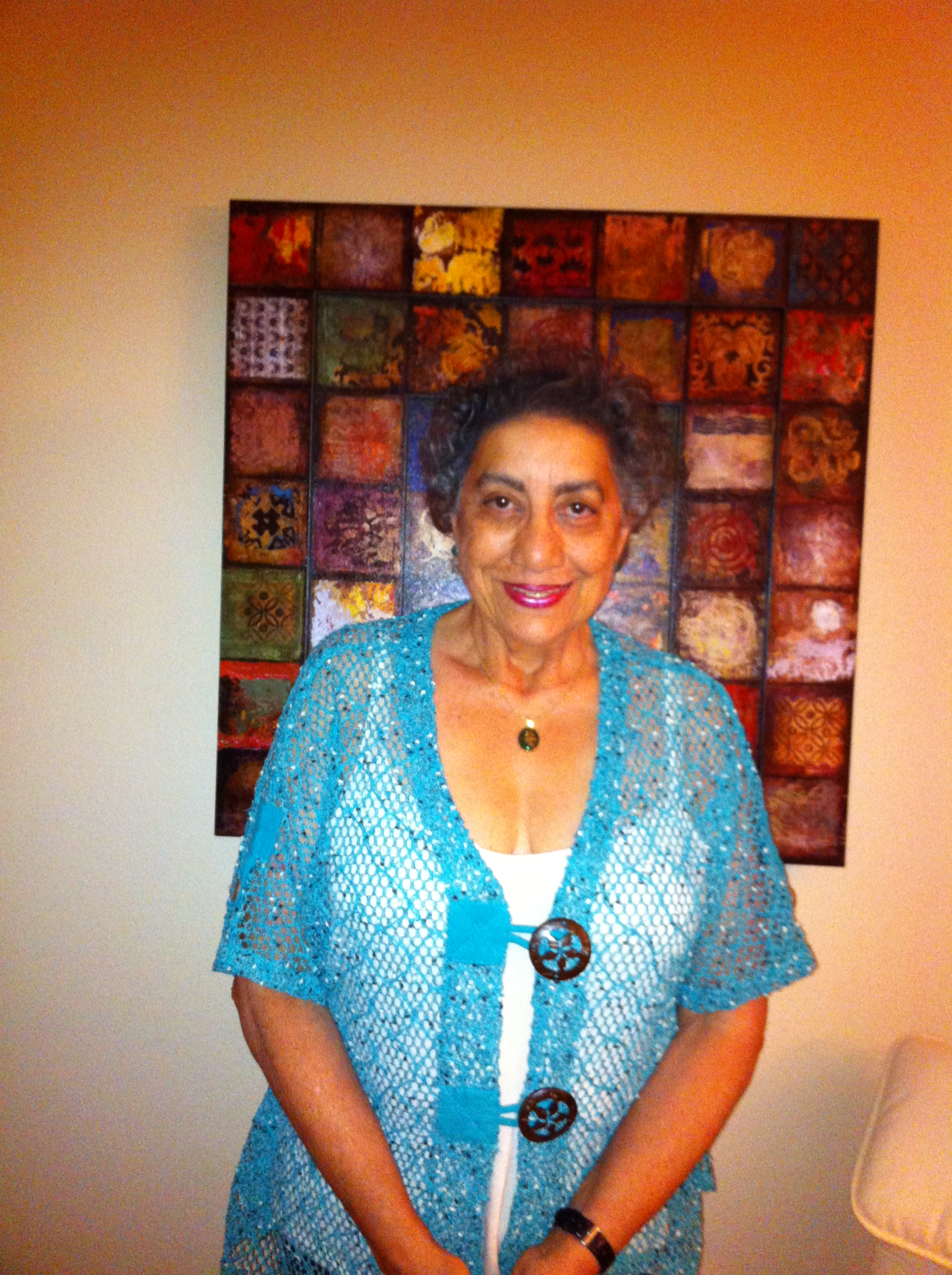
Tristan Douglas

Lockworx Alleyway

Tending Jack in the Box Stains on my button up
Flippedback cap skateboards by
Hauling twisty bag of recyclables

Crater ash tray to my left
Water heater embassy
The MostIEst

La Pizza Loca
Tire shop on the other side
Fence fairytale bushes
Low pale audience of grass
Perfect breeze
Peaceful familiarity in the city’s ribcage

Milieu

Be joyous and love others

 Herb is the lubricant
 The green currency
 It’s oil we seek its vapors
 You know it’s California because of how multicultural the English department is

    Will we power our cars with hemp oil one day?

    It would make all cars drive 58 to 65 miles an hour, in the middle and right lanes. Bumpin’ some Marvin Gaye.
  I’ve done a gang of shrooms in my day and my friends and I usually would just sit around campfires and bump the Beatles in grassy patches in the mountains and such
   It had to be Kerouac to talk to David and I
Perhaps you’ve earned the privilege of being the only Christopher around

What if I went on an adventure with the family of kitties that lives next to my parking spot

——

Tristan Acker is in the M.F.A. poetry program in his hometown at Cal State San Bernardino. He is trying to interpret and share the middle-class ethnic values and nascent counter-culture that he observes so much of in his life here in the Inland Empire. You can listen to Tristan’s poetry and hip-hop collective the West Coast Avengers at westcoastavengers.bandcamp.com

Michaelsun Knapp

Slow the way you like it.

the stars wink like the girls you slip
dollars and compliments to,
phone numbers and hotel keys to.

Butter’em up so you don’t feel
dirty; polish off a G&T
so the guilt goes down smooth
the way momma used to make it

scrub your conscience
with lye and pumice
they work as well as promises,
lies, and I-love-you’s paid for
by the hour

finish a few more glasses
fork over a couple of bills
drink up the nerve to walk over
ask her to dance
as fast as you’re dying

——

bio needed

Timothy Donneley & the Riverside Inlandia Creative Writing Workshop

DonnellyVisit

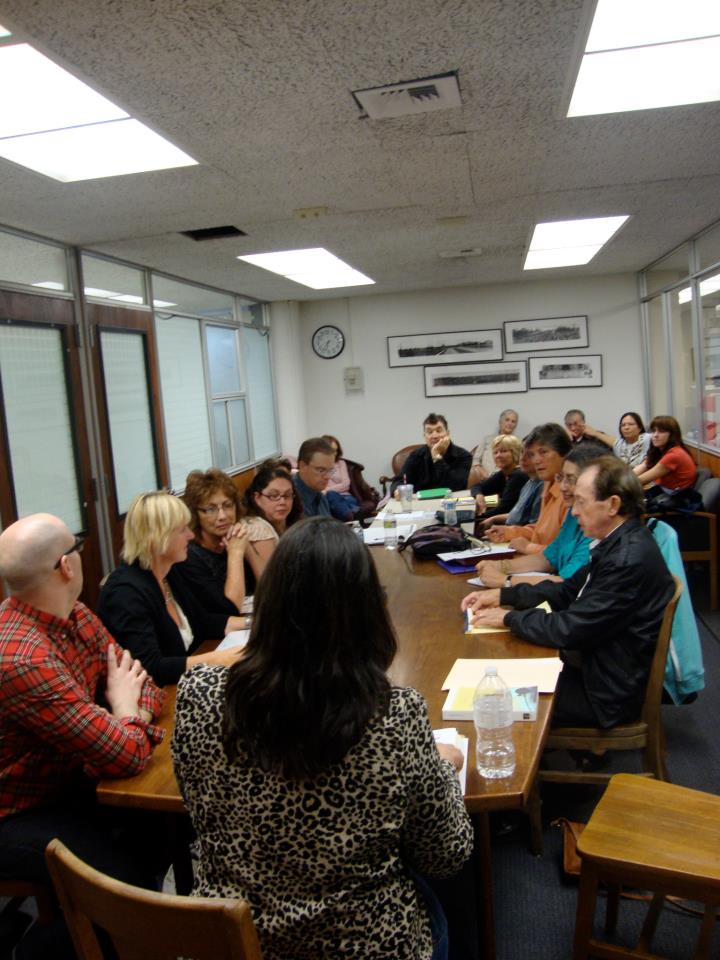
The Riverside Inlandia Creative Writing Workshop group and guest Timothy Donnelly, Columbia University professor and author of The Cloud Corporation, winner of the 2012 Kingsley Tufts Prize. Great session in which we created a collaborative bouts rime poem using the endwords from Robert Frost’s “Acquainted with the Night”. Thanks, CGU, for reaching out to the Inlandia Institute!


Inebriated Firebird

Do not go into the mysterious night
Or you will be drenched in the driving rain
in which we see no speck of light
as we try to avoid creatures that run into our lane
we have kidnapped Santa Claus and the beat
goes on, which our inferior brain cannot explain
and we don’t hear our capricious feet
as the cilia in our ears cement the ancient cry.
We tumbled down the inebriated street
and down some grotesque path, we said goodbye.
I walk solo, she looks down from a height
as gargoyles howl the night away, as ribbons uncoil in a dawning sky.
The asphalt tilts, the filthy water drains out, all is made right.
The speck bores a hole in the infinite night.

Joan Koerper, Ph.D. & Riverside Inlandia Creative Writing Group

10-11-2012: Results of the fifteen minute collaborative exercises of the Riverside Inlandia Creative Writing Group in the bowels of the Riverside Main Library.
That night’s workshop facilitator and giver of prompts: Joan Koerper, Ph.D.
The prompts are in bold.

The San Timoteo Canyon…

The San Timoteo Canyon. I don’t know anything about nothing—all I know is that it has my name—and I had my name first—just ask my mom. Mom said that San Timoteo is my “Saint’s Day” and that he is the patron saint of poets and writers and artists. And driving through the canyon is a time of respite. The two lane road passes horse farms and open space, a time to reflect and ponder on the day. Absorbing the natural setting to the left and right. It is a place of peace and quiet.

So I brought my 12 gauge shotgun—intent on putting holes through every single road sign that reads San Timoteo Canyon. Yep! Road signs got slaughtered. But nobody better not mess with the wild life and the green sage brush.

Today, the rains flooded the road and the dark and curvy canyon was closed leaving frustrated drivers having to find another way home. Some got stuck in the muddy waters cursing the lack of cell phone bars on their phone. Others were frustrated because they could not read those shot gun blasted signs.

Co-authors: T. Perez, Frances Vasquez, Mae Wagner, Lisa Biehman (sp?)
_______

The hearses lined the side of the road…

The hearses lined the side of the road like dead roaches along the molding on the bathroom tile.
I stormed up to the lead car and pounded my fist on the black glass. Everyone else refused to talk to me; the other woman. Adultery is never particularly popular, but the presence of a priest and a coffin made me even less welcome.

“I know you can see me in there!” I screamed, pulling the .38 from my purse. When the window shattered the two living passengers, the diver and his assistant, fled with hands raised to the heavens.

I wanted to make sure the bastard was really dead.

Co-authors: Laura Aranjo, Wendy Sank (sp?) Suzanne Maguire
_______

I wanted to soar…

I wanted to soar in my mind but my body never left the ground. That does not keep me from trying it over and over again. Never give up. So, I put my head up, straightened my back and…breathed in the briny smell of the ocean, looking out at the horizon and imagined my body dissolving into the mist. In this state I sensed a clarity about the world that I had never experienced before. But, it lasted only for a few moments and I was back in the world again. I returned to reality…saddened by my need to go back to my daily routine. I kept a sea shell and bought a bird charm in a vile of sand from the beach for a necklace to remind me how to let go of myself again.

Co-authors: Don Daviau, Gertraud Daviau, Celena Diana Bumpus, Nan Friedley
_______

The cemetery was filled with people for the Day of the Dead

The cemetery was filled with people for the Day of the Dead
the rotting corpses permeated the air with an acrid stench
rows of memorials on display like monuments
loved one’s dressed to celebrate life.
Ghostly apparitions circle the living.
The living rise as one to celebrate the dearly departed.
Brittle bones decaying to dust in caskets.
Cold air hits the back of their necks like ghostly breath
for a moment there is no sound
then the silence in broken by the anguished screams from beyond the veil.
Those who rose to remember lost souls now flee the cemetery
the dead are walking.

Co-authors: Mike Sleboda, Cassandra Alderson, Michelle Gonzalez, Heather Dubois, Linda Rhodes.

Marsha Schuh

Geometries of Euclid

I

Apparitions float above my early morning walk
and breathe (almost) the earth,
faint allure of blossoms
citrus, magnolia, hints of sage and farm
air yet to smell of fluorocarbons.

It is difficult this morning to imagine the once emptiness
where land poured from the northern mountains
in one huge sheet;
where fertile arroyo of cottonwoods, willows, and sycamores
rattled in the wind;
where travelers met nothing
but sage, jack rabbit, coyote;
where contours of water transformed this desert
into the Gem of the Foothills
and travelers caravanned for cures.

Yet I sense an imagination
thinking in parallel lines,
elements of geometry from Euclid,
colony name from Canada,
and from Australia, parallel rows of Silk Oak
ferny leaves and gold combs like inverted mustaches,
winged seeds furling on the wind, pepper trees
gnarled and ancient even in their youth.

II

As I walk, the dead shuffle along with me
in the half-light of dawn–

The Highlanders, Serrano traders,
neighbors, brothers and rivals
to the People of the Earth who rowed out
to meet Cabrillo in the bay of San Pedro;
Spaniards, bringing smallpox and mission life,
the names of streets and families;
Jedediah Smith, making the first overland journey
along the Old Trails Highway leading hundreds,
thousands who left their imprint on the land;

George Chaffey, greatest of the dreamers,
who changed this barren trapezoid forever.
I wonder at the foresight of the man
who sat in the shade of peach trees
at the mouth of San Antonio Canyon
viewing this wide expanse, envisioning
the seven-mile divided boulevard.

In its center, where I walk today,
Ontario’s first public transportation–
the car, drawn by mules, sports striped awnings,
carries the ghosts of early settlers.
Ladies, wearing wide-brimmed hats, perch inside.
Boys in knickers and older boys in long pants
lean out the windows and cling to railings near the steps.
Dapper conductor mans the tiller, his moustache a perpetual smile.
And on the rear platform, the mules
rewarded for their uphill labor
with return trip down the grade.
The replica reminds me of a story I once heard
about those poor bewildered mules,
who when later sold to farmers, plowed
rapidly the first furrow and waited patiently
for their ride back to start.

Water for every farmer in proportion to his holdings
and by century’s end,
first long-distance telephone line in the world,
first electric light in Southern California,
electric streetlamps one mile apart,
electrified street cars to replace retired mules;
electric room heaters, cooking stoves,
Hotpoint Irons, horseless carriages.
Progress. Industry. Prosperity.

This morning, they hover near me in the fog,
the myriad hard-working men and women:
Chinese workers, who came to “Gold Mountain” seeking fortune,
who were kept from working mines
by threat or force and turned instead to citrus gold;
German and Swiss, European agriculturists,
Filipino, Italian, Japanese farm laborers, nursery owners,
Mexican Traqueros of Santa Fe and Southern Pacific,
gandy dancers, builders of the Pacific Electric red cars,
now ghosts themselves.

III

As I near the “Historic Downtown,”
my own shadows of the fifties haunt me most:
three orange UHaul trailers, twelve
Swedish immigrants from Illinois
who drove the mother road all the way
through Joplin, Missouri; Oklahoma City;
Flagstaff, Arizona; don’t forget Winona;
Barstow to San Bernardino where we sent postcards
from the promised land: Greetings from Ontario, California.
Blocks of small prosperous businesses
Berger’s Restaurant–I still see Mr. Berger,
chef’s hat in hand, taking a break outside his door
with that lady in the red dress who stops
to ask about the missus and their son–
Rexall Drugs, Newton’s stationery,
Fallis’, Gemmel’s, the Granada Theater
where fifty cents still bought a double feature.
On the boulevard, Chevies, Nashes, Oldsmobiles
Fords, Plymouths, Buicks, Studebakers,
and I can’t believe it—an Edsel.

Rambling letters to the frozen folks in Illinois
full of praise for orange trees everywhere,
vineyards, strawberry fields going on forever,
dairy farms, snow on the mountains,
and the beach, only an hour’s drive over the hills,
down highway 39 past Knotts Berry Farm.
On July 4th before the fireworks,
the All-States picnic with its longest table in the world
stretched down the center of our double drive
as we find our spot next to the other transplants from “back east.”

Too soon grandmother, father, uncles, aunts
and mother come to rest in rectangles
set aside in Belleview Memorial Park.

And this Ontario, this Euclid, grew,
grows in the way of Yucca plants,
ghosts in the graveyard, apparitions floating
above the Model City that became
the Pulse of the Inland Empire,
Gateway to Southern California.

And we are transplants, all
who came, who come,
who are yet to come and leave
these ghosts to walk at dawn.

——

Marsha Schuh is an instructor of English composition at California State University, San Bernardino. She holds an MBA with a concentration in Information Technology, an MA in English Composition and an MFA in poetry. Her publications include a coauthored college text, Computer Networking for Prentice Hall and poetry included in Pacific Review, Badlands, Sand Canyon Review, Meat, and other journals. She and her husband Dave are long-time residents of Ontario, CA. She loves to walk early in the morning.

Cindy Rinne

Chalking

I dream of the first words of books
of voyages.
-W. S. Merwin

Mouth of grated tar, asphalt face.
Soft cloth to smooth the edges.

Orange slice on eye like cucumber
to calm. She views half the world

through pie-wedge membranes.
Juice drip tears stain

her cap-sleeve dress.
Her acidic son puts a handgun

to his chest and fires.
His bitter chalk-dust life

segments her mind: leaves her man
of five years, moves four hours

from her best friend, and marries
the first guy who asks her.

——

Cindy Rinne creates art and writes in San Bernardino, CA. Cindy won an Honorable Mention in The Rattling Wall Poetry Contest. Cindy is a Guest Author for Saint Julian Press. She is a founding member of PoetrIE, an Inland Empire based literary community. Her work appeared or is forthcoming in shuf poetry, Poetry Quarterly, The Prose-Poem Project, The Wild Lemon Project Literary Journal, Welter Literary Magazine, The Sand Canyon Review, Inlandia, A Literary Journal, Lili Literary Journal, and Phantom Seed. Cindy is collaborating on two chapbooks and working on a manuscript. http://www.fiberverse.com.

Tim Perez

thin skin

we met in the marrow of a great bird’s bone.
no you didn’t.

between the heart and breast plate.
no you didn’t.

between the floating rib
and melancholy.

what’s melancholy?
you know every time your mom smoked

that nasty stuff she blew out?
yeah, i said.

that was it, he said and stomped off.

i wandered to mom’s bookshelf.
he had yet to get rid of her books;

i took one crammed on top of the others;
it was thin and purple as onion skin.

when i opened it i found strands of her hair
taped to the inside.

when father caught me with the book he said,
quit looking for answers.

anyway you weren’t born, you were made.

like a sandwich, i said.
yeah, like a sandwich.

what kind of sandwich? i asked.
white bread with sardines, he said, now get outta here.

i trotted off, but before i turned the corner
he said, and leave the book.

i dropped it and slowly backed away. from around
the corner i watched father pick up the book and gently

lift a strip of yellowed tape with hair clinging to it.
i watched as the words ripped from the page

and they writhed like so many fishes and i watched father
drop the tape in his mouth and pull it out

like a chubby cartoon cat. the hair and the words zigzagging
down his throat

and i watched the glow in his chest somewhere
between the ribs.


when he brings in the dogs

no one talks about the one they would’ve
taken him for anyway.

told him his skin was too brown for anything
better than carrying a gun.

when he got there they made him a machine
gunner, but when he came back with his trophy
of tongues they let him alone.

and after he was through with his duty
and the damage was done they sent him
and his knife home.

and soon the terrors showed up in his morning
cereal and they’ve been showing up ever since.

independence day is coming which terrifies him
the most with its snapping of bones, so he brings
in the dogs says,

i have to bring them in or they’re just gonna
bark all night. but i know he huddles the dogs

on his bed surrounding himself with furry bodies
like ruck sacks.

his eyes just peering over them like a swamp
gator and he waits for the bombing to begin.

his teeth glowing like polished tombstones.
his favorite knife unsheathed. his dogs quivering
against his throat.

——

Tim Perez currently resides in Long Beach, but works in Corona. Twelve years ago Crooked was published by Gary Soto’s Chicano Chapbook Series. In between he became a high school English teacher, got married and brewed a small batch of children. Late this year Moon Tide Press will publish The Savagery of Bone, his first full length book of poetry.

Judy Kronenfeld


Vestigial Mom

They are international, polyglot:
between them speaking
Russian, Latvian, Arabic, French,
German, and a little Farsi and Slovak.
They travel or live abroad
for work, and count among their intimate
friends: Georgians, Kenyans,
Palestinians, Syrians, Kazakhs, Tajiks,
Lebanese, Turks. But I sometimes want
to tuck them in, to safety pin them
home like mittens to sleeves, to create
years for them like the Advent
calendars of my childhood Catholic friends,
with good surprises behind each little
door

               because seventy-seven years ago,
not too long before “Juden, ‘Raus!,”
my father escaped, leaving behind the cousins
I never met, who look at me
out of the old photos, with my eyes,

               because an Arab host rising
against his oppressor could denounce
my Jewish daughter—”American
Satan!”—or worse,
or Netanyahu bomb his city
while she is there,

               because the “frozen
conflicts” in the lands of the former
U.S.S.R. could thaw and my son
be caught in a flood of ethnic blood.

I want to close the book again
on The Wild Things gleaming
their fierce teeth, to pretend
I’m a cloud pursuing The Runaway Bunny
turned cloud, to gather my children
into the primal room
of Goodnight Moon, brilliant red
and green, warm as a lair
hung with animal fur, against
the arctic out-of-doors.

I want to rush out, as if onto
the street below my window
when I hear the squalls
of a sibling fight,
and bribe the Israelis
and Palestinians, the Chechnyans
and Russians, the Kyrgyz and
Uzbeks, the Sunnis and Shiites,
with whatever it takes: ice cream
and cake, video games, Disneyland.


La Place de la cathédrale

How present, how bountiful
and complete the cathedral
in its square onto which
our small hotel’s windows
gave, around which we made
our daily promenade, in view of which
we drank our café crème. The school girls
on spring vacation sunned and giggled
under the stone harpstrings,
and knots of tourists closed and opened
like sea anemones, their cameras flashing
in the dusk like falling stars. And the bells
tolled the bright and the lightless
hours, their quarters, their halves,
their three-quarters…

Too many days, perhaps, but boredom
pleasant, and to consider reduced
choices—the black or blue
sweater, the grey or brown
pants, petit déjeuner next door,
or a few doors down, where I studied
the elegant French hound leashed
to a lamppost, head on his paws, meditating
on Nothing, and imagined cultivating
an animal calm.

A sabbath of dedicated
space. Emotions unclotted.
Simpler blood ran
in the arteries, unimpeded by the silt
of years. And the failing
body stopped
failing for an instant,
as if it could keep gliding
in the dark, the bells guiding us
like bell buoys in the voyages
of our sleep.


“La Place de la cathédrale” first appeared in Adanna.
“Vestigial Mom” appeared online in Adanna’s Featured Poets Page.
——

Judy Kronenfeld’s most recent collections of poetry are Shimmer (WordTech Editions, 2012) and the second edition of Light Lowering in Diminished Sevenths, winner of The Litchfield Review Poetry Book Prize for 2007 (Antrim House, 2012). Recent anthology appearances include Before There Is Nowhere to Stand: Palestine/Israel: Poets Respond to the Struggle (Lost Horse Press, 2012) and Love over 60: An Anthology of Women’s Poems (Mayapple Press, 2010). Her poems—as well as the more occasional story, essay and review—have appeared in many print and online journals such as Adanna, Calyx, Cimarron Review, The American Poetry Journal, Fox Chase Review, Natural Bridge, The Hiram Poetry Review, Poetry International, The Spoon River Poetry Review, Stirring, The Women’s Review of Books and The Pedestal. She is Lecturer Emerita, Creative Writing Department, UC Riverside, after twenty-five years teaching there and has lived in Riverside since 1969.

Creative Writing Workshops feature Deenaz P. Coachbuilder

I have forgotten you

After Pablo Naruda’s “If You Forget Me”

At first we were planets
that collided and consumed
                                    each other.
I bit off a chunk of your shoulder,
                                             you sheared off my hair
and knotted my thighs.

I wore a rainbow ring
  around my finger.
    Work
    play
    love
    lust
       intertwined,
    tenderness
           anger,
     lacing together
        our laughter
      and our lives.

The years like moonbeams                                  the worms of the world.
                                              cocooned us from

The years they wore away
our celestial cloak.
They sundered us
and flung us apart
you into the sky,
and
   buried
      the rest
of me.

I will forget you.
The way your voice                    for          e
                                  searched              m
when you entered the house
   at the end of a work-a-day world.

I will forget
the way I always knew those friends’ names
you had predictably forgotten,
always read
the sudden knotting of your brow
the depths       of a frozen smile,
recognized
your p e r f u m e,
             from     a f a r.

I have forgotten you,
forgotten you,
forgotten
you,
beyond the day
      I die.

The green hedge

Far from above, none of the sounds
of Mumbai city can be heard.
The setting sun drenches the tips
of balconied skyscrapers.
In the distance, crowded streets
border the landscape.
The dome of a mosque pierces the sun.

Through the glaze of dust and heat,
a quiet emerald oasis ascends.
Nine palms fringe an oval green lawn,
a cool breeze turns over the leaves
to their dark undersides,
while gulmohor boughs dally together
as they sway.

Here children chase each other,
shod in muddied designer shoes
across the manicured terrace
while maids watch hide-and-seek.
Pedigreed playmates barter video games
amid the scrap of roll and tease,
and scattered nursery rhymes,
as they bask in secure childhood.

From behind a green hedge
dark eyes watch the games.
Her only dress scarcely covers scarred knees.
Scabbed fingers tap longingly
in time with the infectious jingle of pop tunes.
Every day she sits on the outer side
of a gossamer hedge.

Spawn of an unschooled
vagrant woman who haunts
the crowded corner traffic stop
for spare change from captive cars,
she escapes each evening to
crouch down beside the emerald hedge.
She tells herself she doesn’t care
when they don’t call her to play.

Tomorrow’s fantasy hovers quietly
beside her, where her shouts and laughter
might merge with theirs in a swirling whirl of happy cries
as quivering rainbows twine through their hair.

The house of loneliness

A swath of light hair falls across her brows.
Short and petite, straight nose and high cheek bones
frame a fine line of lips that slant
delicately down at the edges. Soft eyes,
a quiet voice with a clipped style of speech
muscular arms held akimbo
when she strides along the street.

What do you do after work, I inquired.
Exercise at the Y, she replied.
And then? I hesitantly asked.
I go home, I’m tired.

She lives in a high ceilinged home
amidst seven acres of Port Orchard woodland
bought seven years ago.
Clear water from her own well
glints in a fine jug that rests
on a granite kitchen counter.
Two large dignified cats play in contentment,
encircling each other between the legs
of hand carved cherry wood furniture.
On most days she hears the blue jays squabbling
on the spacious hardwood deck.
Next summer she will plant five fruit trees
along her driveway.

sunrise against the mist

sunrise
my brother’s hand
curled around my finger

romping across the years
teenage conflict
then, he grew
taller than I
sibling rivalry turned
into shared secrets
bonds of the heart

but jealous waters
captured him

still
forever

my flaming youth tempered
to steely caution
burnished metal
into supple sandalwood
golden days etched
deep gray
a subtle sprinkle
of wisdom
the world’s winter land

years of love
and life
extended
down the corridors
of time

Death parted the curtain
I entered with delight
to search for him
yearning for his
youthful embrace

the stars were smoothly silver
the winds most welcoming
those gentle spirits
drew aside
as I
hurried by

a faint glimpse
against the vast mists of space
drawing close
I called
and leapt toward
to touch
his well-remembered hand

he turned

but did not recognize me

Yesterday

Yesterday I danced with revelry.
I slept and dreamt in silvered peace,
waking abruptly to a nightmare,
brackish, dense with pain,
devoid of reason.

I slept, whole, contented,
assured of family, fortunate in friendships,
awoke to treasures sundered,
husband, son, disconnecting
bonds of love and blood.

Empty rooms
tears that slide silently
the moaning heart
a changed world
elusive dreams.

Waste not this moment,
all is but ephemeral,
our signposts evaporating
into a shifting stream.

The nightingale sings
but for one night.

——
DeenazCoachbuilderDeenaz P. Coachbuilder has been a resident of the Riverside area in California, since 1981. She received a Doctorate in Theater Arts from Brigham Young University, an M.S. in Communicative Disorders from Utah State, an M.A. and B.A from Bombay University in English Literature and Language. Deenaz is an educator, artist, poet and environmental advocate. She is a retired school principal, and professor in Special Education at California State University, San Bernardino, past president of Committee for Community Action and Environmental Justice and India Association, of the Inland Empire, and a consultant in Speech Pathology. As a Zoroastrian by religion, Deenaz is actively involved in the Zoroastrian Association of California and is writing a poem on the birth and evolution of the religion and its adherents, extending to the modern period. She is a published poet in the U.S. and India. Most recently, her poems have appeared in The Sun Runner, Sept. 2012; Inlandia: A Literary Journey, Summer 2012; Woman Writing Nature, A special Edition of Sugar Mule Literary Magazine, Sept. 2012; Parsiana, June, 2012. Deenaz exhibits her paintings in oil, enjoys reading, gardening, going for long walks, relationships with family and close friends, staying involved in the Indian American community of Riverside and San Bernardino counties, and particularly cherishes being a wife and mother.

Deenaz is a Fulbright scholar, and the recipient of several awards including “Principal of the year,” Council for Exceptional Children; “Distinguished Service Award,” Phi Delta Kappa, and California Speech Language Hearing Association. She received President Obama’s “Volunteer Service Award” in February, 2011. Deenaz is currently working on a publication of her poems.

James Ducat

Where Did She Go?

I ask aloud, almost midnight,
alone on the porch,
and a gust blows the carport

light on, wafts orange
blossom past me.
That unborn fruit,

which may never deliver
juice or more trees,
dreams beyond desire into taste.


The Santa Anas

Across a continent, decades ago,
a malevolent wind took
the house from over
my mother and infant brother .

They clung together in the roofless cellar –
the house landed a block away.
From that day she opens doors
and windows at any wind,

a celebration of nature
I thought, until
I saw her fingers
dig into folded skin.

Now, a percussion of leaves
and branches howl
in disharmony.
Didion’s gale scrubs the air,

polishes mountain lights.
I breathe in
the dust like insanity.
This dissonant foehn

groans through the house,
and my toddler wonders
if our walls will cave.
I lie to him: the wind is singing.

The wind is singing.
We go outside,
wrapped in a blanket,
arms clinging in atonal warmth.

——
James Ducat received his MFA in Poetry from Antioch Los Angeles. His work has appeared in Word Riot, Specter Magazine, and others. He teaches writing at Beaumont High School and at Mt San Jacinto College. He lives in Redlands with his son (not coincidentally, also named James) and 12 fish, the largest of which is called Bob.