John Brantingham

Deena and the Bear

          Harrison’s already awake on a predawn Sunday morning when he gets the call from his boss. This kind of call would not usually go to Harrison, but no one else is picking up. The early hour is not a problem. The problem is Deena is the bear expert, and he hasn’t seen Deena since he got married.
          Ten minutes later, Deena’s in Harrison’s car, coolly silent with her rifle and tranq darts. Ten minutes after that, they’re up in the little foothill community where the call came from.
          Finding the bear might have been difficult. The suburbs always have looked the same to Harrison. Streets with row upon row of stucco houses. Harrison would have been lost in a second. It would have been difficult except it’s a quiet morning, and a news helicopter circles above, the center of its radius directly above the bear. Harrison follows the helicopter until he sees the police cruisers parked in front of a two story place. It’s painted that ubiquitous tan of the suburbs east of Los Angeles.
          “Looks like it’s just up here,” Harrison says.
          “Does it?” Deena stares at the side of Harrison’s face for a good twelve seconds. Then, with a single motion, she snatches her rifle from the back seat and swings out of the front door with it under her arm.
          Harrison daydreams her death for a second. She’s got the rifle under her arm, trudging up the steps of the suburban home. The cops misunderstand what’s happening, and she’s gunned down, accidentally, tragically, but finally. She lies there twitching in her puke and blood for twelve seconds before she gasps her last. He’s not sure where the puke came from in his fantasy.
          As she actually does start up the front steps, the daydream shifts to a memory of her. He pictures her as she was, lying underneath him as he made love to her. He can see her naked body, smell her womanly sweat, hear her moan. Somehow the remembered sex and the imagined death mingled themselves in Harrison’s mind creating confusing and exciting feelings in him just for a moment.
          Sex and death have slowed Harrison down, and he has to jog to catch up to Deena who is pointedly ignoring him.
          It’s pretty easy to see why the helicopter is circling. The bear is playing a splashing game with himself in a swimming pool in the backyard. He tumbles over on himself in the water, and Harrison knows this is a video people from Los Angeles to Tokyo will be watching for the next few days. A bear playing by itself as ten police officers stand just on the other side of a cinder block wall. No doubt the footage is going out now to every insomniac and early riser in Los Angeles.
          Harrison and Deena will be a part of the tableau as well. He tries to imagine how she must look with that weapon in her hand and greeting police officers. Can the helicopter camera man see that look on her face? Can he get close enough to see how her love for Harrison has turned into hatred?
          And Harrison flashes into another daydream. In this one, Deena becomes famous. She is aiming the rifle when the bear sees her. She fires and misses, enraging the animal, who charges her, mauls her, and kills her. The bear must be destroyed of course, but the television plays her death over and over again, and Harrison is allowed to relive the moment.
          Harrison forces the daydream out of his head. He tries to focus on the current moment, the conversation about what to do with the animal. He’s here to coordinate efforts and call in transportation. He focuses on his job long enough to call the person responsible for taking the bear back to the wild after it’s unconscious, but he’s pulled out of himself and back to her body the second he hangs up.
          He’s back to making love to her, and this time it’s all about her fetish for public sex. Deena, skinny dipping in a lake. Deena, sunning her naked body afterwards. Deena, leaning naked against a tree. He hasn’t thought about having sex with her for a long time, but it’s all back in the kind of half-awake dreams he has on cool Sunday mornings.
          It’s the morning, he decides. It doesn’t have anything to do with lingering feelings. It’s not doubts about his new marriage. It’s just this time of the morning and time of the week. It’s just he’s entered into a dream world up here in the foothills.
          Deena raises her rifle as the bear clamors out of the pool. She waits until the bear is out of the water and firmly onto the grass of the backyard, and then there is the popping sound of the gun going off. Harrison can see the dart strike the animal’s flank. A gasp goes up from the police officers, and the bear seems to be wobbling already. Harrison’s never seen this before, so he doesn’t know how long the tranqs will take, but they already seem to be having an effect.
          Harrison turns to ask Deena how long it will take for the bear to go down, but he stops. Deena is aiming the rifle at him and smiling but only with her teeth. That glassy-eyed look is on her face, the same look he must have.
          There’s a long silence between them, maybe twelve seconds, and then she says, “Boom.”
          One of the police officers laughs nervously, but the rest of them are focused on the bear. Harrison wonders what the scene must look like from above and on televisions across the city.
          Are the helicopter cameras good enough to capture the dreamy quality in Deena’s eyes? Can they see the heart break living there? Are they able to zoom in on the pain that has been festering in the long months after the death of their love?

——

John Brantingham’s work has been published in hundreds of magazines in the United States and England, and he has eight books of poetry and fiction. “Deena and the Bear” is a sequel story to his latest short story collection Let Us All Pray Now to Our Own Strange Gods, available now from World Parade Books.

s. Nicholas

Fog

“Oh” I said as I stepped out of the Cedar Glen Laundromat. The fog was creeping past the trees and shops, through the parking lot, pressing its nose to the windows. It had slunk in quietly, like a tardy student, while our backs were turned folding towels and loading dryers. I stuffed my daughters into the truck, paralyzed in their seats under piles of clean blankets and precariously stacked baskets. We began the slow crawl, out to the road, toward the edge of the mountain. Never before had I considered this vehicle as a cage of steel. I drove blind, slowing down until we were inching along. I didn’t realize we were still moving until I pushed my foot harder down on the brake. My instinct was to hunker down, stay silent and hidden. Safer to be still rather than barreling into a car, or tree. The thick white out the window surrounded us until we felt the universe shrink to the cab of the truck. We were all that existed. Unable to see the world outside, it was difficult to even imagine and I told myself it was all still there, waiting for us to navigate our way through. “Ok” I whispered and willed myself to press my foot to the gas and continue. At the stop sign before the right turn onto Highway 18, I peered straight ahead, imagining the drop before us, creeping slowly into the road. See me, See me, See me. I muttered these words aloud, my hand hovering over the horn, not wanting to startle the Honda that was headed straight toward my side of the truck, but wanting to give a warning in case it did not veer. It also was creeping along and spotted us in time to steer clear. I hugged the right side of the road, closest to the mountain. We had lost the yellow, lost the white, driving not by memory or instinct. “There’s Rim.” My daughter’s tiny voice came from the backseat. The expansive parking lot of the high school to the right gave us a land mark and for those few seconds we breathed. Always, always was the emptiness to our left, the fog tricking us, pulling the truck closer to the edge. I made no deals with higher powers. I sent no frantic prayers for our safe return. I did not want to take my focus, even in the depths of my soul, from the shrouded road. In the silence of our box, we were connected, my girls and I. Each one focused on the gloom surrounding us. Strangely still for the adrenalin pounding through our veins. Without speaking our wills reached out to each other, bound by fear in an intimacy that we would rarely know in their teenage years to come.

——

s. Nicholas lives and teaches in the San Bernardino mountains. Nicholas was born and raised in the Inland Empire and finds that it is a source of continual inspiration for her. She is currently in the MFA program at Cal State San Bernardino and will be graduating in June.

Creative Writing Workshops feature Deenaz P. Coachbuilder

I have forgotten you

After Pablo Naruda’s “If You Forget Me”

At first we were planets
that collided and consumed
                                    each other.
I bit off a chunk of your shoulder,
                                             you sheared off my hair
and knotted my thighs.

I wore a rainbow ring
  around my finger.
    Work
    play
    love
    lust
       intertwined,
    tenderness
           anger,
     lacing together
        our laughter
      and our lives.

The years like moonbeams                                  the worms of the world.
                                              cocooned us from

The years they wore away
our celestial cloak.
They sundered us
and flung us apart
you into the sky,
and
   buried
      the rest
of me.

I will forget you.
The way your voice                    for          e
                                  searched              m
when you entered the house
   at the end of a work-a-day world.

I will forget
the way I always knew those friends’ names
you had predictably forgotten,
always read
the sudden knotting of your brow
the depths       of a frozen smile,
recognized
your p e r f u m e,
             from     a f a r.

I have forgotten you,
forgotten you,
forgotten
you,
beyond the day
      I die.

The green hedge

Far from above, none of the sounds
of Mumbai city can be heard.
The setting sun drenches the tips
of balconied skyscrapers.
In the distance, crowded streets
border the landscape.
The dome of a mosque pierces the sun.

Through the glaze of dust and heat,
a quiet emerald oasis ascends.
Nine palms fringe an oval green lawn,
a cool breeze turns over the leaves
to their dark undersides,
while gulmohor boughs dally together
as they sway.

Here children chase each other,
shod in muddied designer shoes
across the manicured terrace
while maids watch hide-and-seek.
Pedigreed playmates barter video games
amid the scrap of roll and tease,
and scattered nursery rhymes,
as they bask in secure childhood.

From behind a green hedge
dark eyes watch the games.
Her only dress scarcely covers scarred knees.
Scabbed fingers tap longingly
in time with the infectious jingle of pop tunes.
Every day she sits on the outer side
of a gossamer hedge.

Spawn of an unschooled
vagrant woman who haunts
the crowded corner traffic stop
for spare change from captive cars,
she escapes each evening to
crouch down beside the emerald hedge.
She tells herself she doesn’t care
when they don’t call her to play.

Tomorrow’s fantasy hovers quietly
beside her, where her shouts and laughter
might merge with theirs in a swirling whirl of happy cries
as quivering rainbows twine through their hair.

The house of loneliness

A swath of light hair falls across her brows.
Short and petite, straight nose and high cheek bones
frame a fine line of lips that slant
delicately down at the edges. Soft eyes,
a quiet voice with a clipped style of speech
muscular arms held akimbo
when she strides along the street.

What do you do after work, I inquired.
Exercise at the Y, she replied.
And then? I hesitantly asked.
I go home, I’m tired.

She lives in a high ceilinged home
amidst seven acres of Port Orchard woodland
bought seven years ago.
Clear water from her own well
glints in a fine jug that rests
on a granite kitchen counter.
Two large dignified cats play in contentment,
encircling each other between the legs
of hand carved cherry wood furniture.
On most days she hears the blue jays squabbling
on the spacious hardwood deck.
Next summer she will plant five fruit trees
along her driveway.

sunrise against the mist

sunrise
my brother’s hand
curled around my finger

romping across the years
teenage conflict
then, he grew
taller than I
sibling rivalry turned
into shared secrets
bonds of the heart

but jealous waters
captured him

still
forever

my flaming youth tempered
to steely caution
burnished metal
into supple sandalwood
golden days etched
deep gray
a subtle sprinkle
of wisdom
the world’s winter land

years of love
and life
extended
down the corridors
of time

Death parted the curtain
I entered with delight
to search for him
yearning for his
youthful embrace

the stars were smoothly silver
the winds most welcoming
those gentle spirits
drew aside
as I
hurried by

a faint glimpse
against the vast mists of space
drawing close
I called
and leapt toward
to touch
his well-remembered hand

he turned

but did not recognize me

Yesterday

Yesterday I danced with revelry.
I slept and dreamt in silvered peace,
waking abruptly to a nightmare,
brackish, dense with pain,
devoid of reason.

I slept, whole, contented,
assured of family, fortunate in friendships,
awoke to treasures sundered,
husband, son, disconnecting
bonds of love and blood.

Empty rooms
tears that slide silently
the moaning heart
a changed world
elusive dreams.

Waste not this moment,
all is but ephemeral,
our signposts evaporating
into a shifting stream.

The nightingale sings
but for one night.

——

DeenazCoachbuilderDeenaz P. Coachbuilder has been a resident of the Riverside area in California, since 1981. She received a Doctorate in Theater Arts from Brigham Young University, an M.S. in Communicative Disorders from Utah State, an M.A. and B.A from Bombay University in English Literature and Language. Deenaz is an educator, artist, poet and environmental advocate. She is a retired school principal, and professor in Special Education at California State University, San Bernardino, past president of Committee for Community Action and Environmental Justice and India Association, of the Inland Empire, and a consultant in Speech Pathology. As a Zoroastrian by religion, Deenaz is actively involved in the Zoroastrian Association of California and is writing a poem on the birth and evolution of the religion and its adherents, extending to the modern period. She is a published poet in the U.S. and India. Most recently, her poems have appeared in The Sun Runner, Sept. 2012; Inlandia: A Literary Journey, Summer 2012; Woman Writing Nature, A special Edition of Sugar Mule Literary Magazine, Sept. 2012; Parsiana, June, 2012. Deenaz exhibits her paintings in oil, enjoys reading, gardening, going for long walks, relationships with family and close friends, staying involved in the Indian American community of Riverside and San Bernardino counties, and particularly cherishes being a wife and mother.

Deenaz is a Fulbright scholar, and the recipient of several awards including “Principal of the year,” Council for Exceptional Children; “Distinguished Service Award,” Phi Delta Kappa, and California Speech Language Hearing Association. She received President Obama’s “Volunteer Service Award” in February, 2011. Deenaz is currently working on a publication of her poems.

James Ducat

Where Did She Go?

I ask aloud, almost midnight,
alone on the porch,
and a gust blows the carport

light on, wafts orange
blossom past me.
That unborn fruit,

which may never deliver
juice or more trees,
dreams beyond desire into taste.


The Santa Anas

Across a continent, decades ago,
a malevolent wind took
the house from over
my mother and infant brother .

They clung together in the roofless cellar –
the house landed a block away.
From that day she opens doors
and windows at any wind,

a celebration of nature
I thought, until
I saw her fingers
dig into folded skin.

Now, a percussion of leaves
and branches howl
in disharmony.
Didion’s gale scrubs the air,

polishes mountain lights.
I breathe in
the dust like insanity.
This dissonant foehn

groans through the house,
and my toddler wonders
if our walls will cave.
I lie to him: the wind is singing.

The wind is singing.
We go outside,
wrapped in a blanket,
arms clinging in atonal warmth.

——
James Ducat received his MFA in Poetry from Antioch Los Angeles. His work has appeared in Word Riot, Specter Magazine, and others. He teaches writing at Beaumont High School and at Mt San Jacinto College. He lives in Redlands with his son (not coincidentally, also named James) and 12 fish, the largest of which is called Bob.

Laura Araujo S.

D and Third, San Bernardino

The city employees making their way to one of the six floors at City Hall knew it.
Papá cradled me in the crook of his forearm,
nestled against his chest, my almond roasted skin collected the scent of bundled alfalfa,
scattered hay, and weathered leather from his Wrangler.
The snap button from the left breast pocket
brushed my flushed cheek as Papá gazed into my eyes,
yearning for the Mexico he left behind.

The business owners detected it driving west on Third and north on D,
past the big banks that could one day ruin them. They catch a glimpse of Papá
lifting me in a repetitive motion
slightly so into the air. His calloused hands, rough from lariats,
breaking horses in Rialto, gently hold me from my underarms, the tips of his fingers
meeting securely at the back of my column. I squeal each time I feel the descent.

The residents doing business that day sensed it as they observe
Papá strolling beneath the jacaranda trees in front of the Mexican Consulate’s
on the hottest day in San Bernardino. Separately,
the struggling contractor on his way to the planning department,
the recent widow visiting the social security, the vato renewing a dog license,
and the poet buying passport photos notice as Papá draws me close to his face,
our foreheads touch, his bristly moustache grazing my chin,
a fluttering of eyelids each time we meet.

From his post at the door, the guard at the IRS office sensed it, too.
Keeping watch of the line, the weather, and the tempers, he spots,
from a distance,
Papá blowing sweetly across my face and torso,
a tobacco laden delight. The red Marlboros and heat are
almost undetectable.

Although I will not remember this day,
one day, like the witnesses moving past D and Third Street
on the hottest day in the Inland Empire, I too, will know,
many years from now,
because my body will remember.
Papá loved me once.
Unconditionally
Unashamed

——

Laura Araujo S. was born in Guanajuato and grew up in Southern California. While completing her undergraduate education at UC Riverside, she swore she would never live in that city. Twenty years later, she finds herself residing in the beautiful city of Riverside raising a family. She is a high school teacher.

Max Randolph


California Desert Suite

Overture

Will I speak in the desert of other than dryness
glued like an unripe persimmon to my lips,
other than wind the clear sky has banished
to these dry rocks this fruitless terrain?

Can heat speak of anything but the sun
tanning hiker’s legs on cracked soil:
derelict sea beds fertile with saltbush
in a land where a smile will fossilize?

Still grasses speak of the wind’s hiatus,
how wind borrows the skirt of a breeze,
then casts it off when creosote bushes
dance their wild green thin-branched dance.

And the paloverde like bright green flames
lets spring consume her blossoms in frenzy
of shadows sharpening red rocks’ contours
enslaving a sun that remains undeceived—

until dryness tastes like a persimmon ripened,
sensual on evening’s downy lip;
stars shine like broken bits of earth,
Venus a shard of today’s indigo sky.

1. Before the Hike

Look at this rock shaped like a spear head:
an ordinary stone, but it’s meant to kill.
Our will like rock our hearts shaped
like an arrow that captures spring wind,
turns mill wheels into useless artifacts,
our bread to essential hungers
we overcome with bigger rocks
than those displayed in city museums.

Rocks shaped like mountains
you climb to laugh at the ascent,
to kiss your wounds, send your ambition
reeling over peaks you’ll never conquer.

On the desert floor a sun-bleached carp skull
come from the Colorado close by: souvenir,
symbol, of unceremonied days trekking sand
& detritus in search of thought’s burial ground.

In evening over mugs of Chianti,
under shining splinters of nocturnal bone,
by glowing coals, prowling winds,
we sit on a small rise, coyotes gathering below,
each of us wondering what to speak or sing of.
Campers who no longer hunt buffalo,
never rode wild burros into the river’s jaw,
we’ve mixed our passion for inhospitable terrain
with the waning moon reflected in our wine.

We sing not of hills climbed or unclimbed,
nor of bread or prehistory or heroic expeditions,
but of a life we are slowly reviving,
whose tune is the stillness only the restless find.

2. Hiking

Dry in a dusty land,
alone as the big horned sheep,
as elusive as unseen or rarely seen,
I am what you intended o sun:
memory and destiny of a naked sky.

I am not proud of my holy calling.
I militate only to the needs of vultures
who rip muscle from rock bone from sky,
deposit me in a spurt of undigested light
on some square feet of earth I’ve never known.

Not afraid to say I grow old with the eagle
or crag twisted and deathless on Picacho Peak.
Not too old to say I’m fresh as rainwashed lichen,
nor too sad to say the sun will dry out my fate,
winds will harden my ghost,
moon will polish my lover’s heart.

Dry in a dusty land,
ready as milk of unsucked breasts,
alone as children of a god that never was,
children who must eat their names,
who carouse with scavengers of light
and sleep like prayer on a few feet of sun.

3. Getting Lost Overnight

A rag of mountain hangs from the vulture’s beak . . .
The hill lying on its side apes a man . . .
When the crow caws the sky will be bluer . . .
For I’ve learned to love these animals,
protective spirits; and I’ve learned to love fear
alone, lost in the desert night, all night,
obsidian night, stars of quartzite, comfort
only of knowing I still sleep on earth,
bare legs buried in arroyo’s gravel.

Daytime creature, I am also of night,
of the frenzy of ants, deliberation of tortoises.
River of misguided pilgrimage,
composer of my own death sentence—
hiker to the peak that wont save me.

A splinter of determination, dead eagle’s feather,
sun-varnished crag bloodied with memory,
impales my exhausted hands, blistered faith.
Yes, I believe in the savagery of the sun
even while the sun refuses to slay me.
It has more howls in its jaundiced throat,
more blood to smear on my logbook.

I rise at dawn from wash into wasteland
to celebrate not the malice but the confluence
of animal nights with days of chanting and magic,
knowing radiance may yet kill before reaching camp.

4. Back at Camp

                                              Night is
sparkling mica. Day a green branch that sings
these weeks of living nomadic, half idle
captives of the elements that disdain praise
or censure . . . inheritors of America’s divine
average on a willing diaspora, self-exiled
to a country that is tent, hibachi, day long hikes,
eating outdoors except cold nights we dine
in the tent like two westernized Bedouins.

(She cooks in beauty who did not go with me
to climb the peak. She awaits tearfully news
of my fate knowing it was my will to go alone.
I return bedraggled, empty-handed, mindless,
with no god in my gut, just a hug for her.)

Day is a time for collecting unusual stones.
Night is a black serration of many hills.
Day is a jackrabbit that eludes the trap,
learns the trick of surviving to find life good,
to return to love after conquering his fear,
a raven’s wing jauntily tied to his brow.

Coda

Stones are torn from the mountain’s ribs
to create a woman craggy as desert peaks,
a man tender as a hedgehog cactus bloom;
stones torn like clouds from a hawk’s shadow
on dusty mesquite lining heat-struck washes.

Azure birdsong over earthen shoulders, buttocks:
shale, sand of my body bathed in its beginnings.
Terrain translucent, accessible as an easy death,
piling eyesight on affection for stone,
shadows and wind on the contours of stillness.

I have climbed the crumbled rock of my thought
where absent brothers peopled the eyescape.
Afternoon was spent in a dry arroyo where sun
knew no discretion . . . then back at camp
predusk winds and dove’s coo were the song

of myself, her self. Notes she heard on the wind,
cooking, as I sat silent on the rise looking west
toward the peak that almost claimed me.

——

Max Randolph is the author of “A Horse on the Moon and Other Dreamprose.” (2012, empty sky press, his own imprint.) Born in Canada, Randolph holds dual citizenship. He lived in southern California for 24 years before moving to Tucson, where he currently resides. He’s been published in The Lunatic Gazette, Grain, Poemeleon, The Sun Runner, The Intriguist, Connexions, has performed many solo as well as group readings, and writes a blog at emptyskypress.wordpress.com. His book “Autopsy on a Ghost” will be published in early 2013.

Deanne Stillman

THE LOST CHILDREN OF THE INLAND EMPIRE
Excerpt from Desert Reckoning: A Town Sheriff, a Mojave Hermit, and the Biggest Manhunt in Modern California History (Nation Books, 2012)
My heart is broke
I have some glue

– Nirvana

They had names like Lizard and Paranoid Pam, and they were in bands like Let’s Go Bowling and Nazi Bitch. They hung out at a place called Spanky’s, a punk dive across the street from the Mission Inn in Riverside, California, the history-infused hospitality headquarters for presidents, foreign dignitaries, and well-heeled tourists. A lot of these kids were products of what were once called “broken homes,” but broken didn’t begin to explain it, and their stories spoke of a wreckage across the suburban lands of their home turf, the Inland Empire, that strangely named California region that is a corruption of a vanished real estate dream—the Orange Empire!—and has engendered all manner of jokes and disparagement—Conquer this!—and that no one can quite figure out the boundaries of, but most agree that it begins where greater Los Angeles bleeds into San Bernardino and Riverside counties and then the whole thing ends where a warehouse runs into the desert and people go shooting.

One day in 1989 ninth grader Chris Smallwood was walking through this region, down La Sierra Street in Riverside, where he lived with his mother and sister, heading to school. He met a kid named Chuck, aka Charles Donald Kueck, who had just rounded the corner from Doverwood, where he lived with his mother, her boyfriend, and two sisters, one from his mother’s first marriage and the other from her third. Chuck was tall and skinny and dressed in black—black T-shirt, black leather jacket, black jeans, black boots—and he was pushing a ten-speed bike. He was a bit embarrassed about his impaired vehicle situation and later, by way of explanation, added some information about his family, off-hand comments that to an outsider would sound an alarm: “My mother’s wasted and so’s her old man.” But not here in this working-class neighborhood of small one- and two-bedroom homes, where the mothers were beleaguered and the fathers were broken, often absent because of divorce or jail time, or at home, barely hanging on, drowning in booze or drugs, lashing out at their wives and kids, at ghosts, trying to shake off a legacy of poverty and violence that dated back to the clan rivalries of their Scots-Irish forebears, some of whom came to America as indentured white slaves. On the day of that first encounter, the boys formed a quick bond, mainly because of the neighborhood that they lived in and the mutual knowledge of what that meant. As they continued on to school, they discussed matters of the day, discovering their shared love of certain bands—Black Flag, Social Distortion, the Dead Kennedys—and spoke of their own musical aspirations. From then they on were buddies.

A few weeks later, a kid named Rande Linville was standing outside the window of a liquor store in downtown Riverside. It was 1:30 in the morning and he was about to break in. But he heard the sound of skateboard wheels on pavement and turned to look. “There were these two guys on boards,” he says. “I was surprised to see them because there weren’t very many skateboarders then. And most of them looked like me, blonde, clean-cut, with surfer hair. These guys were wearing black leather jackets and looked like punks.” They were Chuck Kueck and Chris Smallwood and along with Rande they were about to become a close band of friends who called themselves The Three Amigos—a reference to the John Landis movie with Chevy Chase, Martin Short, and Steve Martin, in which three actors who play gunfighters end up in a Mexican village where they actually have to fend for themselves.

As they stood in the parking lot on the night of their first encounter, Rande asked, “What’s up?” He was wondering if he was going to have to fight two people off for the swag from the liquor store, especially because there appeared to be a serious tribal difference if you judged the situation by clothing alone. And then came the response: “What’s up?” For a moment there was a standoff, and then Chris decided to end it, reaching into his crotch—to Rande’s alarm—and pulling out an American flag. “Dude,” Rande said, “whaaa?” Chris explained that they were out stealing flags and were on their way back to Chuck’s house to burn them. The news was startling and hilarious, and Rande cracked up and then they all started laughing, and then Rande explained his break-in plans. Chuck and Chris approved and Rande picked up his skateboard and smashed the window. Chuck dove in and then the other two boys followed, returning with candy, cigarettes, and beer, and then they jumped on their boards. Instead of heading to Chuck’s, they cruised back to Rande’s apartment, a small, three-room unit he shared with his mother and sister in a nearby Section 8 housing project. Inside Rande’s bedroom, they cracked open a six-pack and started to drink. “Dude,” Chuck said as he looked around the room, “you like Black Flag?” He was referring to a wall poster and he was impressed. Then Chris joined in, noting a flyer for the Circle Jerks, and high-fiving Rande. Surprised that the surfy-looking guy would be into punk rock instead of metal, Chuck and Chris exchanged a look, and then Chuck turned to Rande. “I play bass,” he said. “Chris plays lead. We need a drummer. Do you—?” Before he could finish, Rande was in— as it turned out, he was a heavy metal drummer transitioning into punk, and he had been playing for a long time. Soon after that they formed their first band, named one night after Chris and Chuck had seen the Oliver Stone movie JFK and Chuck, recalls Chris, “was all, ‘Dude, dude, dude,’”—mimicking his friend—“Oswald was set up, we gotta call our band Oswald’s Revenge and I said, ‘Dude, that is so right,’ and from then on, that was our band.”

Chuck was now part of a world that was getting some serious attention; it included bands like No Doubt and the local outfit Voodoo Glow Skulls, regulars at Spanky’s and famous all over the country. In fact, amigo Rande Linville’s best friend was a member of the Glowskulls, the most revered band in the Inland Empire. Because of the association, Linville became a sought-after drummer, and his crew— Chuck, Chris, and all of their musician associates— assumed a high profile in the Inland Empire, their fame only adding to their street cred. When Gwen Stefani was in town, they could go backstage, and a couple of times they partied with one of their idols, Henry Rollins, along with his seminal OC band Black Flag. Along with outlaws like William Burroughs and Charles Bukowski, Rollins was a serious inspiration. Rollins looked and dressed like a skinhead, but he was anything but. Chuck often quoted from his book Pissing in the Gene Pool, with one passage holding particular relevance.

“I’ve got a roach crawling on my hand,” it went. “Should I kill it? . . . I don’t know, let me think. It was the first thought that popped into my head. I raised my other hand to crush it but all of a sudden I stopped dead in my tracks. I thought about all the people who think of me the same way I think of this roach. All the people who see me as a filthy crawling piece of vermin that should be destroyed. Hah! The roach is my brother and long may he prosper!”

Heartened by kindred spirits and part of a flourishing nationwide scene, Chuck and his friends were in demand as musicians, playing gigs around Riverside and once or twice at clubs in Los Angeles.

After a while, Oswald’s Revenge became other bands, as bands have a way of doing, but the three amigos were always in them, adding and subtracting other personnel, and they were always together, in spirit or in person, bonded forever by the fact that, as Rande recalls, they were “three fully abused kids who loved the same music.” In the annals of rough upbringings, this was not an exaggeration; they were indeed fully abused, but underlying that was a theme that ran through their lives, which could be summarized by way of one question: Where’s Dad?

* * * * *

In 1928, the Daughters of the American Revolution commissioned a series of monuments called the Madonna of the Trail. There was one in each state along the National Old Trails Road, which extended from Maryland to California—twelve in all. The idea was to commemorate the pioneer woman whose strength and courage helped conquer the wilderness and make a new home in the Promised Land. Wrought from granite, the towering sculpture portrays a bonneted woman in full pioneer dress, baby in her arms and youngster at her side. She is in mid-stride, resolute, clutching a rifle. On February 1, 1929, the second to last of the Madonnas was dedicated in Upland, California, at the corner of Foothill Boulevard and Euclid Avenue, a few miles from Riverside, where the first white trappers had entered the Golden State by land. The women who soon followed had not been acknowledged in such a way until this unveiling. “They were just as brave or braver than their men,” President Harry Truman had said at the ceremony for an earlier monument. “In many cases, they went with sad hearts and trembling bodies. They went, however, and endured every hardship that befalls a pioneer.”

Over 150 years later, little had changed on the frontier. Yes, it was modern and crowded, but still brutal, with women trying to hold the line. Amid a world of violence, on LaSierra Avenue in Riverside, Virginia Smallwood maintained a safe place—not for her, as it turned out, but for the kids who gathered there. Even while sometimes bruised and visibly battered, Virginia was everyone’s mother, or in the words of her daughter Amanda, she was “the community mom”—a comparatively stable parent with a steady job (she had resumed working as a dental assistant), a person who liked to take care of others, not so she could receive foster care payments from a government agency (as some who abused the system, and the kids in it, were known to do), but simply because she felt so inclined. Sooner or later, in this land of want and need, the children who wandered the malls looking for their own kind, or just drifted through because that’s where the trails led, made their way to the Smallwoods’ house, gathering ’round the table for dinner on any given evening, nurturing their weary bones with the burritos or chorizos and eggs cooked up by the generous Mrs. Smallwood, stretching her small salary to feed an army of haunted kids.

There was one kid who seemed a bit different, more troublesome, a tornado really; as soon as he started coming home with Chris, Virginia noticed that his energy was more chaotic and yet very intense and everyone seemed to fall under his spell. He was living with his mother at the time yet sometimes stayed on the streets, or at the homes of other kids, and soon, as always, his good looks, wit, and explosive charisma won the day, and Mrs. Smallwood permitted him to become a member of her household and move into her garage. Over time, she and the other members of her family learned the details of his personal story, and it was one of the worst she had heard, becoming more harrowing with every revelation, confirmed eventually by relatives and friends who had already fallen into his orbit.

Who can say when the trouble began? Certainly the fact that his father had walked out of his family’s life was a factor, opening up a fissure that would not come together again in spite of attempts by both father and son to reach across it after not having seen each other for over ten years. There were other factors too—a mother whose troubles were a mystery to outsiders and her involvement with a strange man whom Chuck and his friends came to call Ranch Dressing Rod, after his fondness for slathering food with this particular condiment. And by all means, we must consider genetics, which now show that nearly all aspects of personality, seemingly, are hard-wired (though susceptible to refinement in one way or another), and certainly we must acknowledge the general malaise that prevailed in the late twentieth-century cities of the Inland Empire, where the natural world was fast becoming a dream.

_______

Stillman Deanne (Mark lamonica) (3)Deanne Stillman is a widely published, critically acclaimed writer, often writing about the modern and frontier West with the Mojave Desert as a main character. Her latest book is Desert Reckoning, based on an award-winning Rolling Stone article. It was just named a “Southwest Book of the Year,” was a Rolling Stone “must-read for the summer” (2012), and was praised in the Los Angeles Review of Books, Los Angeles Magazine, Oregonian, Denver Post, Tucson Weekly, and elsewhere. She is also the author of Mustang, an LA Times “best book 08,” and winner of the California Book Award silver medal for nonfiction. In addition, she wrote the cult classic Twentynine Palms, an LA Times “best book 01” which Hunter Thompson called “A strange and brilliant story by an important American writer.” Deanne is a member of the core faculty at the UC Riverside-Palm Desert Low Residency MFA Creative Writing program.

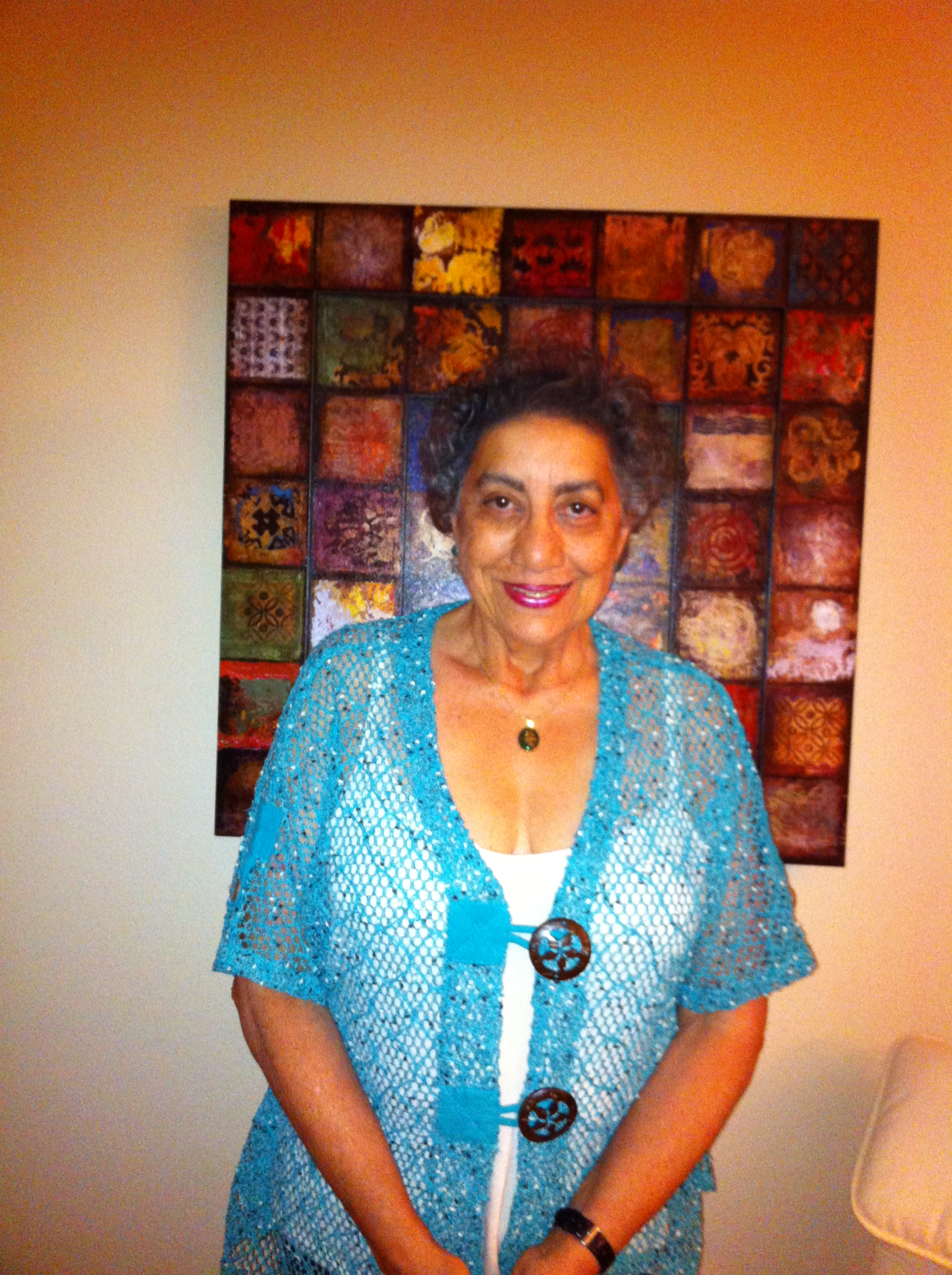
Tami Sigurdson

Since moving to Palm Desert several years ago, Tami Sigurdson [“smoke trees in bloom“, “easter lily cactus pod“, “living desert pathway“] has been capturing the striking contrasts of the flora and fauna of the desert and its unique beauty with her photography, which she continues to further her interests in. Coupled with the images she creates, she most enjoys putting pen to paper and spends her spare time writing poetry and short stories reflecting on her keen interest in social studies and life experiences.

Call for Submissions: Special Issue on Cultural Identity in Inland Southern California

Were you or your parents born outside of the United States? Have you ever called Inland Southern California your home? Do you have a story to tell?

For this special issue, we will be featuring writers who represent the current face of Inland Southern California’s shifting cultural landscape.  We want work about your experience as a person of your particular background, and about the ways in which your cultural identity has been influenced or shaped by the varied cultures present here.

Some examples of relevant topics might be: how your family has maintained or changed cultural traditions/rituals since coming to the region, inter-cultural relationships and marriage, finding a sense of community (or lack thereof), what it was like to grow up as the child of an immigrant parent or parents, or conversely what it was like for a person of your background to parent (or grand-parent) children in this region, and/or explorations of interaction with cultures in the region, including your own.

All genres accepted – poetry, fiction, creative nonfiction, images, and hybrid works.

(*For our purposes, “Inland Southern California” is defined as any non-coastal city or area in southern California, stretching from the San Felipe Valley just east of Oceanside up to Death Valley, near the California-Nevada border, including the deserts of eastern Riverside and San Bernardino counties all the way to the Colorado River.)

Please submit here.


Shali Nicholas

The Fog Has Moods

The fog has moods
that I tiptoe quietly through.
It rolls in thin and laughing,
tumbling over itself,
a mean edge to its saunter,
begging for play, but canyons
lay still, too frightened
to respond. Rejected,
it sits heavy and brooding,
hiding things in its pockets,
a boulder, a fox, the red
warning of a street light.
Finally it weeps under
its own weight, tiny circles of
tears bubbling up on its skin
like a burn.

When we are sad

Gene Louise and I walk/scramble to the lake.
We sniff urine, dandelion fluffs, that stupid stray
cat, the rotting corpse of a fish and someone
somewhere is grilling steak. We curse them
and their happy, Laissez-Faire life. We want to
chase egrets but all we can find are ducks. We
dig holes for strollers to stumble into. We discover
two tennis balls (one neon orange, one bleached
a beige) that have sat on the shore since
our last visit. Poor tennis balls. We cautiously
lap the water. Sand-coated and sun-warmed,
we finally make our way back home, pissing
on everything along the way.

—-

Shali Nicholas is a student in the MFA program at Cal State San Bernardino. Nicholas lives and teach in the San Bernardino mountains for Rim of the World School District.